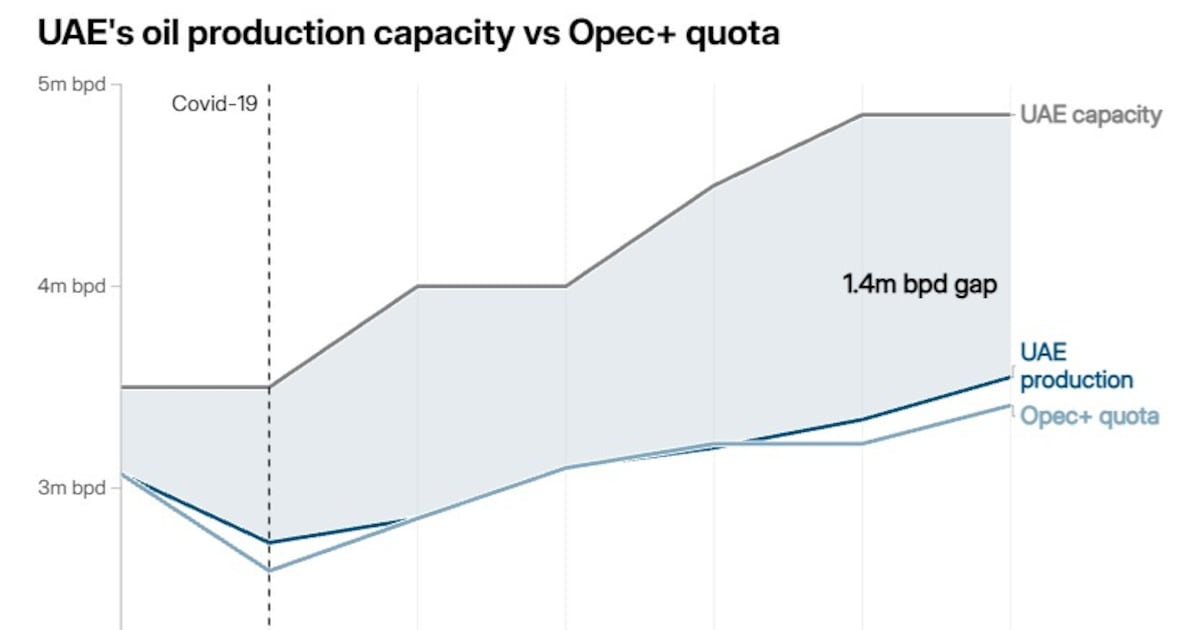

The United Arab Emirates’ exit from OPEC represents a seismic rebalancing of sovereign capital flows and strategic autonomy in the MENA region. By shedding the binding production quotas of the OPEC+ supergroup, Abu Dhabi can now accelerate its refinery upgrade program, redirect surplus crude towards liquefied natural gas (LNG) exports, and allocate capital towards high‑growth tech and renewable projects that were previously stalled by quota ceilings. The shift is expected to free up roughly 1.6 million barrels per day of discretionary output, a figure that exceeds the combined spare capacity of Iraq and Kuwait and rivals that of Saudi Arabia alone. This unlocks a new tranche of liquidity for the UAE government, which can now be leveraged to attract foreign direct investment (FDI) in cybersecurity, fintech, and green hydrogen—sectors identified by the Abu Dhabi Investment Authority as priority growth engines.
The business ramifications ripple across the broader Gulf Cooperation Council (GCC). Regional infrastructure processors, from pipeline construction firms to LNG plant operators, will see heightened demand for engineering, procurement, and construction (EPC) services. The sudden availability of additional upstream production capacity will also spark a surge in midstream logistics contracts, as new storage and export terminals must be brought online to accommodate the increased throughput. With the UAE’s move, the reliability of supply to Asian markets—particularly China and Japan—improves, potentially reducing hedging costs for regional oil traders and boosting profitability for national oil companies that rely on spot sales in volatile markets.
For venture capital ecosystems, the departure signals a shift in the risk appetite of sovereign wealth funds and state‑backed PE vehicles in MENA. By asserting operational independence, the UAE positions itself as an attractive co‑investor in tech start‑ups that require significant capital and a stable energy backdrop. Early-stage firms in data analytics, energy efficiency, and autonomous transport are likely to see increased sponsorship from Abu Dhabi’s strategic funds, creating a virtuous cycle that enhances the region’s competitive edge in the global tech arena. Simultaneously, the removal of collective quota constraints will necessitate new regulatory frameworks to manage intra‑GCC oil production, offering a fertile ground for legal and compliance start‑ups specializing in commodity regulation and digital pipeline monitoring.
From a geopolitical standpoint, OPEC+ faces a recalibration of its market‑stabilization mandate. Saudi Arabia’s dominant spare capacity—approximately 4.9 million barrels per day—now contains an additional 1.6 million barrels per day under the UAE’s discretionary control, tilting the balance of power within the supergroup. This development pressures OPEC to refine its coordination mechanisms, potentially accelerating the adoption of technology‑driven forecasting tools and real‑time monitoring dashboards to manage the now greater production volatility. For MENA’s sovereign capital strategies, the UAE’s exit underscores a broader trend toward economic diversification and sovereignty‑centric policy frameworks, setting a precedent that may influence other Gulf states to reconsider their roles within multilateral commodity blocs in pursuit of greater fiscal autonomy and investment fluidity.