
The
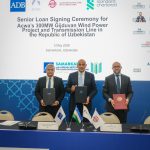
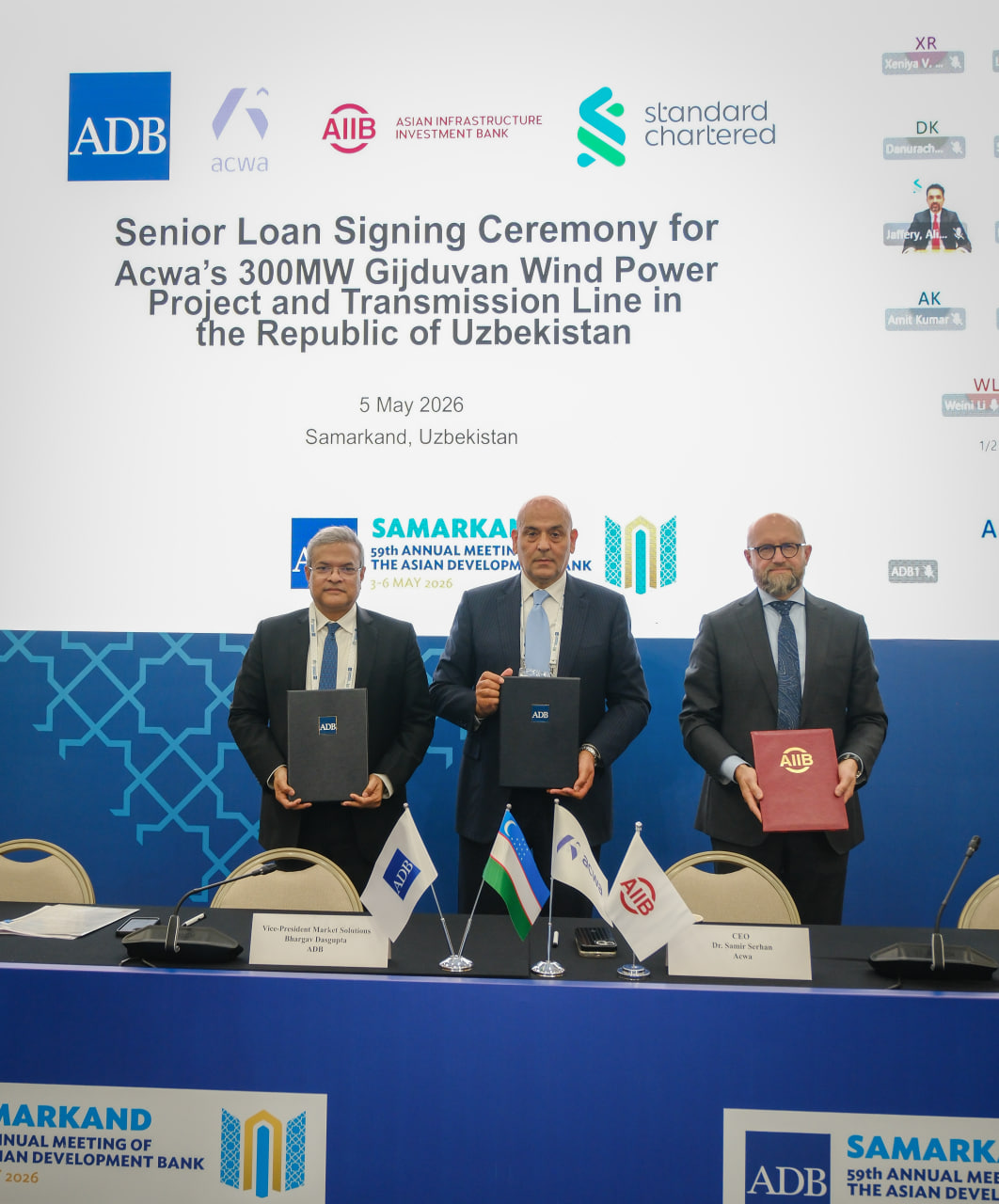
development of the Bash 2 wind power plant in Uzbekistan, backed by a $107 million loan from the Asian Infrastructure Investment Bank (AIIB) and co-financed by the Asian Development Bank and Standard Chartered Bank, underscores a strategic alignment between sovereign capital mobilization and private-sector innovation in the Middle East and North Africa (MENA) region. This project, part of ACWA Power’s renewable cluster in Ugland, exemplifies how sovereign entities are leveraging multilateral financing to de-risk large-scale infrastructure, while creating blueprints for similar ventures. The $107 million loan is structured within a long-term power purchase agreement (PPA) with Uzbekistan’s National Electric Grid, ensuring revenue stability and reducing financing costs for ACWA Power—a model that could catalyze similar megaprojects across the region. For sovereign investors, the deal reflects a calculated push to diversify energy portfolios, aligning with Uzbekistan’s 2030 target of 40% renewables in its power mix, a trend likely to resonate across oil-dependent MENA economies.
The collaboration highlights the evolving role of international financial institutions in bridging MENA’s infrastructure gaps, where venture capital (VC) and traditional financing often converge. While venture capital typically targets early-stage startups, this project demonstrates how institutional capital—particularly from development banks—fuels mature, asset-heavy renewables. AIIB’s thematic focus on green infrastructure and technology-enabled projects aligns with global ESG mandates, while Standard Chartered’s co-investment signals Western appetite for MENA’s renewable pipeline, contingent on political stability and PPAs anchored in strong sovereign credit. For Uzbekistan, the financing arrangement mitigates transition risks for local assets, enabling local utilities to adopt hybrid renewable self-consumption models, a trend gaining traction in the region’s energy utilities.
Regionally, the Bash 2 project reinforces Uzbekistan’s positioning as a wind energy hub, mirroring Morocco’s Noor solar complex and Jordan’s Tafilah wind-solar hybrid plant. The 300 MW facility, which will generate 943 GWh annually and power 336,000 households, not only reduces Uzbekistan’s reliance on imported fuels but also strengthens its energy export potential to neighboring markets. However, the deal’s structure—secured by rising wind energy prices in Europe—raises questions about scalability during volatility in global commodity markets. Furthermore, the project’s carbon-offset benefits, avoiding 475,000 tons of CO2 yearly, position it as a narrative tool for MENA governments seeking to fulfill Paris Agreement commitments without compromising economic growth. Such projects, however, will require robust regional grid infrastructure, a bottleneck that MENA has yet to resolve despite pledges.
The scalability of the Bash 2 model hinges on replicable frameworks for de-risking renewable projects in MENA’s politically fragmented, oil-reliant landscapes. For sovereign capital, the deal normalizes multilateral financing for renewables, potentially unlocking Saudi Arabia’s $10 billion oil fund for green infrastructure or UAE pension assets for regional solar farms. For VC-backed developers like ACWA Power, the arrangement reaffirms the viability of private-sector-led green transitions when paired with sovereign guarantees. Yet, challenges persist: regulatory arbitrage, currency mismatches between multinational lenders and local grids, and the need for accelerated permitting processes. As MENA nations vie to emulate Bahrain’s 30% solar target or Egypt’s Wind Horizon project, the Bash 2 partnership offers both a roadmap and a litmus test for balancing sovereign capital appetites with VC-driven innovation in a resource-constrained region.