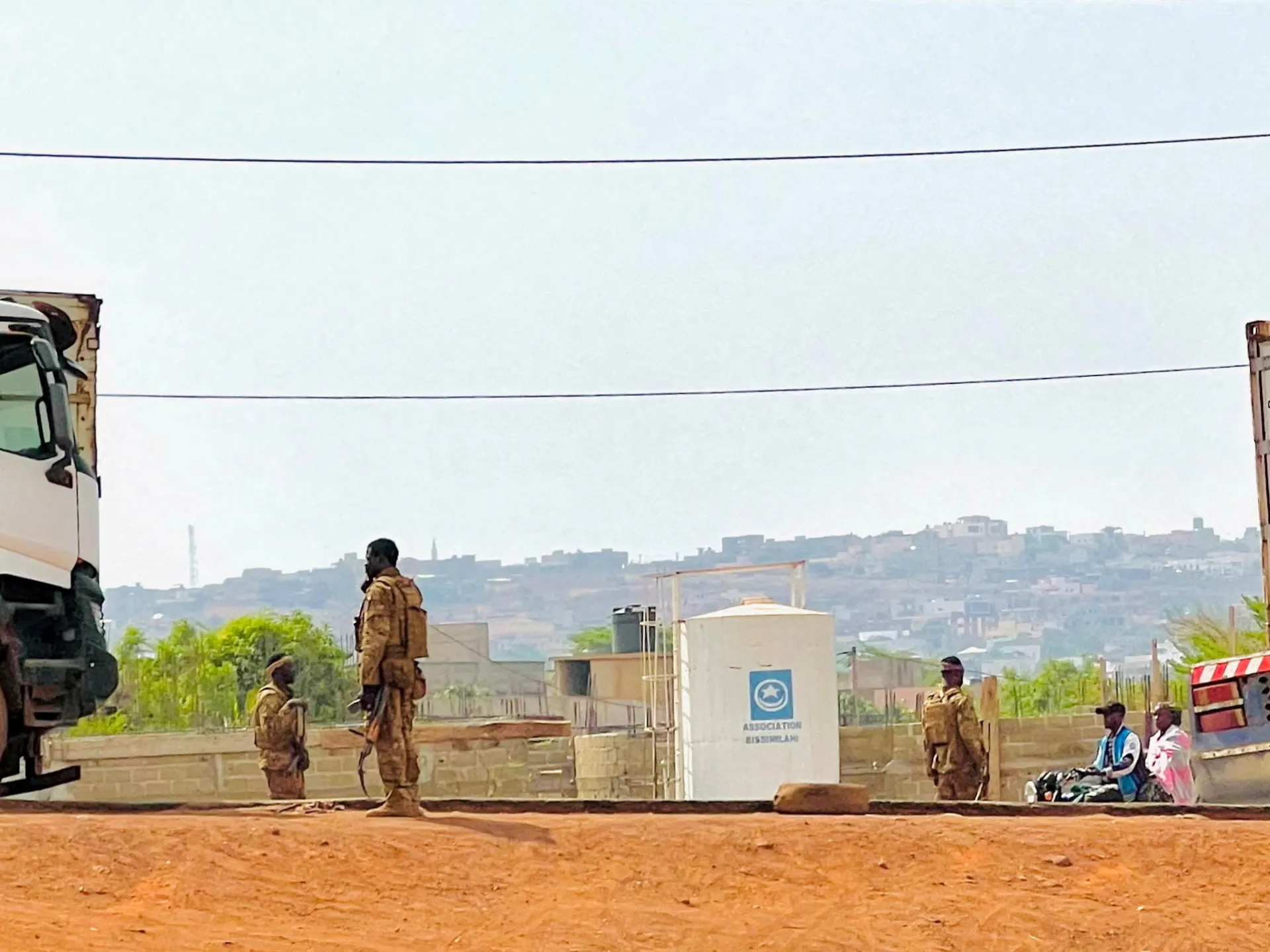

The breach of Mali’s Kenieroba Central Prison and the interdiction of logistics corridors into Bamako mark an escalation that directly threatens sovereign balance sheets and the monetisation of strategic infrastructure across the Sahel. A detention complex billed as “Africa’s Alcatraz” has failed not merely as a custodial asset but as a node in Mali’s coercive supply chain, exposing the fiscal cost of fragmented security to sovereign balance sheets already strained by currency illiquidity and restricted multilateral access. With high-value detainees linked to JNIM returned to operational circulation and food supply arteries severed, the state faces higher import bills, acute foreign-exchange leakage, and contingent liabilities tied to emergency procurement—conditions that raise risk premia on hard-currency debt and complicate collateralisation of future extractive and transport revenues against offshore borrowing.
For regional capital allocators, the incident recalibrates exit expectations and liquidity horizons across frontier MENA and Gulf portfolios with exposure to Sahelian logistics, agri-processing and critical minerals. The corridor paralysis constrains throughput to littoral ports that serve Niger, Burkina Faso and northern Nigeria—routes increasingly monetised by sovereign-wealth participation and pan-African infrastructure funds. Venture and growth investors in logistics-tech, cold-chain and last-mile distribution will face higher country-risk loadings, elevated insurance premia and the structural need for redundancy layers that push returns below institutional hurdle rates. Meanwhile, sovereign-wealth investors from the Gulf are likely to redeploy capital toward hardened corridors in the Red Sea–Sahel axis, prioritising modular, securitised assets with shorter payback windows and reduced exposure to contested hinterland nodes.
The longer-term infrastructure implication is a fragmentation of continental integration schemes, with security externalities forcing capital to bypass the Central Sahel in favour of maritime and northern transit alternatives. Projects tied to ECOWAS corridor liberalisation, power interconnectors and cross-border fibre will face renegotiation risk and potential abandonment, while the commercial case for satellite-based connectivity, decentralised energy and air-bridge logistics strengthens. For MENA investors, the recalibration favours hard-asset plays insulated from host-state security failure—ports, refineries and mineral off-take structures—over equity exposure to soft infrastructure. Until security externalities are internalised into sovereign credit and project-finance structures, private capital will price the region as a constrained, optionality-heavy allocation with limited carry and compressed duration.