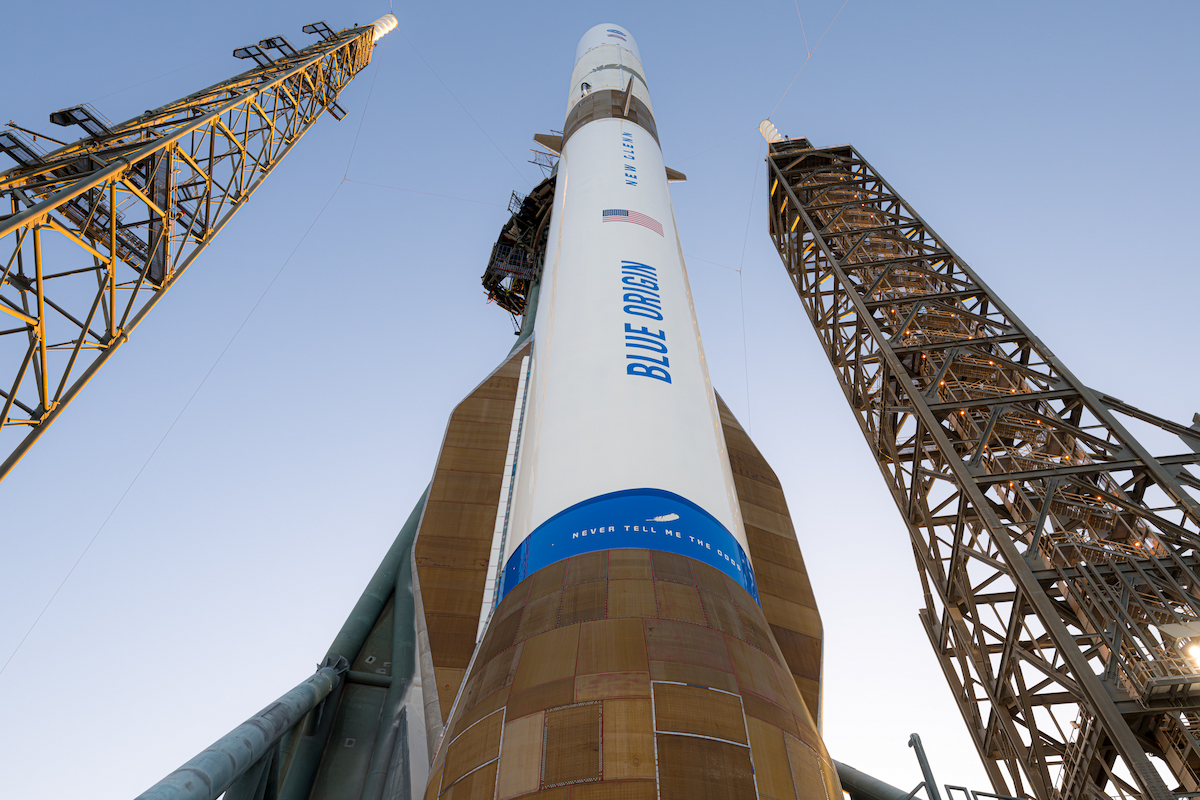

Blue Origin’s NewGlenn rocket’s failure to deliver AST SpaceMobile’s satellite to the intended orbit underscores critical vulnerabilities in commercial space logistics that could reverberate across the Middle East and North Africa (MENA). For businesses in the region reliant on satellite communications—particularly in remote or underserved areas—the incident highlights an increased risk of mission failure and associated costs. While AST SpaceMobile’s insurance mitigates immediate financial loss, the broader implications include heightened operational uncertainties for telecom providers, government agencies, and enterprises leveraging satellite-based solutions. The MENA region, which has seen growing investments in aerospace and IoT-driven infrastructure, may face pressure to diversify its reliance on foreign launch providers. A single-point failure in such a high-stakes program could delay deployment timelines for regional projects, erode investor confidence, and necessitate costly contingency planning. This setback also challenges Blue Origin’s ambitions to position itself as a key player in global space infrastructure, potentially diminishing its appeal as a partner for MENA governments or corporations seeking reliable satellite deployment solutions.
The failure carries significant implications for sovereign capital allocation within the MENA region. Countries such as the UAE, Saudi Arabia, and Egypt have prioritized space technology as a cornerstone of economic diversification strategies, with sovereign funds and national development agencies investing heavily in commercial space ventures. The setback with New Glenn may prompt these entities to reassess their partnerships with external launch providers, favoring more proven systems or local capabilities. For instance, national space agencies might redirect funds toward indigenously developed launch vehicles or satellite networks to mitigate risks associated with proprietary commercial systems. Additionally, the incident could accelerate discussions around regional cooperation, such as shared orbital infrastructure or joint ventures, to enhance resilience in space operations. Sovereign capital in MENA is increasingly directed toward high-growth, high-tech sectors, and a misstep in a critical program like New Glenn could trigger a recalibration of investment priorities, emphasizing reliability and regional control over long-term dependencies on foreign entities.
Venture capital in the MENA space tech ecosystem stands to face intensified scrutiny following this failure. The region has attracted significant VC funding for startups focused on satellite technology, space analytics, and related services, with investors betting on the proliferation of commercial space applications. Blue Origin’s stumble with New Glenn may dampen enthusiasm for high-risk, high-reward satellite deployment ventures, pushing investors toward more mature or redundant systems. However, it could also catalyze a shift toward niche MENA-based solutions. For example, startups specializing in satellite miniaturization, AI-driven orbital mechanics, or regional ground infrastructure might gain traction as alternatives to large-scale foreign rocket systems. The failure serves as a cautionary tale for VCs, emphasizing the need for rigorous technical due diligence and contingency frameworks. In a region where access to global capital markets is expanding, this event may reshape investment strategies, favoring localized innovation over outsourced solutions that expose portfolios to unanticipated technical failures.
The incident underscores regional infrastructure gaps that MENA must address to secure its position in the global space economy. Countries across the peninsula are investing in ground stations, launch pad development, and satellite manufacturing to reduce dependency on external launch providers. However, Blue Origin’s New Glenn failure highlights the fragility of relying on nascent or under-tested systems without robust regional infrastructure to support mission-critical operations. For MENA, this could mean redirecting infrastructure investments toward hybrid models that combine local expertise with international partnerships, ensuring redundancy and adaptability. Additionally, the failure may spur collaboration with organizations like the African Institute for Mathematical Sciences or the Arab Space Agency to pool resources and knowledge. Regional infrastructure development is not just an economic imperative but a strategic necessity—satellite communication networks, disaster monitoring systems, and digital economies in MENA are increasingly tied to reliable access to space. Without addressing these vulnerabilities, the region risks falling behind in harnessing space technology as a driver of sustainable growth and resilience.*