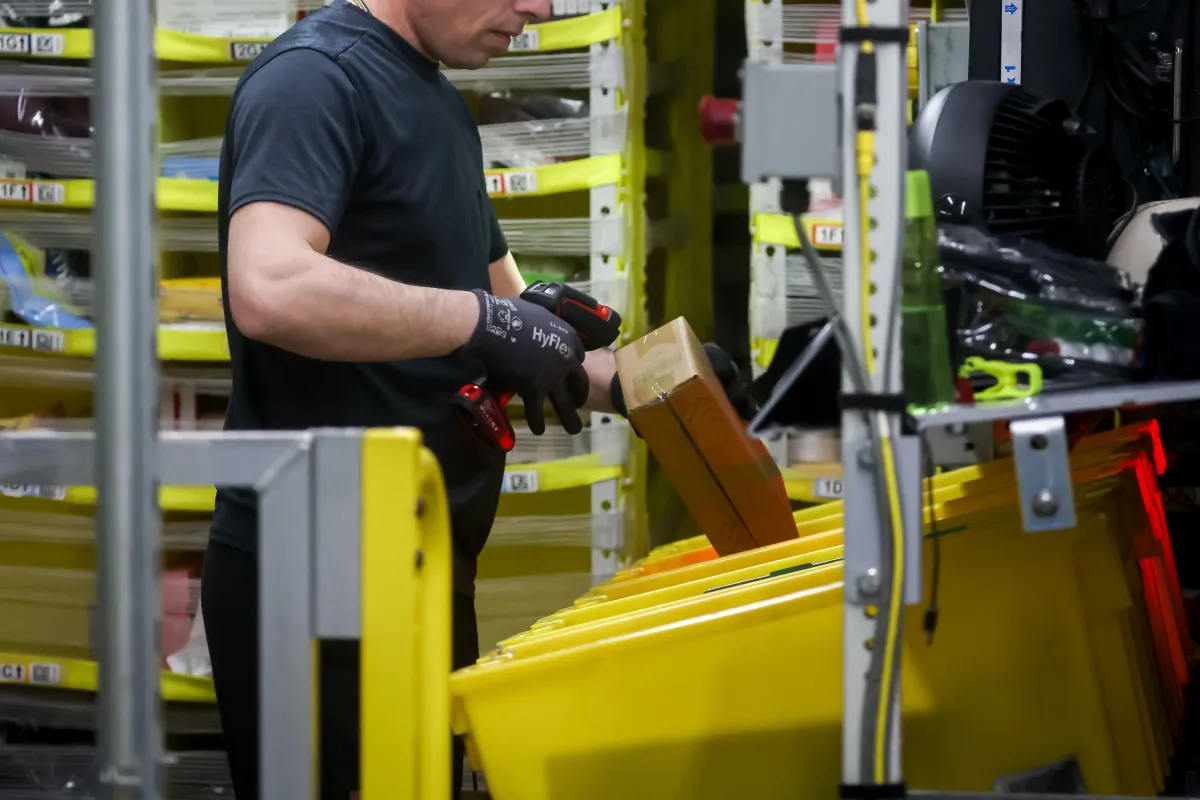

The tragic death of an Amazon warehouse worker in Oregon underscores the critical business implications of corporate safety practices in global supply chain management, with direct relevance to sovereign capital strategies and venture capital (VC) risk assessments across the Middle East and North Africa (MENA). As MENA nations accelerate infrastructure modernization and attract foreign direct investment, this incident serves as a cautionary case study in balancing operational efficiency with labor welfare. Sovereign wealth funds and institutional investors in the region, increasingly prioritizing ESG-compliant portfolios, must rigorously evaluate companies like Amazon whose scale and dependency on manual labor exacerbate risks of systemic negligence. Similarly, VC firms backing startup logistics solutions in MENA must consider how legal precedents in high-income economies influence regulatory expectations—and by extension, the viability of deploying cutting-edge technologies to mitigate workplace hazards.
The U.S. investigation into Amazon’s alleged data manipulation to obscure injury metrics highlights a growing geopolitical tension between corporate accountability and state-backed capital flows. For MENA’s fledgling sovereign sovereign wealth funds, which are prioritizing “Future-Readiness” initiatives—including smart cities and automated logistics—the death at the PDX9 warehouse signals the necessity of embedding safety-as-infrastructure into public-private partnerships. Regional governments, already grappling with the dual imperative of attracting Amazon-like giants while replicating their tech-driven scale, face a paradox: investors demand operational efficiency, yet lax labor safeguards erode social capital and trigger regulatory backlash. This dynamic could dampen multilateral infrastructure projects tied to sovereign funds, such as railway expansion projects in the Gulf or expanding Saudi Arabia’s NEOM tech hub, if global partners cite internal safety malpractices as exclusionary risks.
The MENA infrastructure paradigm is diverging from Western models, mandating innovative risk-sharing frameworks that align with both local labor realities and global ESG standards. As Amazon’s $2.5 billion annual safety investment demonstrates—amid concurrent legal liabilities—the transition to SaaS-driven safety protocols and AI-enhanced training systems is no longer a niche VC niche but a sovereign necessity. For example, Qatar’s Al Jadaa Capital and Saudi Arabia’s PIF are actively sourcing AI-enabled labor management platforms to retrofitted legacy industrial zones. However, the Oregon case underscores the peril of overlooking regional implementation challenges: even state-of-the-art facilities in water-staressed, heatwavelula climates require hyper-localized solutions, from staggered work shifts to integrating heat stress biomarkers into workplace wearables. MENA’s sovereign capital will likely demand similar granularity, pushing for localized ESG KPIs beyond empty corporate pledges.