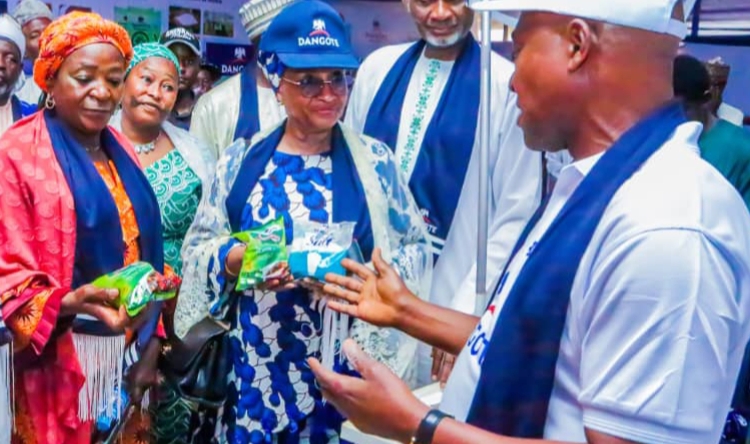

The Dangote Group’s strategic engagement with the Nasarawa Trade Fair underscores a broader paradigm shift in Africa’s industrialization trajectory, with direct implications for sovereign capital allocation and regional economic resilience. As Africa’s largest multinational industrial conglomerate, Dangote Industries Limited’s deployment of the Dangote Refinery and Petrochemical Company at this event highlights its role as a catalyst for sovereign wealth mobilization. The project aligns with MENA’s strategic interest in leveraging African industrial assets to diversify energy and manufacturing portfolios, potentially reducing dependency on volatile fossil fuel markets. For sovereign entities in the Middle East and North Africa, this model offers a template for investing in Africa’s resource-intensive sectors, where infrastructure scalability and policy stability are increasingly critical. The integration of Dangote’s agro-industrial and petrochemical assets into Africa’s supply chains could attract regional sovereign capital flows seeking diversified, large-scale equity investments, mirroring similar initiatives in Gulf sovereign wealth funds investing in African energy and mining.
The venture capital landscape in both Africa and MENA is poised for transformation as industrialization drives demand for technology-enabled solutions. Dangote’s Vision 2030, emphasizing innovation and value-chain integration, exemplifies how traditional industries can interface with digital infrastructure—a trend resonant across MENA’s startup ecosystems. While the group’s participation in the trade fair focuses on physical goods, its emphasis on digital platforms for stakeholder engagement (e.g., help desks, mobile training systems) reflects a recognition that VC funding is no longer confined to pure tech firms. Instead, ventures in sectors like agro-processing, logistics, and petrochemicals are increasingly attractive to regional VCs seeking compounding returns. For MENA, this signals an opportunity to align VC portfolios with Africa’s industrial boom, particularly in areas where sovereign capital has previously been leveraged (e.g., Saudi Arabia’s PIF investments in green hydrogen or petrochemicals). The success of Dangote’s ecosystem could also spur cross-regional hubs, where MENA VCs partner with African entrepreneurs to tackle infrastructure bottlenecks, such as energy access or supply chain digitization.
Regional infrastructure implications for MENA are twofold: first, as a cleaner slate for industrial investments compared to its oil-dependent counterparts, Africa may become a preferred destination for MENA tech infrastructure spending. Dangote’s logistics network, evidenced by its sodium silicate and cement operations, parallels MENA’s need for integrated supply chain solutions to support its megaprojects. Sudanese or Egyptian governments, for instance, could replicate Dangote’s approach by partnering with Gulf-based firms to develop industrial parks that combine renewable energy (a MENA priority) with localized manufacturing. Second, the trade fair’s focus on inclusive growth underscores a MENA imperative to align industrial policies with community development—a dynamic that could attract Gulf sovereign wealth investments tied to ESG or social return metrics. Challenges remain, however, including MENA’s unfinished industrialization and competitive infrastructure gaps. Dangote’s model provides a blueprint for overcoming these barriers, but execution will depend on regional coordination and risk mitigation frameworks that resonate with MENA’s geopolitical and regulatory complexities.