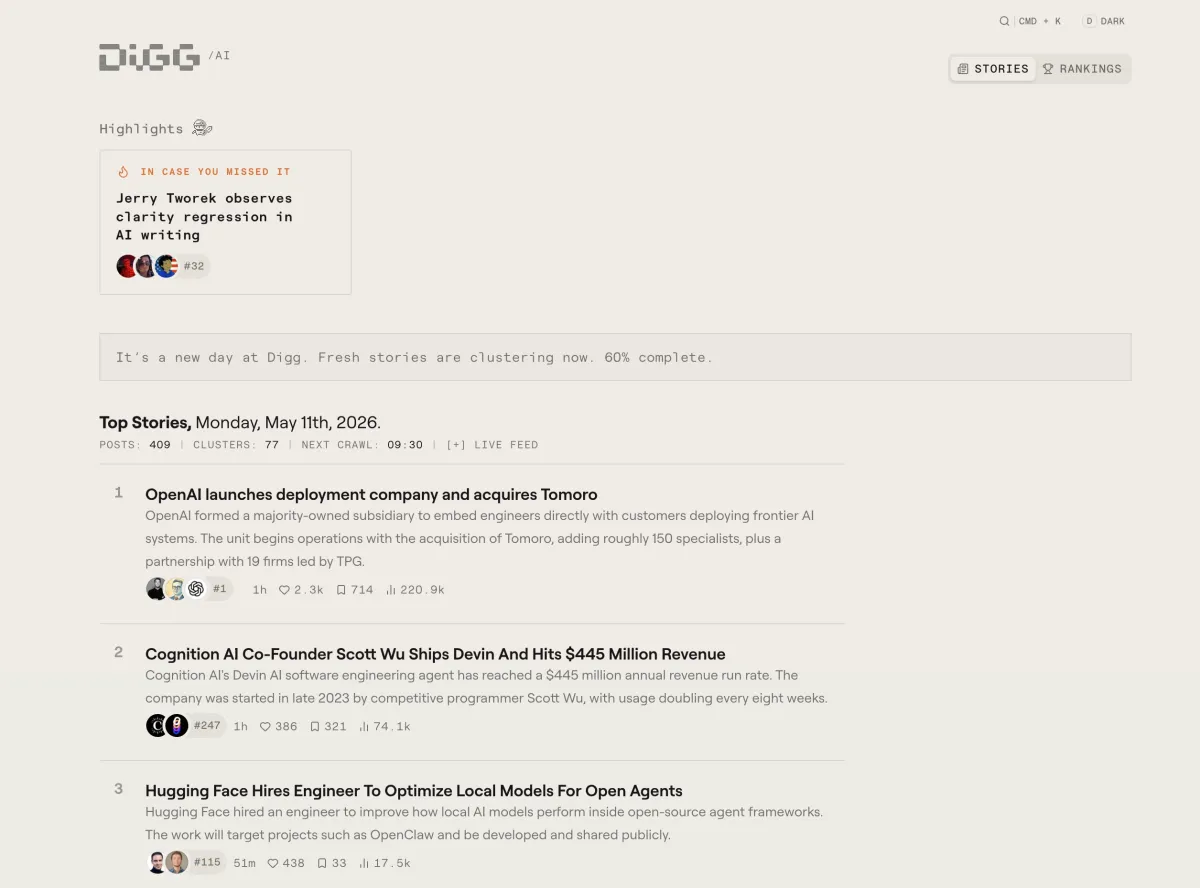

Digg’s latest iteration, now emphasizing AI-driven news curation, underscores a broader trend in the tech industry toward leveraging real-time data analytics to combat information overload—a challenge with direct parallels in the Middle East and North Africa (MENA) region. While Digg’s pivot to AI-centric content highlights the growing importance of algorithmic transparency and user engagement metrics, its struggles with bot management and differentiation reveal persistent gaps in digital infrastructure and regulatory frameworks. For MENA’s emerging tech ecosystem, this serves as a case study in the complexities of scaling platforms that rely on global data ecosystems, particularly in regions where internet penetration and cybersecurity standards vary widely. The venture capital landscape in MENA, increasingly focused on fintech and AI-driven solutions, may find lessons in Digg’s iterative approach, though the region’s sovereign capital priorities—prioritizing domestic tech sovereignty and infrastructure investment—could complicate the adoption of such models.
Sovereign capital in MENA is increasingly directed toward projects that align with national digital transformation agendas, such as Saudi Arabia’s NEOM or the UAE’s AI and quantum computing initiatives. For Digg, operating in a region where governments exert significant control over digital infrastructure, the platform’s reliance on third-party data sources like X raises questions about data sovereignty and compliance. While the MENA region’s growing venture capital scene has shown appetite for scalable tech ventures, Digg’s model—dependent on real-time social media analytics—may face headwinds in markets where local regulations restrict data flow or prioritize state-controlled platforms. This dynamic could limit the platform’s ability to attract foreign investment, as investor confidence hinges on transparency and alignment with regional policy frameworks. Moreover, the lack of robust local discussion forums in MENA, as highlighted in the article, underscores the need for platforms that bridge global and regional discourse, a gap that sovereign capital might address through targeted investments in hybrid tech infrastructure.
Venture capital in MENA has historically favored startups with clear monetization pathways, such as e-commerce or mobile money, but Digg’s focus on AI-driven content aggregation could signal a shift toward more experimental, data-centric models. However, the region’s venture ecosystem remains cautious about platforms that depend on volatile global trends, as seen in Digg’s struggles with user retention and content differentiation. For MENA’s tech hubs, this highlights the importance of building resilient, regionally relevant infrastructure—such as localized data centers and secure cloud ecosystems—to support innovative platforms. Additionally, the article’s mention of Digg’s potential to drive traffic to publishers amid Google’s AI-driven search shifts aligns with MENA’s broader challenges in sustaining digital publishing revenue. Sovereign capital could play a critical role in funding such initiatives, provided platforms like Digg demonstrate clear value to both users and governments in terms of digital literacy, economic diversification, and national data governance.