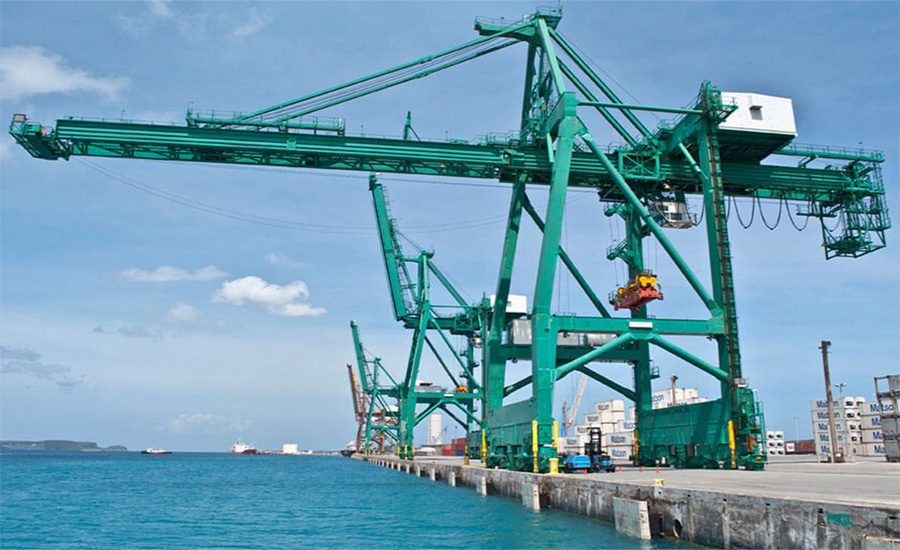

The United States’ unprecedented $774 million port infrastructure allocation signals a strategic realignment of global maritime capital flows that carries significant ramifications for MENA sovereign investors and regional development mandates. This record-setting disbursement, backed by the $1.2 trillion Infrastructure Investment and Jobs Act, represents more than domestic modernization—it constitutes a competitive pivot that regional capital allocators must factor into long-term portfolio construction. Gulf sovereign wealth funds, managing over $3 trillion in combined assets, are increasingly positioning infrastructure investments toward logistics corridors that can capture shifting trade dynamics. The program’s trajectory—from peak funding in FY2025 to projected decline post-FY2026—creates a compressed investment window that mirrors similar urgency facing MENA port authorities racing to align their capabilities with China’s Belt and Road connectivity ambitions.
For regional venture ecosystems, the US port modernization wave underscores accelerating convergence between traditional infrastructure and technology-driven efficiency gains. MENA’s venture capital community, which deployed $4.2 billion across logistics and mobility tech in 2024, views port digitization as validation for continued investment in automation, AI-powered cargo optimization, and smart terminal solutions. Saudi Arabia’s $500 billion NEOM megaproject and Egypt’s Suez Canal Economic Zone are both calibrating their infrastructure roadmaps against these US benchmarks, incorporating lessons from American projects spanning marine structures to intermodal rail connectivity. The competitive tension is crystallizing around a fundamental question: whether regional sovereign capital will continue subsidizing port expansion cycles amid potential contraction in Western infrastructure spending post-2026.
The funding volatility inherent in the US model—where federal programs face expiration rather than permanent authorization—highlights structural advantages available to MENA governments with longer-term fiscal horizons. Abu Dhabi’s $11 billion Khalifa Port expansion and Qatar’s Hamad Port development benefit from multi-decade capital commitments that contrast sharply with American cycles of boom-and-bust appropriations. This stability gap translates into predictable procurement timelines that regional construction conglomerates and technology vendors can leverage for capacity planning. Moreover, the emphasis on Category 4 and 5 storm resilience at ports like Guam provides a blueprint for MENA climate adaptation strategies, particularly for Saudi Arabian and UAE facilities exposed to rising temperature extremes and sea-level projections.
Looking toward 2027 and beyond, the impending funding cliff for US port programs may catalyze a regional reallocation of maritime infrastructure capital toward MENA markets seeking to monetize strategic geographic positioning. Dubai’s DP World and Saudi Aramco’s logistics subsidiaries are already evaluating acquisition opportunities in complementary port assets, anticipating that American public sector retrenchment could create private market dislocations. The convergence of sovereign capital, venture-stage innovation, and infrastructure modernization suggests that MENA’s next phase of port development will emphasize integrated ecosystems rather than standalone terminal expansions—an evolution that positions the region as both competitor and complement to traditional Western maritime power centers.