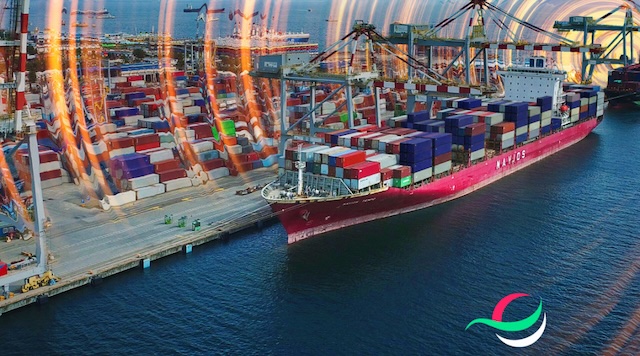

DP World’s Batangas Integrated Port in the Philippines is underscoring the profound multiplier effect of trade infrastructure on regional economic development, a development dynamic with direct implications for infrastructure investment strategies across the Middle East and North Africa (MENA). New Oxford Economics research commissioned by DP World shows the port supports 2,340 jobs nationwide, with 1,320 in the Calabarzon region alone, spanning logistics, manufacturing, and local services. Direct economic output from operations at the terminal totaled nearly US$28 million in 2024, including US$18.5 million within Calabarzon. This level of localized value generation presents a compelling case for sovereign wealth funds and private capital allocators in MENA evaluating transport infrastructure as a medium-term growth lever. The facility’s integration into global shipping routes also strengthens the Philippines’ export competitiveness, with projected GDP gains of approximately US$1 billion by 2035. As Gulf Cooperation Council entities continue to expand trade corridors under initiatives like Saudi Arabia’s Vision 2030 and the UAE’s logistics diversification agenda, models like Batangas offer operational evidence that port-led industrialization can directly support human capital development and SME enablement.
The site also serves as a testbed for inclusive employment generation, with women comprising 28.1 percent of jobs linked to Batangas port activities and over 11 percent of positions filled by individuals aged 24 or younger. Each DP World employee generates approximately US$23,900 in gross value added per annum, a figure nearly six times the Calabarzon average for the transport and storage sector. This disparity highlights the economic leverage that efficiency-focused, technology-enabled port operations can exert on per capita productivity. For MENA markets, where youth unemployment persists as a structural challenge, replicating this model could strengthen sovereign growth narratives tied to employment-linked infrastructure spending. Moreover, the port’s positioning as a Metro Manila alternative reduces systemic bottlenecks, reinforcing regional supply chain resilience—an increasingly vital consideration amid climate and geopolitical volatility.
While Calabarzon’s contribution to national GDP remains strong, recent data indicates a 0.6 percentage point increase in the poverty rate between 2021 and 2023, exacerbated by Typhoon Trami in 2024. In this environment, the development and modernization of gateways like the Batangas Integrated Port form part of a broader infrastructure defense strategy to ensure GDP gains translate into tangible livelihood opportunities for local populations. Glen Hilton, CEO & Managing Director, Asia Pacific at DP World, described the current trajectory as a visible example of the firm’s “DP World Effect,” where each infrastructure investment acts as a catalyst for community-level prosperity beyond the point of terminal operation. As MENA governments and institutional investors continue to recalibrate infrastructure investment criteria post-pandemic and post-inflation shocks, this project demonstrates that capital deployment in transport and tech-enabled logistics is not only a trade optimization tool but also a socio-economic stabilization mechanism with measurable revenue and employment multipliers.