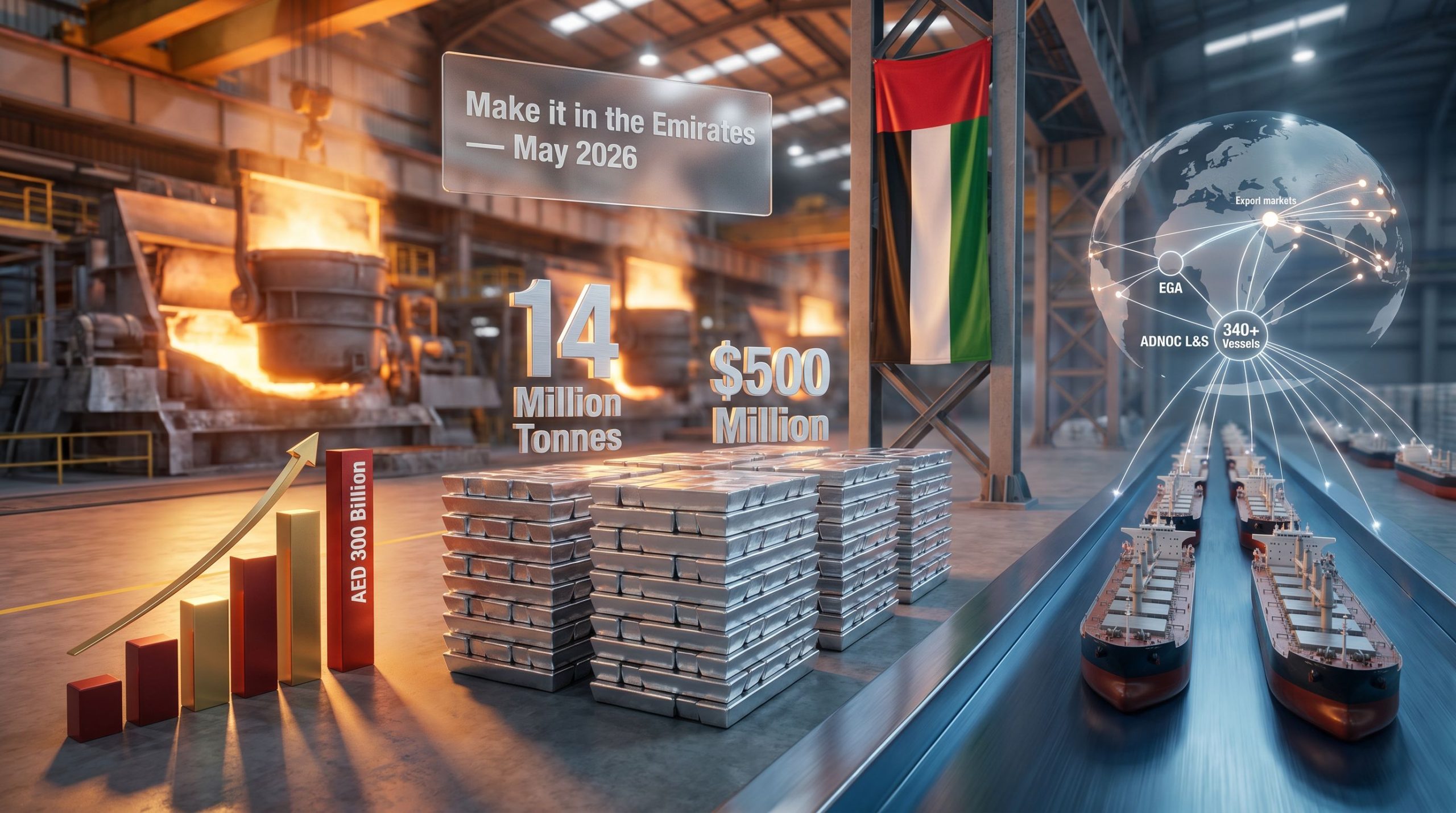

The EGA-ADNOC logistics and supply chain framework formalised at Make it in the Emirates signals a fundamental recalibration of how Gulf sovereign capital is being deployed—not as passive resource rent, but as active infrastructure in upstream industrial value chains. EGA’s annual movement of 14 million tonnes of raw material and finished aluminium across 50-plus export markets has transformed the company into a de facto maritime logistics operator, and the integration of ADNOC Logistics and Services’ 340 owned vessels plus 600 chartered ships into EGA’s supply architecture is not a procurement nicety. It is a structural hedge against freight volatility, shipping scarcity, and geopolitical disruption that converts a volatile cost centre into a managed, relationship-defined asset. For sovereign wealth architects watching from Abu Dhabi and Riyadh, this is the template: lock critical inputs—calcined petcoke, operational consumables, outbound freight—into domestic supply frameworks that compound over time rather than react to spot market swings.
The strategic architecture on display is deliberately layered across nearly a decade of agreements, from the 2019 calcined petcoke supply deal through the AED 1.84 billion petcoke commitment sealed in 2025 and now the May 2026 logistics MOU with its explicit pathway toward a joint venture in aluminium-focused transportation assets. This compounding logic—each agreement anchoring a distinct operational dependency—mirrors the ICV framework underpinning the UAE’s Operation 300bn industrial localisation push, where procurement decisions are measured not by unit cost alone but by domestic value creation. The 96% ICV score on ADNOC Distribution’s smelter-specific lubricants and EGA’s 40%-plus local sourcing rate demonstrate that the government is using anchor industrial players as vectors for supply chain depth, building domestic supplier capacity that makes future localisation commercially viable without direct mandate.
What distinguishes this model from global peers is the sovereign maritime logistics dimension. Rio Tinto, Rusal, and Alcoa integrate across bauxite-to-aluminium chains, but none access a state-owned fleet of this scale without carrying the capital burden on their own balance sheets. The potential EGA-ADNOC L&S joint venture, if formalised, would create a logistics vehicle without parallel among non-Chinese aluminium producers—a structural cost advantage that commercially financed competitors cannot easily replicate. For regional infrastructure planners, the implication is clear: the next competitive frontier in aluminium is not smelter efficiency but supply chain ownership, and Gulf states that convert hydrocarbon logistics expertise into industrial commodity services will command margins and market access that spot-market buyers simply cannot match.