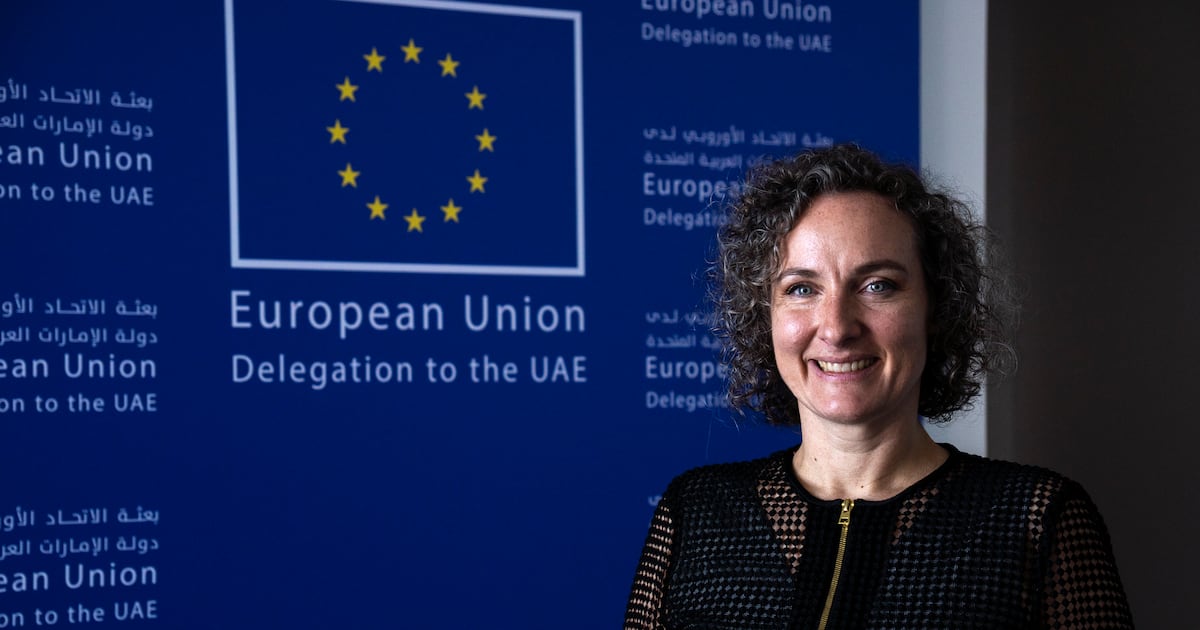

Despite a sharp escalation of hostilities in the Persian Gulf, trade links between the European Union and the United Arab Emirates remain on track, underscoring the resilience of Gulf‑EU economic ties and the imperative to finalize a comprehensive free‑trade agreement. Ambassador Lucie Berger, the EU’s chief representative in the UAE, highlighted that the conflict has not stalled negotiations; on the contrary, it has accelerated the agenda, with six rounds of talks completed in less than a year—an unprecedented pace for EU‑Gulf accords. The deal, slated for year‑end completion, would lock in €57 billion of bilateral trade and open new avenues in AI, renewable energy, and cybersecurity, thereby reinforcing the UAE’s position as the EU’s largest Gulf partner.
From a sovereign‑capital perspective, the turmoil has amplified the EU’s drive to diversify its energy and maritime security dependencies. The temporary closure of the Strait of Hormuz has triggered a surge in global energy prices and spotlighted the strategic importance of Gulf routes. In response, the EU has signalled willingness to replicate the Red Sea Operation Aspides in the Gulf, signalling a higher level of military collaboration that could involve joint naval patrols and shared intelligence on Iranian drone warfare—an area where Ukrainian expertise is already being leveraged by Gulf states.
Regional infrastructure ramifications are equally significant. The war has underscored the need to modernise shipping lanes, expand port resilience, and embed cyber‑defence across Gulf logistics networks. Investment flows are likely to shift towards infrastructure projects that safeguard freight corridors and enhance supply‑chain redundancy, particularly in light of ongoing missile and drone threats. The UAE’s robust defence posture, having repelled over 5 000 Iranian missile and drone strikes to date, serves as a practical case study for EU‑Gulf partners seeking to safeguard critical maritime assets.
In sum, the current geopolitical volatility is unlikely to derail the EU‑UAE economic partnership; rather, it has sharpened focus on trade liberalisation, sovereign risk mitigation, and collaborative infrastructure development. For MENA investors, the urgency to invest in resilient trade corridors and defence‑tech startups presents a high‑return opportunity, while sovereign capital managers must now reckon with the dual imperatives of energy security and maritime stability in an increasingly complex regional landscape.