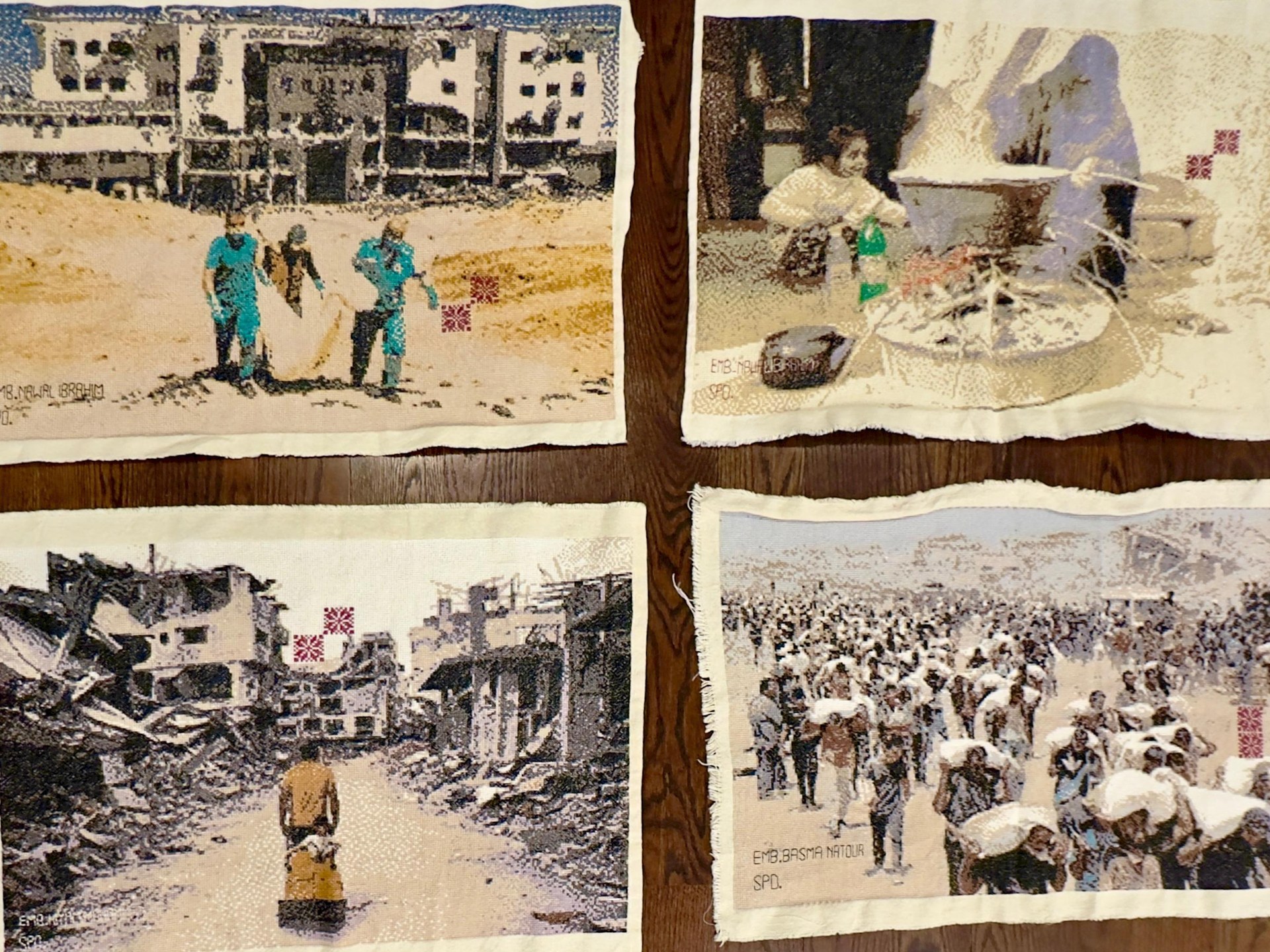

The Gaza Genocide Tapestry represents a profound intersection of cultural preservation and economic opportunity, underscoring the strategic role of arts-based initiatives in shaping regional narratives and fostering resilience. As a collaborative effort involving Palestinian women, diaspora communities, and international institutions, the project highlights the growing appetite for transnational cultural capital in the Middle East and North Africa. By leveraging traditional tatreez (Palestinian embroidery) as a medium of testimony, the tapestry not only safeguards historical memory but also positions Palestinian heritage as a vital asset in the region’s evolving economic landscape. This aligns with broader trends where cultural initiatives are increasingly viewed as catalysts for soft power, tourism, and diplomatic engagement, particularly in a region where sovereignty and narrative control remain contested. The venture capital ecosystem, traditionally focused on tech and fintech, is now exploring opportunities in cultural technology and heritage-driven economies, as evidenced by the Palestine Museum US’s role as a hub for curating and commercializing such initiatives.
Sovereign capital, traditionally associated with state-backed investments, is evolving to encompass cultural and humanitarian projects, particularly in contexts of conflict. The Gaza Genocide Tapestry’s reliance on partnerships with entities like the Palestine Museum US and its global exhibition at the Venice Biennale reflects a shift toward “cultural diplomacy” as a form of sovereign leverage. For MENA governments, funding or endorsing such projects could signal solidarity with marginalized communities while navigating complex geopolitical alignments. However, the region’s fragmented political architecture complicates this, as states like Israel and Saudi Arabia pursue divergent agendas. The tapestry’s existence thus becomes a proxy for broader debates about who controls historical narratives and how regional economies can harness cultural assets to counterbalance external influences. This dynamic intersects with growing investor interest in “impact capital,” where returns are measured not just in financial terms but in social and cultural capital.
The scalability of the Gaza Genocide Tapestry offers a blueprint for regional infrastructure innovation, particularly in leveraging digital tools to document and disseminate trauma. The project’s logistical challenges—coordinating embroidery across refugee camps, translating images into stitchable formats, and managing cross-border distribution—reveal gaps in the MENA region’s connectivity infrastructure. While venture capital has historically prioritized urban tech hubs, the tapestry’s decentralized nature highlights the need for investment in rural digital infrastructure and cultural preservation networks. For example, blockchain-based platforms could authenticate and track the tapestry’s panels, creating new revenue streams for artists while ensuring transparency in funding allocation. Similarly, the integration of augmented reality into future exhibits could transform how such projects engage global audiences, aligning with the MENA region’s push to modernize cultural tourism. These innovations require coordinated public-private partnerships to bridge infrastructure deficits and unlock the economic potential of cultural narratives.