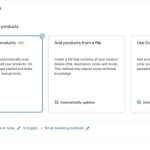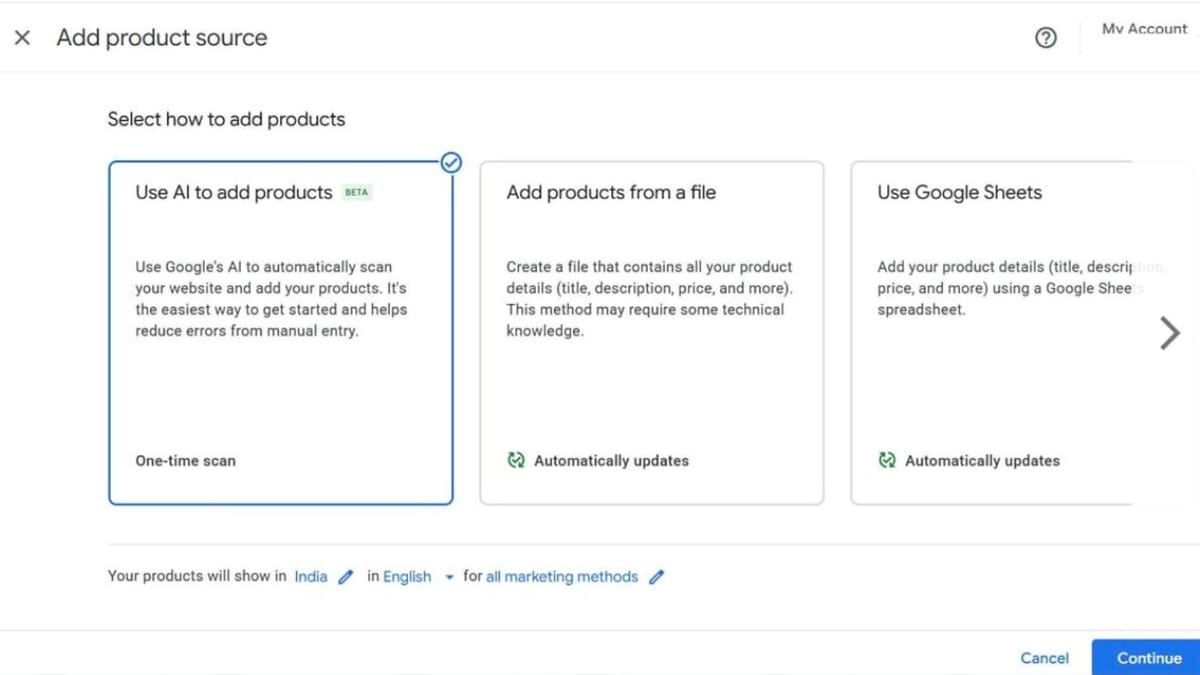

Google’s latest AI-powered product import capability for Merchant Center represents more than a tactical feature upgrade—it signals a strategic inflection point for digital commerce infrastructure across the Middle East and North Africa, where sovereign capital pools are aggressively repositioning toward technology-enabled retail ecosystems. The one-time AI scan functionality, while seemingly modest in scope, arrives at a critical juncture as MENA governments pursue economic diversification agendas that prioritize digital transformation and cross-border e-commerce facilitation. With Saudi Arabia’s Vision 2030 allocating $1 billion to digital infrastructure by 2025 and UAE’s Operation 300bn targeting AED 207 billion in industrial investments, the region’s sovereign wealth funds are increasingly directing capital toward platforms that can accelerate SME digitization and reduce technical barriers to market entry.
From a venture capital perspective in MENA, this development intensifies competition dynamics among regional e-commerce enablement startups that have historically monetized the complexity of product feed management. Companies like Dubai-based Salla and Saudi Arabia’s Zid have built substantial merchant bases by simplifying inventory management for Arabic-language retailers, yet Google’s one-time scan capability directly challenges these value propositions by eliminating the initial technical setup friction that drives merchant acquisition costs. The feature’s limitation to static snapshots rather than continuous synchronization creates both opportunity and vulnerability for MENA’s venture-backed ecosystem: while enterprise-scale retailers will still require sophisticated feed management solutions, the long tail of small merchants who drive regional e-commerce volume may increasingly bypass local platforms entirely, redirecting ad spend toward Google’s consolidated commerce infrastructure.
The infrastructure implications extend beyond immediate competitive dynamics to reshape how MENA policymakers conceptualize digital sovereignty in retail markets. As Google’s product data increasingly powers not merely Shopping campaigns but also AI Mode experiences, free listing grids, and connected television commerce surfaces, the region faces a fundamental trade-off between rapid digitization acceleration and dependency on Western cloud infrastructure. Sovereign capital vehicles including Saudi Arabia’s Public Investment Fund and Qatar Investment Authority have committed over $30 billion collectively to regional technology partnerships since 2024, yet Google’s expanding data ingestion capabilities effectively centralizes product intelligence within US-based infrastructure—a dynamic that regional policymakers will need to weigh against competing Chinese and domestic alternatives. The timing coincides with increasing regulatory scrutiny across MENA markets regarding data localization requirements for consumer financial and purchasing information.
Looking toward the next twelve months, the beta nature of Google’s AI import feature belies its strategic importance for cross-border retail expansion across MENA markets. Unlike traditional product feeds that require ongoing merchant maintenance and create recurring technical dependencies, this one-time scan approach aligns with regional commerce patterns where informal retail sectors dominate and sustained technical infrastructure investment remains nascent. However, the documented nine-day data lag in existing automated import systems raises fundamental questions about accuracy for MENA merchants operating in high-inflation environments where pricing volatility can exceed 5% monthly across key categories. As regional central banks maintain tight monetary policies through 2026, the reliability gap between Google’s promise of automatic updates and actual performance may prove decisive for merchant platforms that survive on superior data freshness—a competitive moat that venture capital investors in Dubai and Riyadh are actively evaluating against their Google exposure.