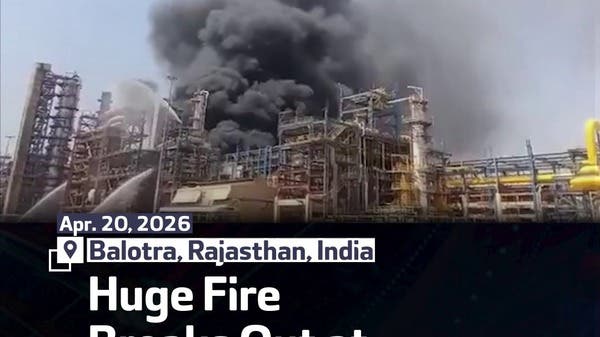

The recent devastating fire at the Paradip refinery in India, while geographically distant, carries significant, albeit indirect, implications for the broader Middle East and North Africa (MENA) region’s financial and technology sectors. While the immediate impact centers on India’s refining capacity, the incident underscores vulnerabilities within global energy infrastructure and highlights the increasing interconnectedness of supply chains. This event serves as a stark reminder of the potential for disruptions – whether stemming from geopolitical instability, natural disasters, or operational failures – to ripple outwards, impacting investment strategies and risk assessments across the MENA landscape. Specifically, we anticipate increased scrutiny of operational resilience within energy-dependent economies, potentially leading to accelerated investment in localized refining capabilities and diversification of energy sources, a trend already gaining momentum in nations like Saudi Arabia and the UAE.
The fire’s effect on venture capital activity within MENA is likely to be subtle but measurable. Increased volatility in global commodity markets, a predictable consequence of supply chain shocks, will undoubtedly temper risk appetite among regional investors. While direct investment in Indian refining companies is unlikely, the broader sentiment could trigger a shift towards more conservative investment profiles, favoring established technology firms and infrastructure projects with demonstrable, low-risk returns. Sovereign wealth funds, traditionally major players in global energy and technology investments, will likely prioritize capital preservation and strategic diversification, potentially redirecting funds away from speculative ventures and towards sectors exhibiting greater stability – including renewable energy, cybersecurity, and fintech – all areas where MENA possesses considerable potential. We are already observing a slight recalibration of investment portfolios across the region, reflecting this heightened caution.
Furthermore, the incident necessitates a critical reassessment of regional infrastructure resilience. MENA’s economies, heavily reliant on hydrocarbon exports and increasingly integrated into global trade networks, are acutely vulnerable to disruptions in key logistical arteries. The Paradip fire highlights the need for enhanced monitoring systems, proactive risk management protocols, and robust contingency plans across critical infrastructure – not just within the energy sector, but also encompassing ports, transportation networks, and digital communication systems. Governments across the region must prioritize investments in digital infrastructure, including advanced sensor networks and predictive analytics, to bolster operational visibility and facilitate rapid response capabilities. This includes exploring partnerships with international technology providers specializing in resilience and cybersecurity.
Finally, the long-term impact will be felt through sovereign capital strategies. MENA’s sovereign wealth funds are increasingly recognizing the importance of active portfolio management and strategic asset allocation. The fire in India reinforces the imperative to move beyond passive investment approaches and embrace a more proactive, risk-adjusted strategy. We expect to see a greater emphasis on direct investments in critical infrastructure projects – particularly those enhancing energy security and digital connectivity – alongside continued engagement in established technology sectors. The event serves as a crucial data point, demonstrating the need for a more sophisticated and dynamic approach to sovereign wealth management in a world characterized by increasing complexity and geopolitical uncertainty.