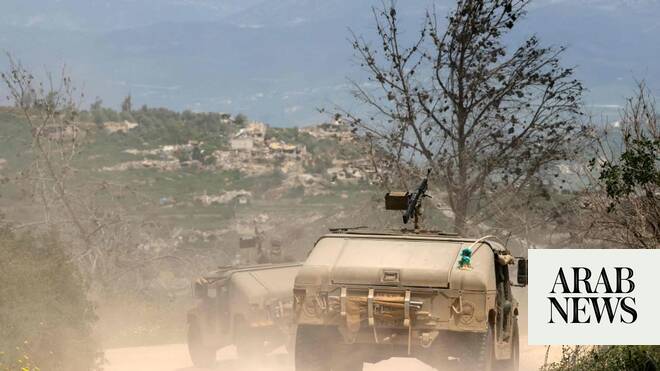

The resumption of hostilities between Israel and Hezbollah in southern Lebanon presents a significant and escalating challenge for the wider Middle East, demanding immediate attention from regional sovereign wealth funds and impacting the trajectory of venture capital investment across the North Africa and MENA corridor. Israel’s directive for “full force” engagement, including the targeted demolition of structures allegedly utilized by Hezbollah, underscores a shift from a purely military response to a deliberate strategy of infrastructure disruption and territorial control. This action directly threatens the stability of Lebanon, a nation already grappling with a severe economic crisis and political fragmentation, and risks exacerbating existing humanitarian concerns, potentially triggering a refugee crisis that will strain neighboring countries’ resources.
The business implications are profound. Venture capital firms active in sectors such as logistics, telecommunications, and renewable energy – all critical for Lebanon’s reconstruction – are likely to curtail investment until the security situation stabilizes. Furthermore, sovereign wealth funds, particularly those with exposure to Israeli assets, face heightened risk exposure. The potential for protracted conflict and the disruption of trade routes, including the Litani River’s impact on critical supply chains, necessitate a reassessment of portfolio diversification strategies. Beyond Lebanon, the escalation raises concerns about broader regional instability, particularly regarding Syria and the potential for spillover effects, impacting investments in sectors reliant on cross-border trade and security.
The deployment of a “Yellow Line” mirroring the Gaza demarcation zone represents a formalized attempt to delineate operational areas and control the flow of combatants, but it also signals a prolonged military presence and a significant impediment to economic recovery. The reported demolitions and ongoing artillery shelling are systematically dismantling civilian infrastructure, effectively crippling the capacity for rebuilding and hindering the return of displaced populations. The French and European diplomatic efforts, including President Macron’s planned meetings with Lebanese and EU leaders, are crucial, but their success hinges on Lebanon’s ability to demonstrate a commitment to accountability and a path towards de-escalation, a prospect currently undermined by the ongoing violence.
Ultimately, the situation in southern Lebanon highlights the interconnectedness of regional security and economic stability. The conflict’s impact extends far beyond the immediate border region, demanding a coordinated response from international financial institutions, regional governments, and the private sector. Sustained engagement, coupled with targeted humanitarian aid and a commitment to supporting Lebanon’s long-term reconstruction, is paramount to mitigating the economic fallout and preventing a further deterioration of the already precarious situation. Failure to address the underlying drivers of instability – including Hezbollah’s influence and Lebanon’s endemic governance challenges – risks perpetuating a cycle of violence and undermining the region’s economic prospects for years to come.