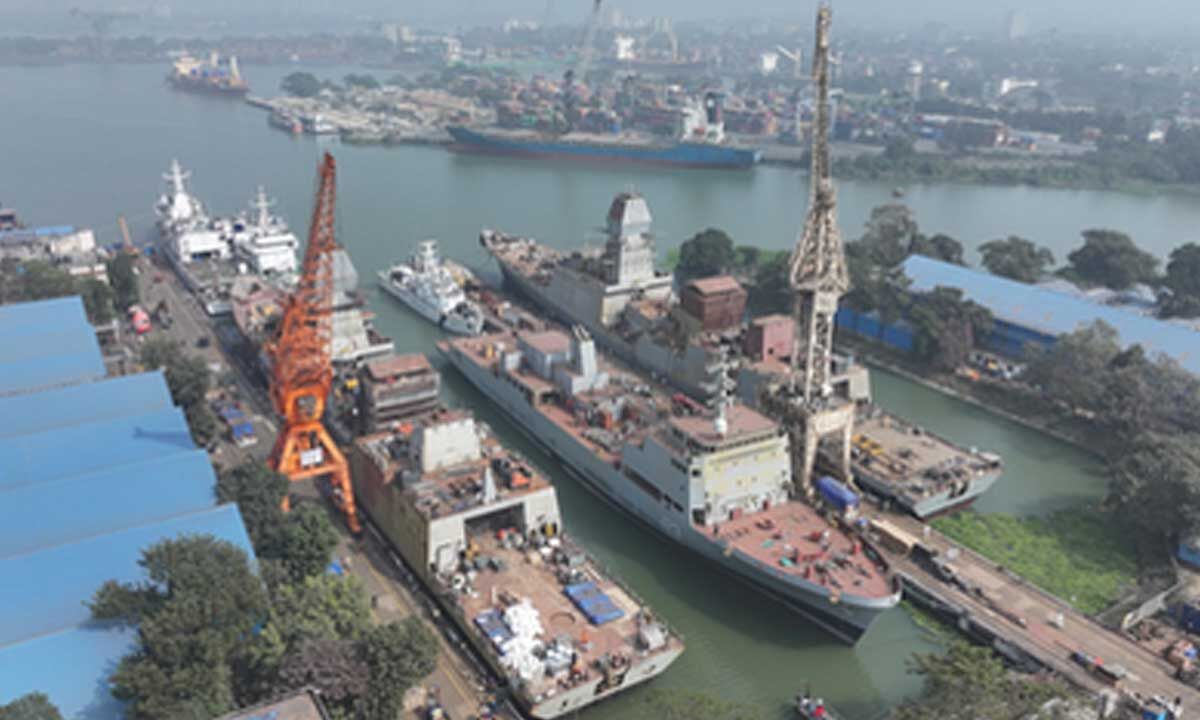

India’s approval of a ₹1,570 crore ship repair facility at Vadinar represents a significant strategic realignment in the maritime services landscape with profound implications for the Middle East and North Africa (MENA) region. This sovereign-backed investment, executed by Deendayal Port Authority and Cochin Shipyard, directly addresses the critical deficiency in domestic capacity for large vessels exceeding 230 metres, enabling repairs up to 300 metres. This move fundamentally alters the competitive dynamics for ship repair, particularly targeting the high-value market for foreign-flagged vessels in the Indian Ocean corridor. The facility’s proximity to key international shipping lanes and existing port clusters like Mundra and Kandla positions it to capture market share previously serviced primarily by MENA hubs such as Dubai Dry Docks World or Singapore, potentially diverting significant sovereign capital outflows from the region back into India’s maritime ecosystem.
The projected creation of approximately 290 direct and 1,100 indirect jobs underscores the project’s role as a catalyst for ancillary industries and small and medium-sized enterprises (MSMEs), fostering a self-sustaining maritime industrial cluster. This model of infrastructure-driven economic development is likely to resonate with MENA sovereign wealth funds (SWFs) and regional governments, who are increasingly scrutinizing capital allocation towards strategic assets like advanced shipyards. Beyond direct investment, the project signals potential opportunities for venture capital (VC) funding supporting logistics, marine tech, and specialised repair services that will cluster around the facility. This could ignite a broader regional investor interest in maritime tech and infrastructure support services, creating new investment channels beyond traditional energy projects.
Ultimately, the Vadinar facility is not merely an infrastructure upgrade but a strategic imperative reinforcing India’s position within the Indian Ocean trade network. It reduces dependency on external repair facilities, curbing foreign exchange outflows and enhancing the competitiveness of Indian ports through faster turnaround times. For MENA, this development intensifies competition in the Indian Ocean services market, compelling regional players to innovate and potentially accelerate their own sovereign-backed infrastructure projects to maintain dominance. The project also aligns with India’s long-term maritime visions, heralding a shift towards regional self-sufficiency that could reshape the entire trade and service architecture between the Indian subcontinent and the Gulf, MENA, and East Asia.