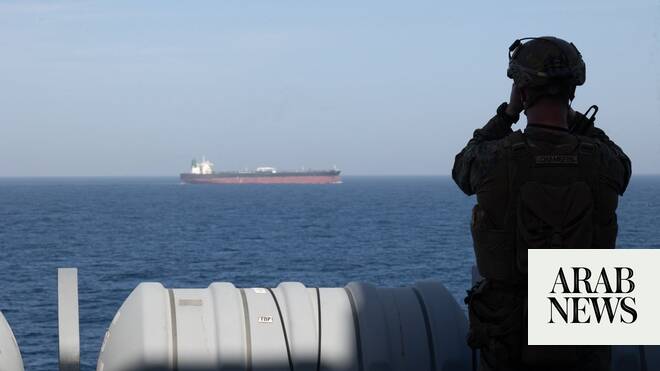

The escalation of hostilities in the Strait of Hormuz underscores the existential fragility of the Middle East and North Africa’s (MENA) strategic economic infrastructure, with direct ramifications for global energy stability and sovereign capital flows. The U.S.-Iran confrontation over the seized Icelandic tanker, Touska, exemplifies how military interventions in critical maritime chokepoints disrupt not only regional trade but also the broader financial architecture underpinning energy markets. With over two-thirds of the world’s seaborne oil transiting the strait, the unilateral U.S. blockade of Iranian vessels—enforced through naval interdiction and sanctions—translates into a de facto weaponization of energy security. Such actions exacerbate inflationary pressures across MENA states reliant on oil imports, while destabilizing sovereign credit ratings by eroding confidence in the region’s ability to maintain predictable, rules-based energy transactions.
The blockade’s economic ripple effects extend beyond immediate geopolitical tensions to reveal vulnerabilities in MENA’s sovereign capital structures. Iran’s seizure of the Touska, a vessel ensnared in U.S. sanctions, highlights the precariousness of sovereign wealth management in an era of hyper-sanctions. With over $100 billion in assets globally immobilized, Iran’s inability to access international capital markets strains its capacity to fund critical infrastructure projects—from decarbonization initiatives to digital transformation—while heightening fiscal pressures on regional partners dependent on energy subsidies. This dynamic pressures Gulf Cooperation Council (GCC) states, including Saudi Arabia and the UAE, to recalibrate their sovereign wealth strategies, prioritizing resilience against prolonged supply chain disruptions even as they navigate divergent U.S. diplomatic pressures.
Venture capital hesitancy across MENA’s tech and renewable energy sectors further amplifies these systemic risks, as geopolitical uncertainty deters cross-border investments critical for transitioning to a post-oil economy. While the region attracted a record $4.2 billion in VC funding in 2023, the Hormuz impasse—coupled with protracted U.S.-Iran friction—casts doubt on long-term regulatory stability. Investors face heightened risks of asset seizures under extraterritorial sanctions or escalating maritime hostilities, which could deter capital inflows into emerging blockchain or fintech hubs. Moreover, the blockade’s impact on oil price volatility—evidenced by a 30% surge in Brent crude during the strait’s brief closure—exacerbates cost of capital challenges for startups reliant on stable energy logistics.
Regional infrastructure stakeholders must now confront the existential threat posed by continued maritime destabilization. The Strait of Hormuz, a linchpin of MENA’s trade and energy net, risks becoming a terrain of irreparable economic harm if confrontations persist. Recent U-turns by LNG tankers, including the Angola-flagged G Summer, signal market distress as shippers recalibrate transit routes, amplifying costs for energy-intensive economies like Egypt and Morocco. Simultaneously, the U.S.-led blockade has exposed gaps in de-escalation mechanisms, leaving regional infrastructure projects—from the Blue Economy initiatives to cross-border renewable grids—exposed to cascading disruptions. Addressing this requires urgent multilateral engagement to insulate critical infrastructure from partisan escalations, ensuring MENA’s economic sovereignty remains anchored to stability, not sanctions.