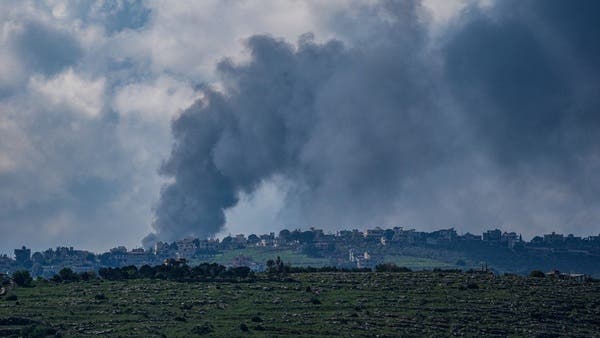

The killing of a broadcast journalist amid a suspended air campaign in southern Lebanon underscores how operational risk is migrating from conventional battlefields into the information infrastructure that underpins sovereign stability. For MENA sovereign investors and infrastructure planners, the incident is not isolated; it is a leading indicator of how contested peripheries can impair data flows, raise insurance premia on critical transport corridors, and compress the window in which Gulf capital can underwrite logistics and energy transit. When reporting lines come under fire, so too do the revenue assumptions of special economic zones, port concessions, and cross-border power interconnectors that rely on predictable security externalities. Accountability, therefore, is less a normative question than a balance-sheet item: the cost of its absence is priced into higher political-risk loadings and longer payback horizons for sovereign-backed ventures.
Regional venture capital is recalibrating exposure to information and mobility assets accordingly. Limited partners are pressing general partners to embed continuity clauses that shift from narrative-led growth metrics to hard infrastructure redundancies—dark fibre, low-earth-orbit backup, and sovereign-cloud nodes that can operate irrespective of terrestrial volatility. Capital stacks are tilting toward dual-use platforms that serve commercial logistics and civil-defence communications alike, a trend most visible in UAE and Saudi mandates where state-co-investment vehicles condition follow-on tranches on demonstrable network resilience. The upshot is a bifurcation: high-multiple consumer-facing models face valuation compression, while deep-tech and physical-infrastructure plays attract sovereign co-investment at valuations that embed a durable security premium.
Infrastructure masterplans from North Africa to the Levant will increasingly price for intermittent flashpoints rather than episodic shocks. Sovereign wealth allocation is pivoting from headline-grabbing mega-projects to modular, defensible assets—desalination clusters tied to renewable micro-grids, inland logistics buffers, and hardened data arteries that skirt contested land lines. For regional LPs, this translates into a preference for escrow structures and political-risk insurance that front-loads liquidity and caps contingent liabilities. The implication for cross-border venture is clear: capital will flow through state-affiliated channels that can guarantee continuity of operations irrespective of ceasefire calendars. In this environment, the cost of capital is increasingly a function of infrastructure redundancy, and the margin of safety is measured in kilometres of alternative route and minutes of failover time, not quarterly user growth.