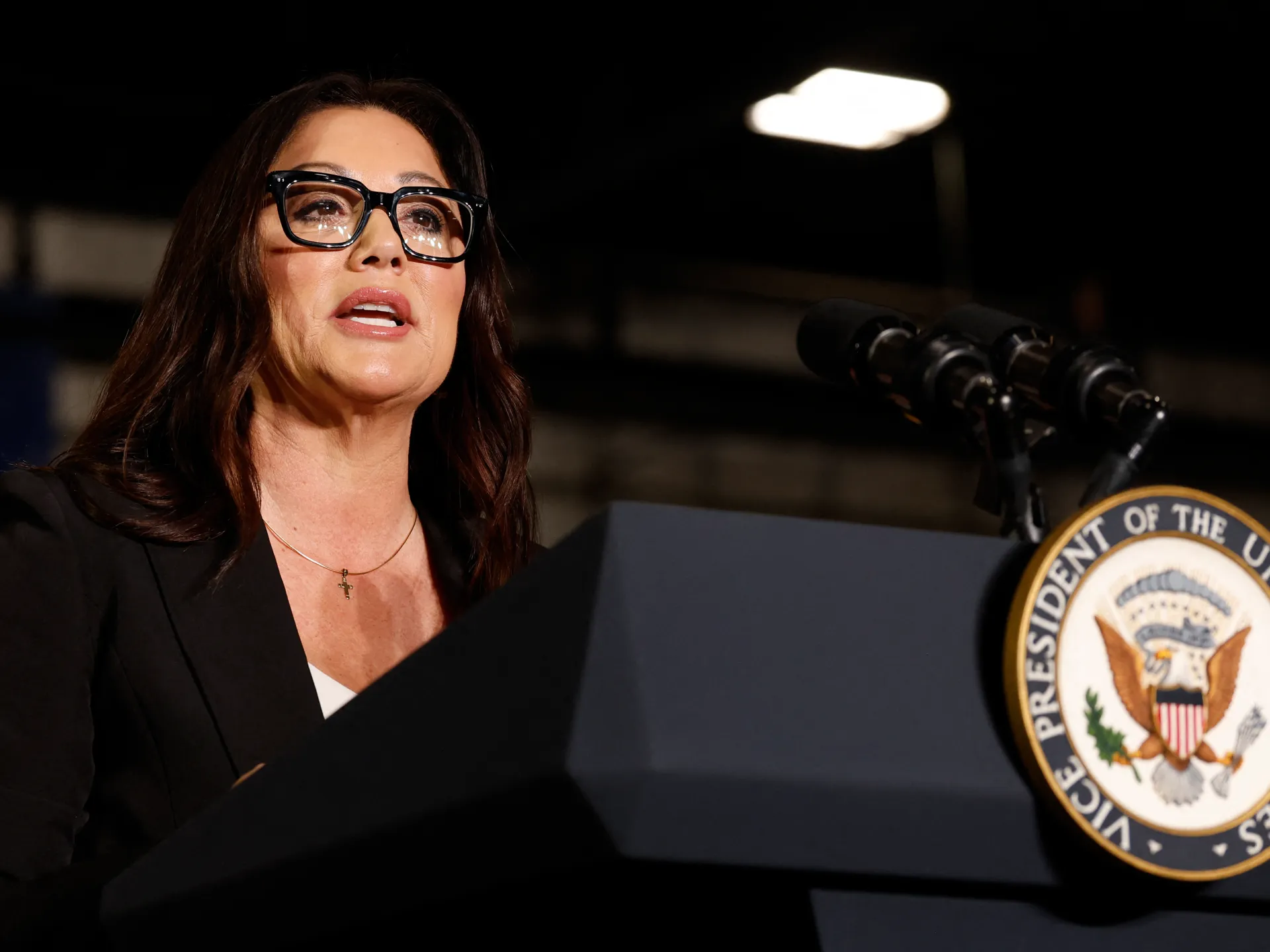

The recent transitions at the White House are emblematic of a broader recalibration of executive talent in the MENA region, underscoring shifting priorities within federal leadership structures. As American labour secretary Lori Chavez-DeRemer prepares to depart following a pattern of three high-profile departures from the Trump administration—including the notable resignations of Kristi Noem and Pam Bondi—she carries with her a complex legacy and set of institutional responsibilities. This transition is not merely symbolic; it reverberates through the financial and technological sectors, where her expertise in regulatory frameworks and sovereign capital management will now be evaluated against a new operational paradigm. For regional stakeholders, this signals the recalibration of investment flows and the repositioning of development agendas under evolving geopolitical and economic pressures.
The sovereign capital landscape within the Middle East and North Africa is undergoing a transformative period, accelerated by the ongoing exodus of key political and economic actors. The departure of Chavez-DeRemer follows a strategic retreat of both government and private stakeholders seeking to align with the evolving regulatory environment. This signals a hardening of policy boundaries—particularly visible in sovereign wealth funds and institutional investors who are reassessing risk exposure in light of increasing policy volatility. Venture capital firms and regional financial institutions are now recalibrating portfolios, factoring in the implications of such executive changes and their potential impact on domestic market stability. Such movements reinforce the urgency for local capital to prioritize resilience and regulatory rigor as anchors in a turbulent environment.
The ripple effects of these leadership transitions extend beyond governmental institutions into the realms of regional infrastructure and private-sector investment. As venture capital networks tighten their focus on long-term stability and structural integrity, there is a growing emphasis on supporting tech-driven infrastructure projects that require institutional credibility and alignment with national strategic goals. This shift is critical for mobilizing sovereign capital toward sustainable development, particularly in sectors that demand robust regulatory oversight. For investors across the MENA region, understanding these dynamics is vital, as it shapes the trajectory of private economic participation and the broader financial ecosystem in an era of heightened policy uncertainty.