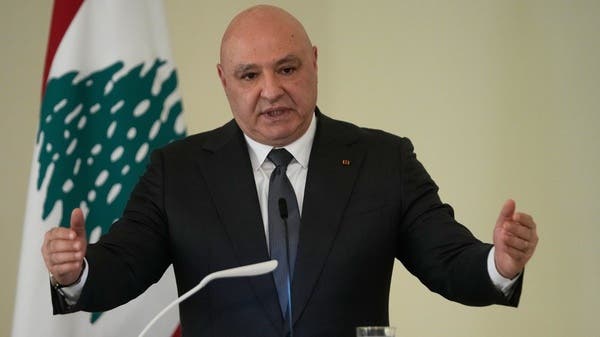

President JosephAoun’s articulation of a conditional ceasefire underscores a pivotal shift toward diplomatic engagement that could recalibrate cross‑border investment flows in the Levant. By foregrounding Lebanese sovereignty and demanding an end to “targeting of the innocent and security personnel,” the statement bolsters the narrative of a stabilized southern border, a prerequisite for sovereign‑backed infrastructure pipelines and sovereign wealth fund allocations in reconstruction and logistics.
The prospective direct talks between Lebanon and Israel, though not yet confirmed, signal a rare alignment of political will that may unlock multilateral financing mechanisms, including the World Bank’s Stabilization and Growth Trust and Gulf Cooperation Council‑linked development funds. Such alignment would facilitate sovereign‑issued green bonds tied to renewable energy projects in the Bekaa Valley and the reconstruction of displaced communities, thereby attracting both sovereign and institutional capital.
From a venture capital perspective, a durable ceasefire would reduce geopolitical risk premiums, encouraging early‑stage tech incubators in Beirut and Amman to attract follow‑on funding from global limited partners seeking exposure to MENA’s digital transformation. The reduced volatility could also catalyze cross‑border fintech collaborations that leverage the nascent digital banking ecosystem, accelerating capital deployment into AI‑driven logistics and supply‑chain platforms.
Regionally, infrastructure initiatives—spanning port upgrades, highway expansions, and cross‑border energy grids—stand to benefit from a stabilized security environment. Multinational engineering firms and construction consortia are likely to prioritize bids in Lebanon’s reconstruction phase, with sovereign wealth funds from the Gulf and sovereign‑linked development banks providing the bulk of financing, thereby reshaping the capital landscape of the broader Middle East and North Africa corridor.