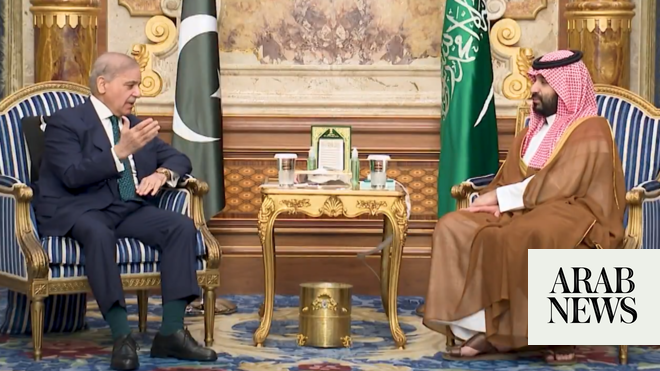

RIYADH — Saudi Arabia has committed $3 billion in financial support to Pakistan, bolstering Islamabad’s foreign reserves amid heightened regional instability, while extending an existing $5 billion deposit for an unspecified period, the Pakistani finance ministry announced Wednesday following high-level talks between Crown Prince Mohammed bin Salman and Prime Minister Shehbaz Sharif in Jeddah.
The sovereign capital infusion represents a significant deepening of the Saudi-Pakistani strategic partnership at a moment of acute geopolitical vulnerability for Islamabad. The $3 billion allocation, delivered through the Saudi Fund for Development, provides critical liquidity support to Pakistan’s balance of payments as the country navigates the fallout from escalating US-Iran tensions. The extension of the $5 billion deposit — originally structured as a short-term balance of payments facility — signals Riyadh’s intent to maintain its role as a principal creditor and strategic backer of the Pakistani state, even as regional dynamics grow increasingly complex. This financial commitment underscores the Kingdom’s use of sovereign wealth instruments as tools of diplomatic leverage and regional influence, positioning Pakistan as a key beneficiary of Gulf capital at a time when Islamabad seeks to position itself as a mediator between Washington and Tehran.
The timing of the Saudi financial commitment coincides with Pakistan’s efforts to host a second round of US-Iran negotiations in Islamabad, a diplomatic initiative that carries substantial economic implications for the broader region. The conflict, triggered by US and Israeli strikes on Iran in late February, has disrupted energy flows across the Gulf and exposed Saudi Arabia and other Gulf states to retaliatory Iranian actions. Islamabad’s facilitation of dialogue between the adversarial powers offers potential upside for regional stability — and by extension, for Gulf sovereign capital markets — but also places Pakistan in a precarious diplomatic position. The presence of Saudi Defense Minister Prince Khalid bin Salman and National Security Adviser Musaed Al-Aiban at the Jeddah talks signals the Kingdom’s keen interest in the trajectory of these negotiations, given the direct implications for Saudi energy infrastructure and economic interests.
Beyond the immediate financial support, the Jeddah meetings signal a broader recalibration of Gulf-South Asian economic relations as regional powers seek to hedge against systemic risks. Pakistan’s four-day diplomatic tour — encompassing Saudi Arabia, Qatar, and Turkey — reflects Islamabad’s effort to consolidate support across multiple sovereign capital sources ahead of potential further regional instability. The Antalya Diplomacy Forum, where Sharif is scheduled to meet Turkish President Recep Tayyip Erdogan, provides an additional platform for coordinating positions on the evolving regional security architecture. For Saudi Arabia, the $8 billion total exposure to Pakistan represents a strategic investment in maintaining a stable, aligned partner on the subcontinent’s western flank while simultaneously advancing the Kingdom’s ambitions as a regional diplomatic broker. The convergence of sovereign finance, mediation diplomacy, and strategic partnership in Jeddah underscores how Gulf capital remains central to the Middle East’s evolving economic and security order.