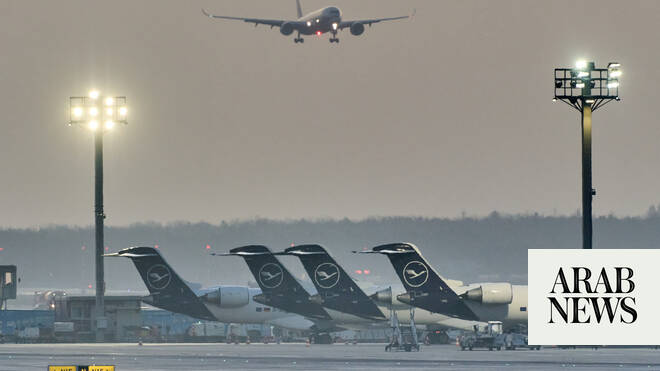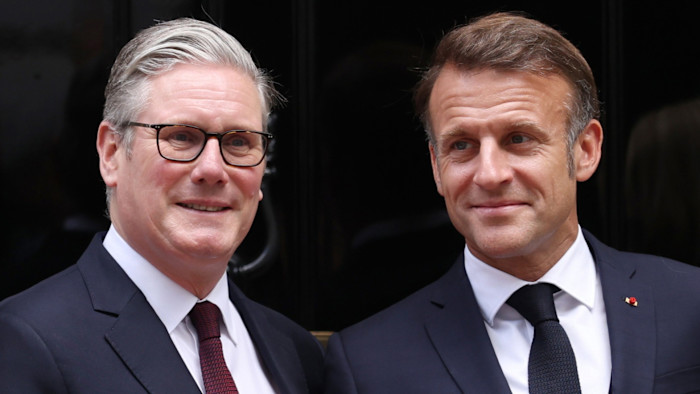

Paris and London will host a high‑level summit on Friday to chart a post‑conflict security framework for the Strait of Hormuz, a maritime corridor that underpins 20 % of global oil trade and a critical revenue stream for Gulf sovereign wealth funds. The agenda, driven by French President Emmanuel Macron and UK Prime Minister Sir Keir Starmer, is less a tactical military exercise than a blueprint for protecting the region’s logistics arteries, restoring investor confidence and unlocking stalled infrastructure projects. With the United States likely to remain a peripheral observer, the onus falls on European capitals and Gulf sovereign investors to marshal the capital required for de‑mining, port upgrades and real‑time navigation monitoring that will re‑enable the free flow of energy commodities.
Participants are expected to include German Chancellor Friedrich Merz, Italian Prime Minister Giorgia Meloni and senior officials from Australia, Canada, Japan and South Korea, while key Western figures such as NATO Secretary‑General Mark Rutte and European Commission President Ursula von der Leyen have been excluded at France’s insistence. The exclusion reflects a strategic pivot toward heads of state who can directly mobilise sovereign balance sheets and accelerate public‑private partnerships. In practice, the summit will outline a three‑phase programme: diplomatic coordination to secure legal guarantees for shipping; logistical support to clear mines and certify safe corridors; and, contingent on a durable ceasefire, a defensive naval presence coordinated through a multilateral mandate. Each phase is framed as a prerequisite for unlocking billions of dollars of private‑sector funding earmarked for downstream infrastructure, from digital traffic‑management systems to next‑generation terminal facilities.
For regional venture capital ecosystems, the outcome could be decisive. A credible security guarantee would stimulate early‑stage financing for fintech, maritime‑tech and renewable‑energy start‑ups seeking to tap the Gulf’s diversification mandates under Vision 2030‑style plans. Sovereign wealth funds, notably Saudi Arabia’s Public Investment Fund and Abu Dhabi’s Mubadala, are poised to co‑invest in resilient supply‑chain assets that mitigate geopolitical risk. Their participation would not only diversify portfolio exposure but also catalyse a broader ecosystem of ancillary services—logistics platforms, insurance solutions and cyber‑security firms—required to safeguard an internationally‑trusted shipping lane.
Underlying the diplomatic overture is a stark acknowledgement that without a durable security architecture, regional infrastructure pipelines—such as the planned Qatar‑UAE gas hub and Oman’s expanding petro‑chemical complex—remain under‑utilised, eroding projected returns on sovereign capital. The summit therefore represents a pivotal moment for MENA economies to translate geopolitical stabilization into tangible economic dividends, positioning the Strait of Hormuz once again as a linchpin of global energy markets and a catalyst for private investment across the region.