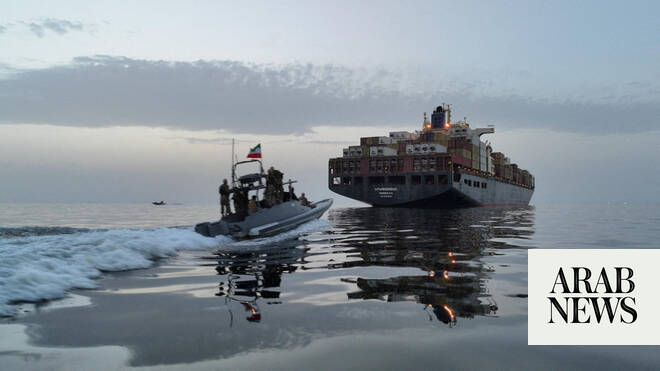

Prime Minister Narendra Modi’s unequivocal declaration that safeguarding the Strait of Hormuz constitutes India’s “highest priority” reverberates across the Middle East and North Africa, where the waterway underpins more than 60 % of global oil shipments and a comparable share of LNG flows destined for Asian markets. For sovereign wealth funds such as Saudi Arabia’s Public Investment Fund and Qatar’s Investment Authority, the statement reaffirms the strategic necessity of securing maritime chokepoints, prompting a renewed focus on capital allocation toward maritime security assets, high‑value port infrastructure, and insurance products that mitigate exposure to geopolitical volatility.
In the venture capital arena, the heightened geopolitical risk profile is catalyzing a surge of capital into technology-driven logistics and maritime surveillance platforms. Start‑ups developing AI‑enabled vessel tracking, autonomous patrol drones, and blockchain‑based cargo authentication are attracting early‑stage financing from regional VC firms seeking to capture a share of the $30 billion maritime security market projected to expand at a compound annual growth rate of 12 % through 2030. This influx is expected to accelerate the deployment of real‑time risk analytics across Gulf Cooperation Council (GCC) shipping lanes, thereby reducing insurance premiums and enhancing the predictability of trade flows.
Regional infrastructure initiatives are also being recalibrated to reinforce the strategic importance of Hormuz‑adjacent corridors. The ongoing expansion of the Saudi‑UAE Joint Logistics Hub, coupled with the UAE’s investment in the Ras Al‑Khaimah deep‑water port and the Saudi‑backed “Red Sea‑Gulf” rail network, reflects a coordinated effort to diversify freight pathways and reduce reliance on the Strait itself. These projects, funded by a blend of sovereign capital and international development banks, are designed to create resilient supply chains that can absorb disruptions while preserving the economic vitality of the MENA region.
Collectively, Modi’s emphasis on Hormuz security amplifies the imperative for MENA governments and investors to prioritize maritime resilience. The convergence of sovereign capital, venture financing, and large‑scale infrastructure development is poised to transform the region from a passive transit zone into an active hub of security‑oriented logistics, thereby strengthening trade continuity, attracting further foreign direct investment, and underpinning the long‑term economic diversification goals of the Gulf states.