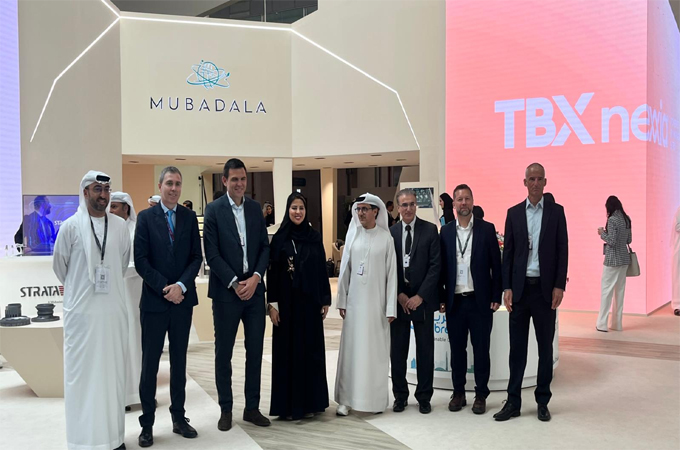

Mubadala’s activation of a dedicated OCTG manufacturing platform with Tubacex converts sovereign capital into decisive industrial leverage at a moment when Middle East energy infrastructure is recalibrating for longevity and complexity. The 20,000-tonne annual CRA OCTG facility anchors Abu Dhabi’s ICAD as a node of metallurgical sovereignty, insulating regional upstream programmes from trans-continental lead-time inflation and geopolitical supply-line friction. For sovereign allocators and corporates alike, the JV validates a replicable template: deploy patient capital to internalise critical oilfield inputs, convert offtake commitments into locked-in demand, and preserve optionality for gas monetisation and low-carbon retrofit without ceding margin or schedule to offshore vendors. The result is not merely import substitution, but margin retention and pricing power within a controlled industrial stack that can be scaled across the GCC.
Backed by Adnoc’s long-term offtake as commercial ballast, TBX Nexxia operates as an infrastructure-grade supplier, compressing working-capital cycles for domestic E&P while offering neighbouring markets a credible, traceable alternative to Northern Hemisphere mills. The integration of Spanish and Brazilian finishing assets expands the addressable network into a near-shore and Atlantic logistics footprint, transforming a national champion into a regional systems integrator. Venture and growth capital will read this as proof that specialised midstream manufacturing can be de-risked through anchor-client structures and sovereign balance-sheet support—a signal likely to accelerate co-investment in adjacent compression, metallurgy and inspection sub-sectors where MENA demand is structurally outpacing global supply.
Strategically, the platform hardens the UAE’s operational continuity as hydrocarbon and hydrogen value chains converge, requiring CRA tubulars capable of withstanding aggressive sour and saline environments. By embedding design, threading and metallurgical traceability within Abu Dhabi, the partnership compresses engineering latency for mega-projects while exporting standards that will shape procurement norms across North Africa and the Levant. For sovereign investors beyond the UAE, the model demonstrates how targeted industrial policy plus bilateral specialisation neutralises single-thread dependency on OECD production cycles and protects capex execution against future trade-route shocks.
Ultimately, TBX Nexxia crystallises the next phase of MENA industrial capital: mission-critical manufacturing, localised know-how and global reach, funded by balance sheets that prioritise resilience over quarterly rotation. As Gulf economies pivot from throughput to value capture, such partnerships will define which jurisdictions control the physical stack required to monetise remaining hydrocarbon life and nascent low-carbon networks. For regional allocators, the takeaway is unequivocal—manufacturing sovereignty in energy inputs is becoming a competitive moat, and the capital required to build it is increasingly patient, strategic and non-negotiable.