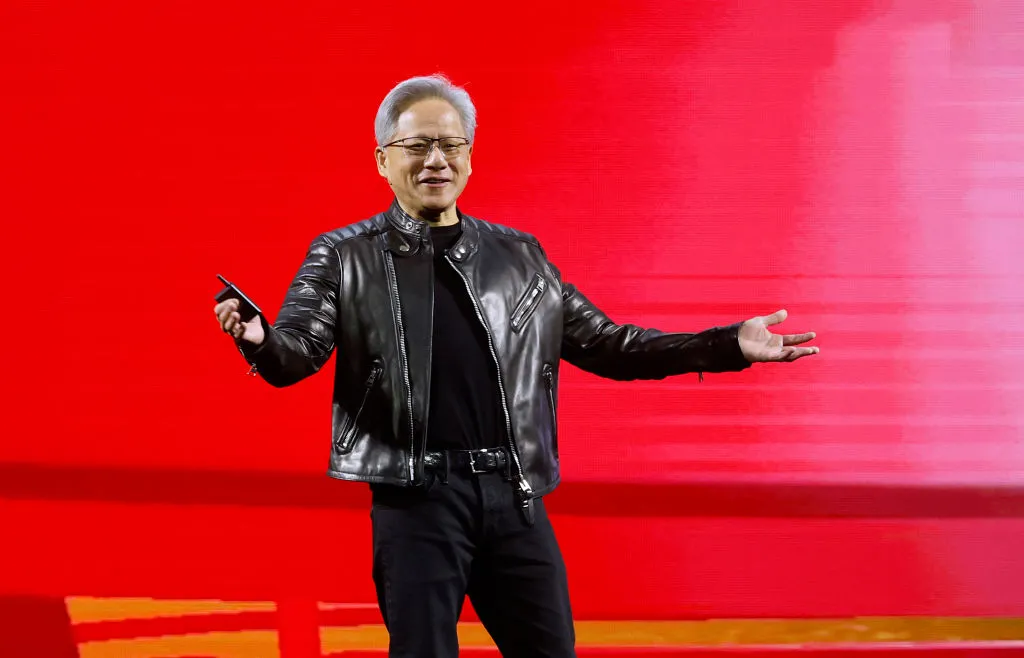

Jensen Huang, the formidable CEO of Nvidia, recently dismissed dire predictions about artificial intelligence eradicating employment, framing AI instead as an engine for industrial resurgence. Speaking at the Milken Institute’s summit, Huang argued that AI’s integration into economies would generate employment at scale, positioning it as a catalyst for re-industrialization rather than a harbinger of mass redundancies. His remarks resonate with particular urgency across the Middle East and North Africa, where sovereign wealth funds and state-backed investors are aggressively deploying capital into AI infrastructure. Countries such as the UAE and Saudi Arabia have committed tens of billions of dollars to domestic AI ecosystems, seeking to diversify beyond hydrocarbons and establish regional technological primacy. These investments are not merely defensive—they represent a calculated bid to capture the next wave of global economic value creation.
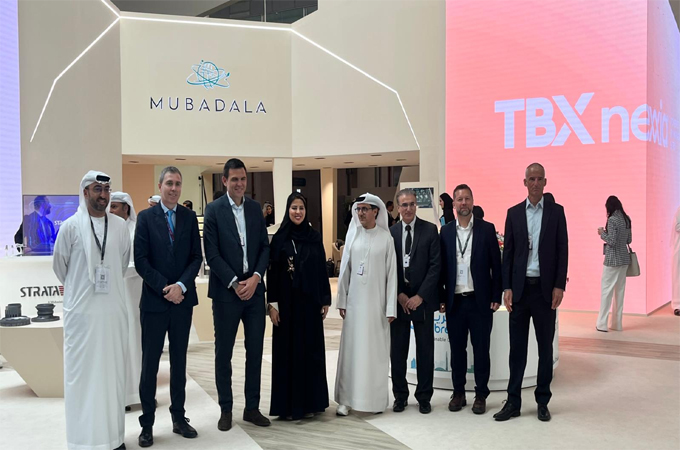
The MENA region is witnessing a parallel surge in venture capital inflows targeting AI-driven startups, with Dubai and Riyadh emerging as key hubs for algorithmic innovation and deep-tech investing. Sovereign capital, exemplified by entities like Mubadala in Abu Dhabi and the Public Investment Fund of Saudi Arabia, is funneling resources into semiconductor supply chains, data centers, and generative AI research. This capital deployment is catalyzing a redrawing of regional infrastructure priorities: nations are racing to build AI-ready power grids, fiber networks, and logistics corridors capable of sustaining compute-intensive operations. However, this acceleration raises critical questions about social cohesion. As AI automates segments of existing workforces, policymakers must balance disruption with reskilling initiatives to prevent exacerbating inequality—a challenge that could undermine long-term economic stability in labor-intensive economies.
Huang’s assertion that AI augments rather than replaces human roles holds particular salience for MENA economies dependent on large youth populations and underemployed graduates. His argument—that AI displaces tasks, not entire functions—aligns with venture capital strategies prioritizing human-in-the-loop systems and augmented decision-making platforms. Yet, empirical data suggests a complex trajectory. According to the Boston Consulting Group, upwards of 15% of U.S. jobs may be eliminated by AI in the coming years, a displacement rate that could strain labor markets from Cairo to Muscat. Regional policymakers are already grappling with the implications: how to retraining populations for roles in AI governance, data annotation, and algorithm auditing while maintaining competitiveness in global markets.
For MENA governments, the path forward demands a dual focus on seizing AI’s transformative potential while mitigating its disruptive fallout. The region’s sovereign wealth funds must continue allocating capital toward foundational AI infrastructure—semiconductors, energy-efficient data centers, and regulatory sandboxes for emerging technologies. Simultaneously, venture capital ecosystems must be nurtured to scale homegrown AI solutions tailored to local market conditions. Success will hinge on aligning these commercial imperatives with strategic workforce development and social safety nets. The stakes are immense: nations that navigate this transition effectively will emerge as global AI powerhouses; those that falter risk becoming consumers rather than creators of the next technological epoch.