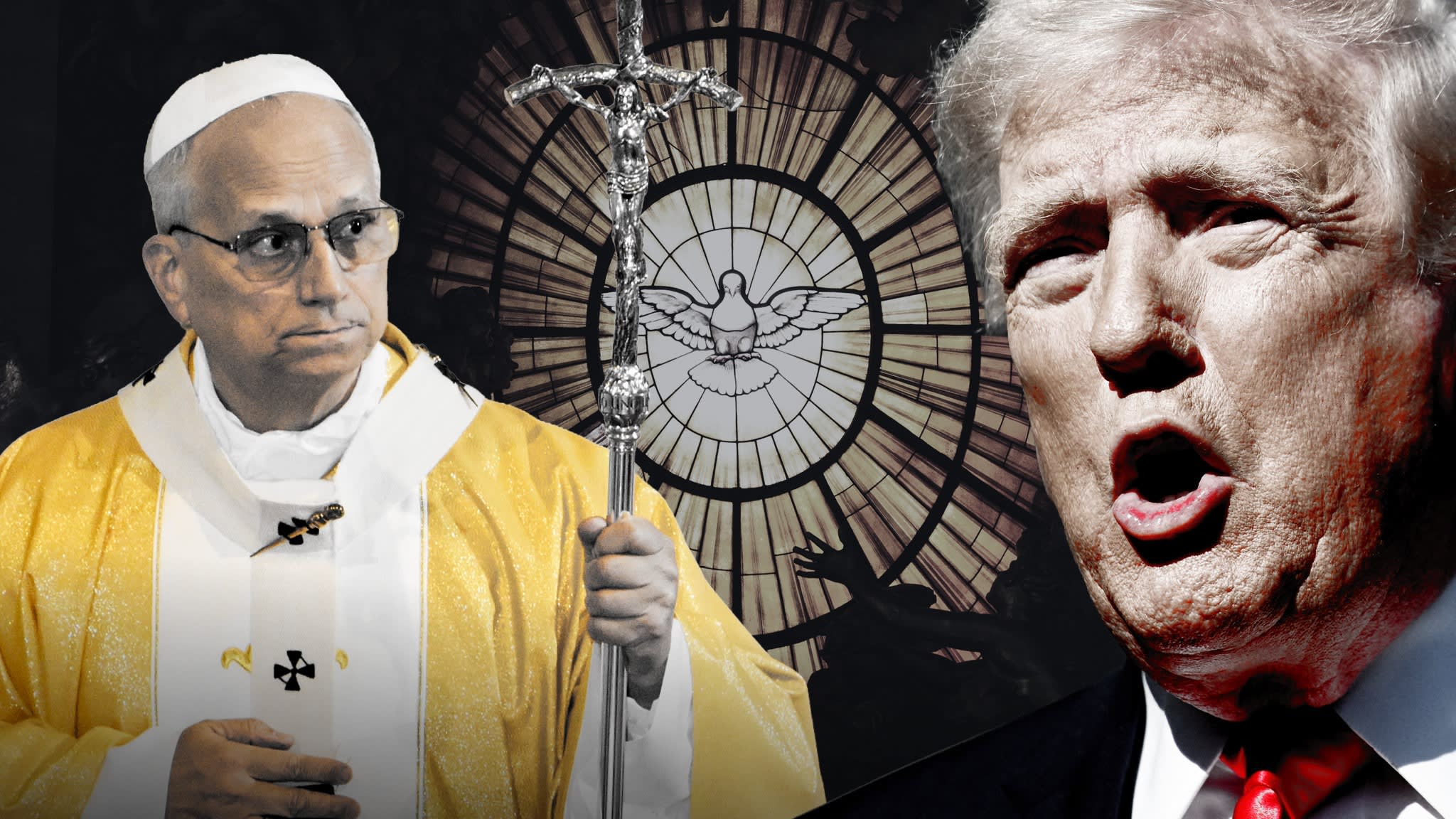

The pontiff’s vocal opposition to the Iran conflict underscores a strategic realignment of global capital flows, with profound implications for Middle East and North Africa (MENA) sovereign capital reserves. As geopolitical tensions in the region intensify, the Vatican’s influence—particularly through its alignment with US political narratives—may catalyze a shift in Western investment priorities. This could pressure MENA nations to reassess sovereign wealth fund allocations, prioritizing de-escalation strategies or diversification away from hydrocarbon-dependent economies. The region’s ability to attract foreign direct investment (FDI) hinges on perceived stability, and the Pope’s rhetoric, filtered through US policy channels, may either incentivize risk mitigation or exacerbate capital outflows if protracted conflict materials. Sovereign entities like Saudi Arabia’s PIF or Qatar’s sovereign funds may respond by bolstering local reserves or redirecting allocations toward defensive infrastructure, reflecting a broader recalibration of risk appetite amid external pressures.
Venture capital ecosystems across MENA face a bifurcated reality contingent on the Iran conflict’s trajectory. While heightened geopolitical volatility typically deters early-stage investment, the Pope’s stance—if it galvanizes a pragmatic US policy adjustment—could open avenues for cross-border tech collaboration. Countries such as Israel, UAE, and Morocco, which rely on global VC networks, may experience transient funding shifts if regional instability sparks a flight to safer jurisdictional hubs. However, long-term implications for MENA’s startup innovation pipeline remain contingent on macroeconomic stability. If sovereign governments prioritize technological self-reliance amid external disruption, venture capital could see a surge in state-backed blended finance models, particularly in AI, clean energy, and fintech sectors. Yet, divergent policy signals from the US and Europe, influenced by ecclesiastical diplomacy, risk fragmenting investment confidence, necessitating MENA startups to adopt more agile, localized capital strategies.
The regional infrastructure landscape in MENA is poised for significant upward or downward inflection based on the conflict’s resolution, with the Pope’s advocacy potentially serving as a geopolitical wildcard. Persistent military engagements in the Gulf could delay critical infrastructure projects tied to energy transition or digital connectivity, areas where sovereign capital has historically flowed robustly. Conversely, a de-escalation framework driven by multilateral diplomacy—possibly bolstered by US policy shifts reflecting papal influence—might accelerate investments in transnational smart grids, cross-border logistics networks, or coastal tech hubs. For instance, Gulf Cooperation Council (GCC) nations may leverage sovereign funds to fast-track projects that enhance regional resilience against external shocks, aligning with global ESG mandates. The key variable remains the Vatican’s role in shaping US foreign policy outcomes; any tangible shift could act as a catalyst for infrastructure-driven economic recovery, or conversely, entrench fragmented development trajectories across the region.