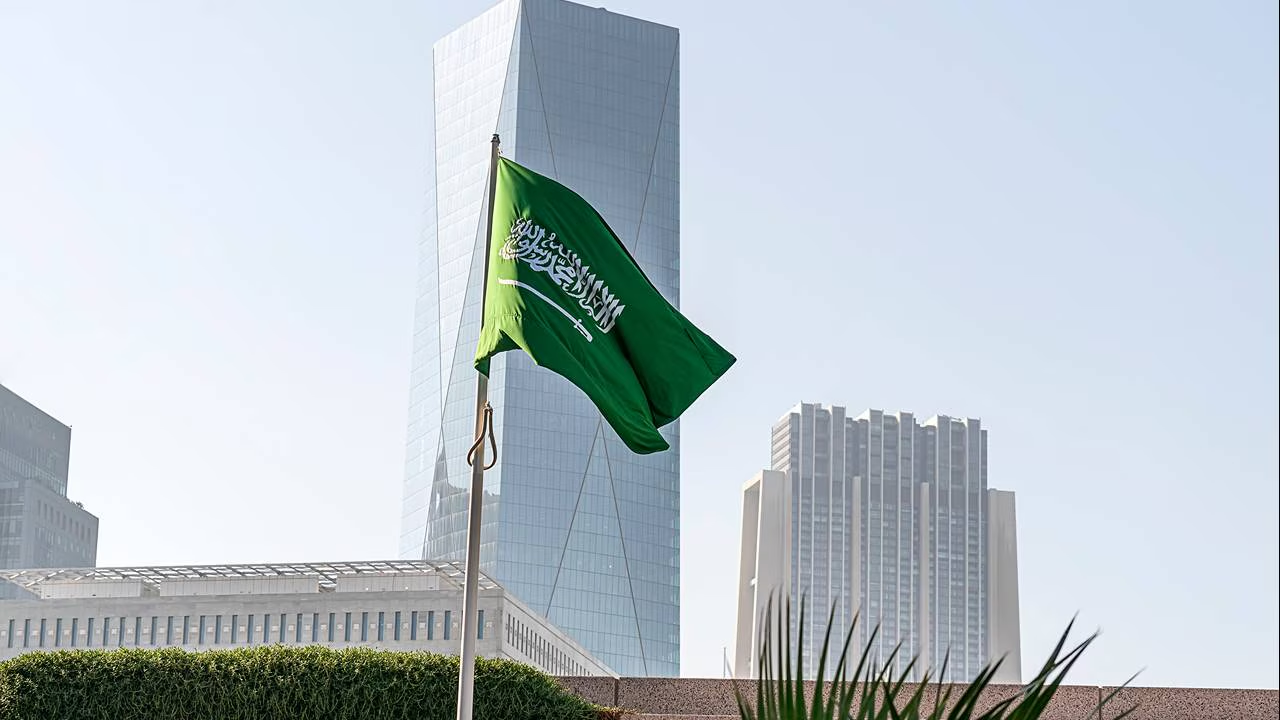

Saudi Arabia’s launch of a unified digital Hajj management system, integrating biometric verification, accelerated passenger screening, and automated baggagehandling for departure workflows, represents a targeted deployment of sovereign capital to protect and scale one of the kingdom’s most stable non-oil revenue streams. Backed by allocations from the Public Investment Fund (PIF) and the Ministry of Finance’s digital transformation budget, the platform targets a 40% reduction in processing times for the 2.5 million pilgrims who travel for the annual pilgrimage, which contributed an estimated $12bn in direct state revenue in 2024, excluding ancillary hospitality, retail, and logistics spend. Higher processing efficiency unlocked by the system is expected to support future quota increases, further bolstering non-oil inflows. This is a deliberate strategic move, not a routine operational upgrade: it positions digital public infrastructure (DPI) as a core sovereign asset under Vision 2030, accelerating a decade-long Gulf-wide shift of capex away from physical hard assets toward scalable, high-margin digital systems.
For regional venture capital and growth equity, the system creates a de-risked, sovereign-backed commercial pipeline for govtech, biometrics, and logistics tech startups across MENA. Multiple local firms backed by Saudi Technology Ventures (STV) and Sanabil Investments, PIF’s private capital arm, have secured subcontracts to build modular platform components, with multi-year sovereign off-take agreements that eliminate customer acquisition risk for early-stage vendors. This has crowded in private capital at scale: cumulative VC investment in Saudi govtech touched $1.8bn in the 12 months to June 2025, per proprietary analysis of regional deal flow, with 68% of deals tied to sovereign digital infrastructure projects. The platform’s modular, export-ready architecture also opens a new revenue stream for domestic tech firms, which can license the system to other jurisdictions hosting mass religious, cultural, or sports gatherings, from Egypt’s Sinai pilgrimage routes to Qatar’s FIFA World Cup legacy infrastructure.
The digital Hajj system serves as a core node in the GCC’s push to interconnect sovereign digital infrastructure across borders, with Riyadh targeting integration of biometric and travel data with UAE, Qatari, and Bahraini customs systems by 2027 to streamline transit for pilgrims routing through Dubai, Doha, and Manama. For aviation and logistics stakeholders, the projected 30% reduction in baggage mishandling and 25% cut in aircraft turnaround times will deliver measurable margin improvements for carriers including Saudia, Emirates, and Qatar Airways, all of which derive 12-18% of Q3 annual revenue from Hajj traffic. More broadly, the project underscores the maturation of MENA’s sovereign capital allocation framework: digital infrastructure now accounts for 19% of total Gulf sovereign capex, up from 7% in 2018, as regional states prioritize scalable digital public goods that can generate recurring revenue streams beyond one-off physical asset sales.