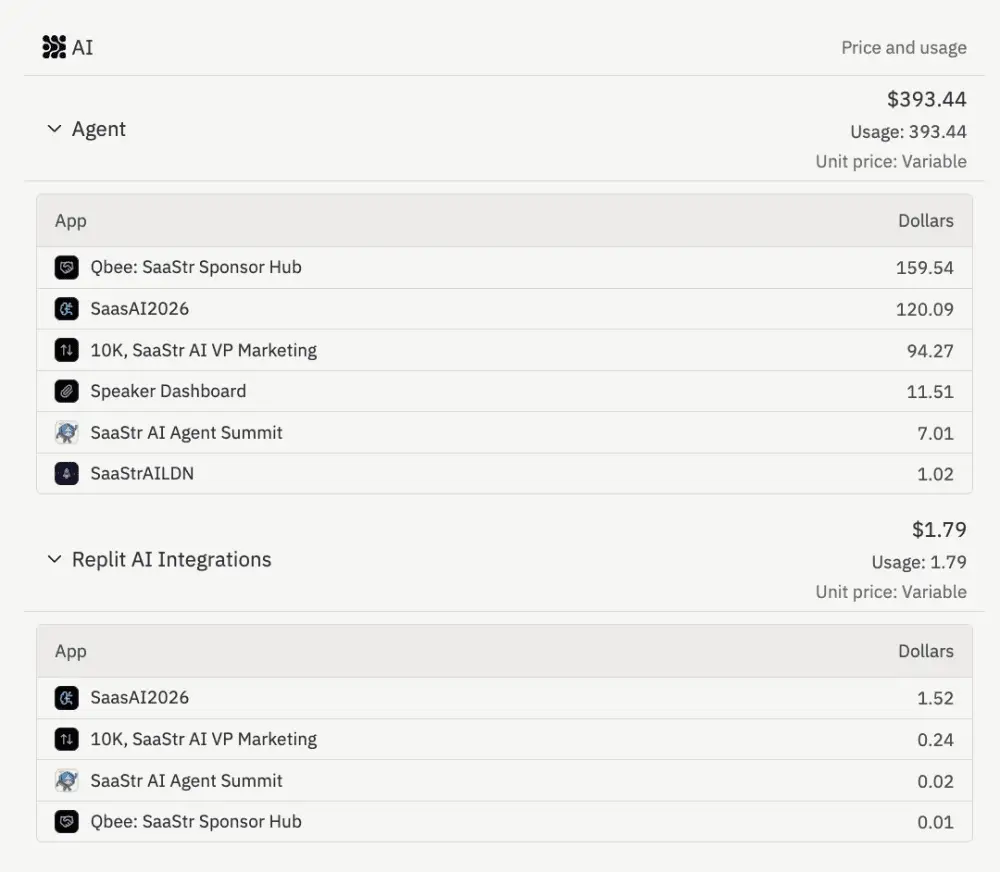

Thedeployment of AI agents within private and public sector operations in the Middle East and North Africa (MENA) represents a transformative shift with profound implications for business efficiency, sovereign capital allocation, and venture capital investment dynamics. The cost metrics illustrated by SaaStr’s experience—$254/month to replicate executive functions previously requiring $500K-$800K annually—demonstrate a scalable model that could disrupt traditional cost structures across industries. In a region where sovereign budgets are constrained by geopolitical and economic volatility, such operational efficiencies offer a pathway to optimize resource allocation. Sovereign entities, from governments to state-backed enterprises, could leverage AI agents to automate non-strategic functions, such as procurement logistics, customer service triage, or regulatory compliance tracking. By reducing manpower costs, sovereign capital could be redirected toward strategic priorities like digital transformation programs or infrastructure modernization, aligning with national economic diversification agendas in Gulf Cooperation Council (GCC) states. This shift would also reduce reliance on Western technology vendors, fostering regional innovation and data sovereignty.
From a venture capital (VC) perspective, the MENA region’s nascent AI ecosystem is poised for accelerated growth if such cost-effective agentic solutions gain traction. While traditional VC investments in MENA have historically focused on fintech and e-commerce, the adoption of in-house AI agents could catalyze a new wave of tech-driven startups. Local VC firms may prioritize funding companies developing tailored AI agents for sector-specific challenges, such as energy grid optimization in Saudi Arabia or agribusiness logistics in Egypt. The key differentiator will be the ability to deliver region-specific value propositions that native human labor cannot replicate at scale. However, this opportunity hinges on overcoming infrastructure limitations. The MENA region’s digital infrastructure—particularly in markets outside the GCC—lacks the bandwidth and data center density required to support high-volume AI operations. VC-backed investments in cloud infrastructure, edge computing, and 5G expansion are prerequisites for scaling agentic AI across the region. Sovereign capital could also play a role here, with countries like the UAE or Qatar allocating funds to build AI-ready data hubs, thereby creating a self-reliant tech foundation for both domestic and international enterprises.
The regional business impact extends beyond cost savings to competitive advantage in global markets. MENA-based firms deploying AI agents could achieve cross-border scalability at a fraction of the cost compared to Western counterparts. For instance, a GCC logistics company using AI-driven supply chain agents could mirror the efficiency of SaaStr’s models, underselling competitors who rely on human-heavy operations. This would position MENA as a low-cost innovation hub, attracting foreign direct investment (FDI) in sectors like insurance, healthcare, and education. However, the sustainability of this model depends on addressing regulatory and talent gaps. Sovereign governments must establish clear frameworks governing AI deployment to ensure compliance and data security, while VC firms should invest in reskilling initiatives to address the shortage of AI engineering talent. Regional infrastructure investments—specifically in high-speed connectivity and cloud services—are equally critical. Without a robust digital backbone, the potential of agentic AI in MENA will remain tethered to urban centers with existing tech ecosystems. The $254/month benchmark is not merely a cost anomaly but a strategic lever that, when paired with supportive policy and infrastructure, could redefine economic trajectories across the region.