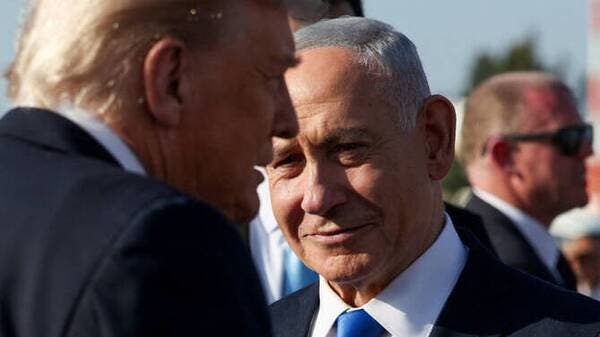

The recent pronouncements from US President Donald Trump regarding Israel’s actions in Lebanon carry significant implications for the broader Middle East and North Africa (MENA) region, impacting sovereign capital flows, venture capital investments, and regional infrastructure development. Trump’s emphasis on Israel striking Hezbollah “more surgically,” intended to de-escalate the conflict without causing undue civilian casualties, signals a potential shift in US policy towards regional security engagements. This could translate to a renewed focus on supporting Israel’s defense capabilities, potentially unlocking new avenues for US investment and partnerships within the Israeli tech sector, particularly in areas like cybersecurity and defense technology.
The geopolitical dynamics surrounding Lebanon and Hezbollah are creating a fertile ground for both sovereign and private capital. While the immediate focus remains on the conflict, the long-term stability of Lebanon is critical to regional economic recovery. A more controlled approach to the situation, as advocated by Trump, could pave the way for increased external investment in Lebanese infrastructure – a key area for rebuilding and economic diversification. This includes potential projects in energy, transportation, and digital connectivity, attracting both public and private sector financing. Furthermore, the renewed US commitment to bolstering the Lebanese Armed Forces (LAF) through training and equipment could indirectly stimulate local economic activity and create opportunities for regional defense contractors.
The impact on venture capital is likely to be bifurcated. While the immediate uncertainty surrounding the Lebanon-Hezbollah conflict may deter some investment, the potential for a more stable regional environment in the long run could unlock significant opportunities. MENA’s burgeoning tech sector, particularly in areas like fintech, AI, and renewable energy, remains attractive to venture capital. The focus on infrastructure development in Lebanon, predicated on a more secure environment, presents an interesting play for venture-backed companies specializing in construction technologies and smart infrastructure solutions. Moreover, a stable energy market in the region, driven by geopolitical shifts, could benefit energy-focused venture capital firms. The increased defense spending facilitated by US policy could also spur innovation in related technologies, creating opportunities for specialized venture capital funds.
Beyond immediate geopolitical considerations, the dynamics in Lebanon are deeply intertwined with broader regional infrastructure development. The challenges posed by the Hezbollah conflict highlight the vulnerability of critical infrastructure networks in the region. This heightened awareness could accelerate investments in resilient infrastructure, driven by projects focused on cybersecurity, disaster preparedness, and improved energy grids. The US’s potential involvement in strengthening the LAF, if successful, could indirectly support regional security partnerships and potentially open doors for increased cooperation in areas such as maritime security and counter-terrorism, further driving infrastructure investments across the MENA region. The long-term impact will depend on the extent to which the underlying geopolitical tensions are managed and whether the region can foster a more predictable and stable environment conducive to sustained economic growth and investment.