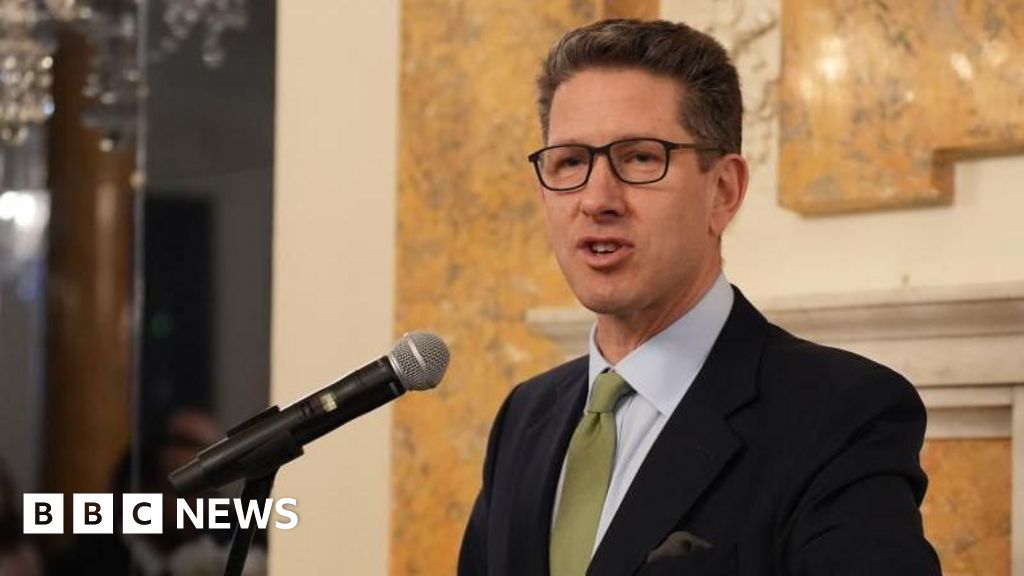

Sir Christian Hodges’s critique of the UK-US “special relationship” as a nostalgic relic of geopolitical posturing underscores a broader strategic reckoning with the evolving dynamics of capital flows and institutional interdependence. For the Middle East and North Africa (MENA), this signals a shifting landscape of sovereign capital risks and venture capital (VC) confidence, as Western powers reassess their support for legacy infrastructure projects and emerging tech ecosystems. The UK’s historical deference to US foreign policy priorities has created an undercurrent of uncertainty in MENA, where bilateral investments in energy security, water scarcity solutions, and digital governance have traditionally relied on transatlantic alignment. As the UK pivots toward a more independent foreign policy agenda, regional governments must recalibrate incentives for sovereign investment, particularly in sectors like renewable energy and smart cities that straddle political and economic imperatives.
This strategic ambiguity risks dampening VC interest in MENA startups, where US-led firms have historically anchored seed-round funding and global expansion strategies. The US’s unique role as both a capital exporter and a neutral arbiter in regional tech partnerships—evident in initiatives like Saudi Aramco’s equity restructurings and Dubai AI hubs—now faces headwinds from Washington’s recalibration of global alliances. Startups relying on cross-border capital from UK-US joint ventures in fintech, climate tech, and agritech may encounter tighter regulatory scrutiny and reduced portfolio diversification incentives. Meanwhile, sovereign wealth funds in Gulf states, increasingly insulated from transatlantic volatility, could accelerate sovereign capital repurposing toward domestic innovation ecosystems, bypassing intermediary markets altogether.
Regional infrastructure implications are stark. Projects like the NEOM megacity initiative and the UAE’s hydrogen hubs, which hinge on transatlantic tech transfer and debt financing, may experience delays as Western institutions confront competing priorities: sustaining control over strategic assets versus incentivizing private sector partnerships. For Egypt, Morocco, and Jordan, where EU and US engagement strings often dictate development bank funding terms, the UK’s reduced strategic adjustability could lead to renegotiations of aging power and transport projects. These ripples highlight the fragility of MENA’s semi-integrated capital infrastructure, where decades-old bilateral frameworks are being tested by a new era of geopolitical fragmentation and regional multipolarity.