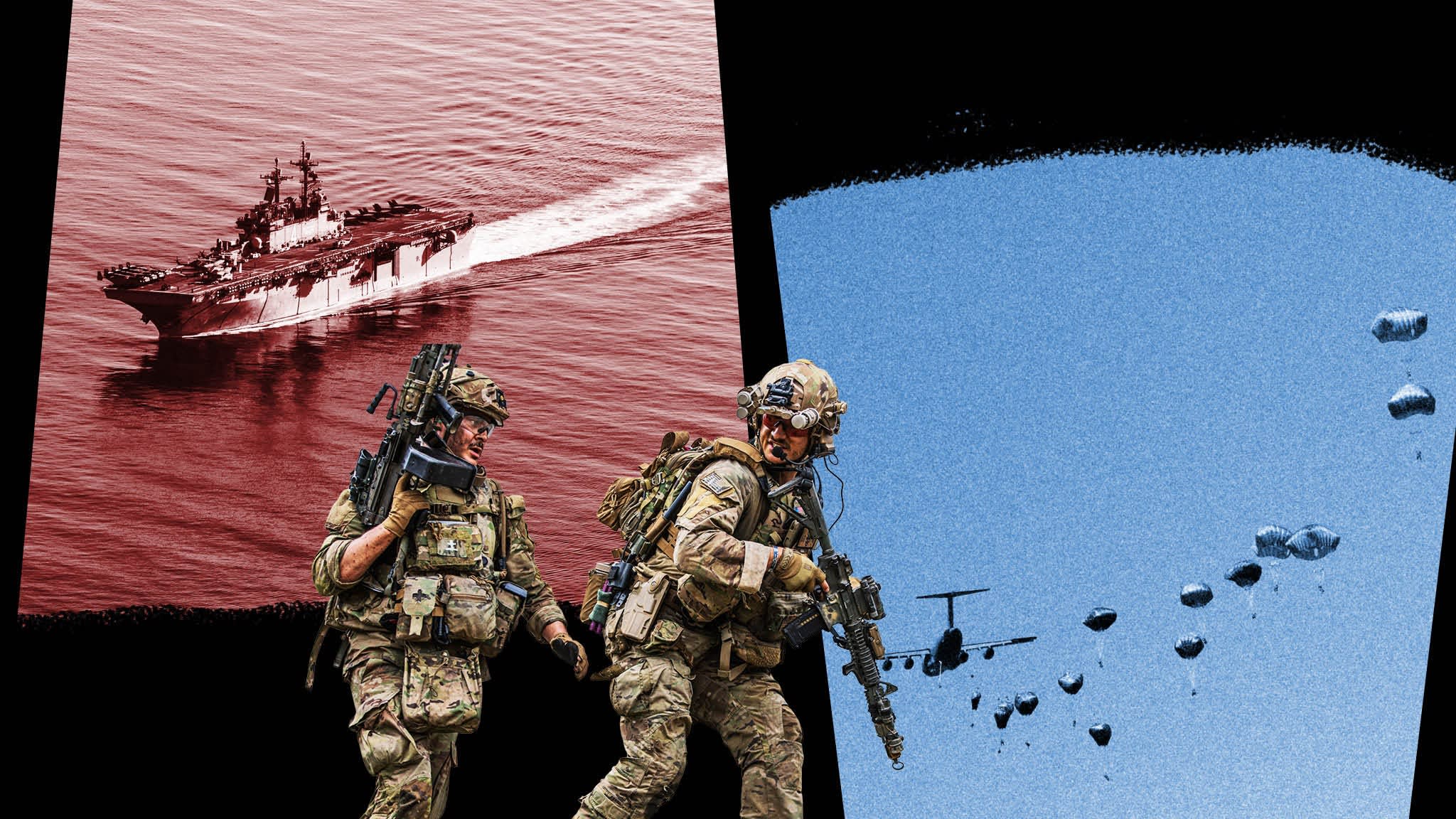

Washington’s deployment of a third US aircraft carrier strike group and as many as 10,000 US special operations troops to the Middle East this month signals a profound recalibration of Washington’s strategic calculus in the region, with cascading implications for sovereign capital flows, venture investment resilience, and the pace of infrastructure modernization across the Gulf. The military buildup—framed by US officials as a deterrent against Houthi attacks in the Red Sea but interpreted by Gulf states as a recalibration of regional security architecture—risks diverting sovereign capital into defense acquisition programs at a time when advanced technology procurement pipelines (particularly in AI, cybersecurity, and unmanned systems) are already straining defense budgets. This dynamic could exacerbate fiscal tightness in lower-rated sovereigns like Egypt and Jordan, where limited liquidity and high debt service burdens leave little fiscal headroom for parallel investments in critical infrastructure or workforce development.
The arrival of US forces will also reshape regional venture capital ecosystems, particularly in states like Saudi Arabia and the UAE, where government-backed funds are driving a booming tech startup sector. While some investors may view the troop surge as a net negative—citing geopolitical risk premiums or potential disruptions to logistics networks for Gulf-based venture portfolio companies—others will likely conflate military strength with long-term stability that could unlock cross-border M&A opportunities. The contrast is stark: GCC sovereign wealth funds have committed over $200bn to venture startups in sectors from fintech to ESG over the past two years, yet the concentration of defense investment in Riyadh and Abu Dhabi risks creating parallel innovation corridors that marginalize smaller regional economies, deepening existing capital disparities.
Infrastructure investment will be the most immediate and visible beneficiary of this militarization, as expanding US bases and troop deployments require upgraded logistics hubs, energy supply chains, and port capacity to support rotational forces. Countries hosting significant US military presence—such as Bahrain, Qatar, and Iraq—are already accelerating public-private partnerships to modernize airports, seaports, and energy grids, with Saudi Arabia’s NEOM project and Dubai’s Dubai Infra Holdings both announcing defense-adjacent infrastructure megaprojects. This convergence of defense and infrastructure spending could create durable growth in local construction and engineering sectors, though it remains contingent on sustained US engagement—a volatile assumption given shifting geopolitical winds and domestic political cycles in Washington.