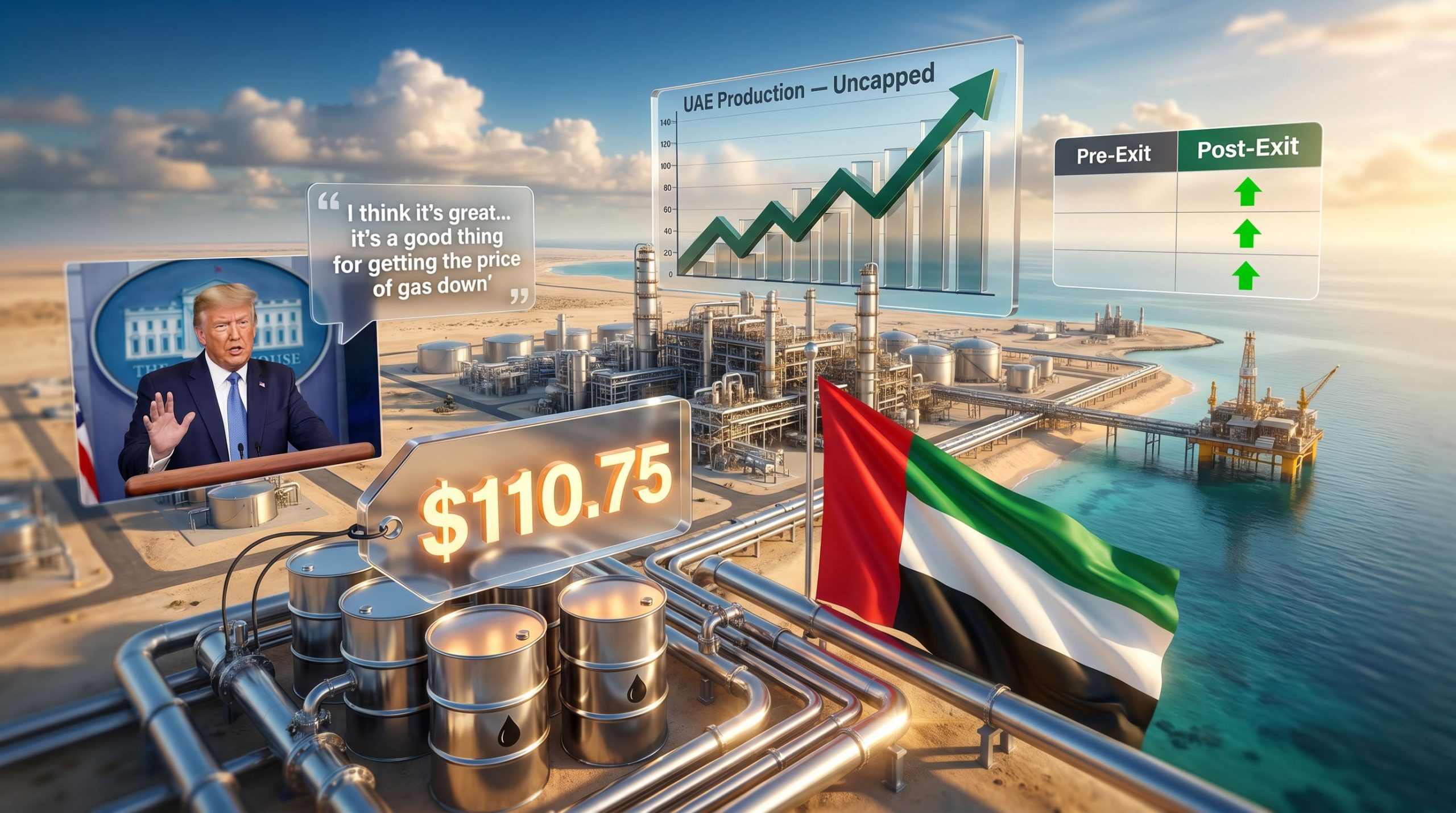

The UAE’s departure from OPEC reconfigures Gulf energy dynamics, necessitating strategic adjustments across regional financial architectures. Immediate repercussions permeate capital allocation, as sovereign reserves and bilateral agreements face recalibration. Venture capital concentrations pivot toward transitional energy projects, while sovereign capital structures undergo stress-testing to accommodate volatile benchmarks. These shifts underscore a critical juncture for institutional actors navigating shifting balance-of-power equilibries.
Infrastructure resilience emerges as central concern, with implications casting ripples through trade routes and energy infrastructure. The Strait of Hormuz’s precarious state remains pivotal, exacerbating vulnerabilities exacerbated by persistent geopolitical tensions. Moreover, regional cooperation models confront-testative trajectories, demanding recalibration amid divergent economic imperatives and strategic calculus.
Long-term projections reveal intensified competition for resource allocation, compelling sovereigns to balance immediate liabilities against structural reforms. Institutions must concurrently address venture capital realignment, leveraging surplus capital to mitigate disruptions while safeguarding strategic interests. The confluence of these forces necessitates agile decision-making frameworks.
Consequences extend to geopolitical negotiations, where the UAE’s exit catalyzes recalibration efforts within OPEC+ and beyond. Regional stability hinges on reconciling competing priorities, with implications for energy security and political cohesion. Adaptation remains paramount to ensuring systemic resilience amid evolving macroeconomic currents.