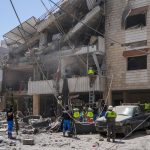

The UAE’s education sector is navigating a complex interplay of financial pressures and strategic resilience following renewed Iranian drone attacks that forced remote learning resurgences. While schools like Bloom World Academy and Brighton College Abu Dhabi have demonstrated operational agility in managing hybrid models, the financial strain on nurseries such as Bright Beginnings highlights systemic vulnerabilities in early childhood care infrastructure. Unlike schools, nurseries face existential risks due to delayed tuition collections and families opting for hybrid arrangements, exacerbating liquidity crunches that may necessitate sovereign or venture capital interventions to stabilize the sector. The inability to adapt remote learning frameworks for toddlers—compounded by monthly payment models—underscores the urgent need for government-backed guarantees or PPP frameworks to insulate MENA’s foundational education infrastructure from geopolitical disruptions.
Venture capital activity in MENA education tech has surged as schools pivot toward digital infrastructure, with startups specializing in hybrid learning platforms and cybersecurity retrofitting K-12 systems attracting significant funding. Institutions like Dubai British School Jumeira are leveraging AI-driven analytics to mitigate future disruptions, reflecting a broader trend where edtech firms bridge gaps between commercial efficiency and public service resilience. However, this shift risks excluding lower-tier private institutions unable to secure upfront capital for tech upgrades, potentially widening regional education equity gaps. Sovereign wealth funds—such as Saudi Vision 2030 and UAE’s NEOM initiatives—are increasingly targeting the $110B MENA edtech market, positioning state-backed tech firms to become crisis anchors for educational continuity amid regional tensions.
Infrastructure modernization efforts are accelerating, with governments prioritizing low-latency digital networks and IoT-enabled classrooms to minimize recurrence of past disruptions. Qatar’s recent $2.3B investment in satellite broadband for Gulf schools and Oman’s AI-driven student monitoring systems exemplify regional bets on technological sovereignty. Yet, the sector’s reliance on fragmented legacy systems—evident in schools’ uneven adoption of hybrid grading tools during the Iranian attacks—creates risks for sovereign creditworthiness. Financial analysts note that MENA’s education capital markets, currently trading at a 220bp discount to global peers, could tighten as investors demand infrastructure resilience guarantees tied to de-escalation of hostilities and regional stability. The convergence of sovereign policy, private investment, and tech innovation will determine whether MENA transforms its education sector into a hub of regional security resilience.