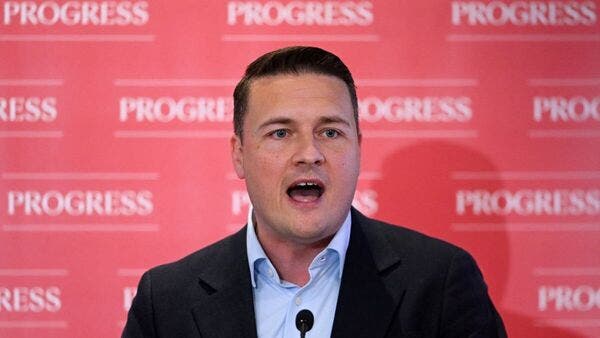

ShadowHealth Secretary Wes Streeting’s unexpected bid to unseat Labour leader Keir Starmer marks the most consequential internal contest within Britain’s governing party in a decade. While the leadership battle is fundamentally a domestic political affair, its swift escalation threatens to destabilise the policy continuity that underpins sovereign investment strategies, especially those of the Gulf’s sovereign wealth funds which have long viewed the United Kingdom as a low‑risk gateway to European technology and financial markets.
Should Streeting assume the premiership, his declared intent to reverse Brexit and re‑engage with the EU will reshape the regulatory environment for cross‑border capital flows. A re‑integrationist stance could unlock additional liquidity for sovereign funds seeking to allocate capital into European tech ecosystems, but it also introduces currency and geopolitical risk for MENA‑based investors whose exposure to UK equities and gilts is already considerable.
The leadership contest underscores a broader trend: Gulf sovereign capital is increasingly diversifying away from traditional UK‑centric allocations toward high‑growth technology clusters in the United States and Asia. Streeting’s campaign, by re‑igniting debates over EU membership, may accelerate this rebalancing, prompting the establishment of new venture‑capital vehicles focused on EU‑linked innovation hubs that could indirectly benefit MENA start‑ups through joint‑fund structures and technology transfer agreements.
Infrastructure financing in the MENA region stands to gain or lose depending on the UK’s forthcoming policy direction. A pro‑EU Labour government is likely to prioritize multilateral financing mechanisms and climate‑focused projects, aligning with the sovereign priorities of Saudi Arabia, the UAE, and Qatar. Conversely, a more protectionist or fiscally austere administration could tighten funding pipelines, compelling Gulf investors to accelerate domestic and regional megaprojects, thereby reinforcing the MENA’s own sovereign‑backed infrastructure pipeline.