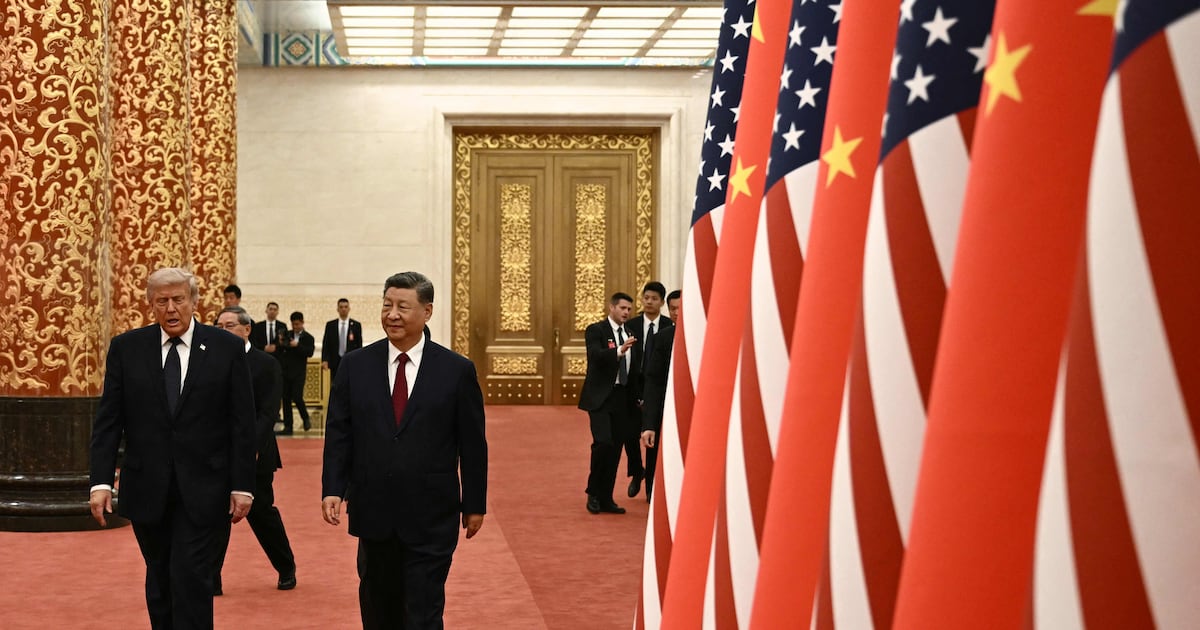

The recent bilateral discussions between Chinese President Xi Jinping and U.S. President Donald Trump underscore the profound geopolitical and economic tensions shaping global markets, with Taiwan emerging as the linchpin of China-US relations. Xi’s stark warning that mishandling the Taiwan issue could provoke “clashes and conflicts” highlights the existential stakes for the world’s two largest economies, signaling Beijing’s unwavering commitment to its “One China” principle. This rhetoric directly contradicts Trump’s public emphasis on business and trade agreements, revealing a fundamental divergence in priorities that risks destabilizing the fragile equilibrium of Sino-American engagement. The conflict over Taiwan is not merely a bilateral concern but a critical factor influencing sovereign capital flows, as heightened geopolitical risk could trigger capital flight from emerging markets, including the MENA region, where investors already face volatility due to regional instability.
Trump’s strategic focus on economic deals—the so-called “three Bs” (beef, soybeans, Boeing) and potential aerospace, energy, and industrial partnerships—reflects his administration’s pragmatic approach to balancing competition with interdependence. However, the exclusion of Taiwan from the White House’s official readout despite its centrality in Xi’s remarks amplifies concerns about the durability of any agreement. For the MENA region, these developments carry significant implications, particularly as sovereign capital flows and venture capital investment are increasingly intertwined with global geopolitical narratives. A breakdown in U.S.-China relations could disrupt investment pipelines, as MENA states reliant on cross-border capital and technology partnerships face heightened uncertainty, compounding existing challenges such as inadequate regional infrastructure and divergent regulatory frameworks.
The U.S.-China trade agenda also holds implications for MENA’s integration into global supply chains, particularly in energy and industrial sectors. Xi’s call for “deeper US business participation” in China’s reform agenda may influence Beijing’s stance on sanctions against regional players, such as Saudi Arabia’s Vision 2030-led investments in green technology and defense. Meanwhile, Washington’s pressure on China to curb Iranian oil imports ties into broader MENA energy dynamics, where the Strait of Hormuz remains a critical chokepoint. A failure to address these interconnected issues could exacerbate regional fragmentation, undermining efforts to develop cohesive infrastructure projects like the China-Pakistan Economic Corridor or Israel-UAE normalization agreements. The quality of Sino-American relations will thus determine the trajectory of MENA’s economic sovereignty and its capacity to attract capital and innovation.
Ultimately, the heightened tensions over Taiwan underscore the fragility of the globalized financial system, with far-reaching consequences for sovereign capital structures and regional investment climates. For MENA, a region grappling with infrastructural bottlenecks and geopolitical fragmentation, the outcome of these talks could either catalyze or constrain efforts to modernize economies and integrate into global value chains. Institutional investors must closely monitor the interplay between U.S.-China strategic calculus and MENA’s sovereign debt vulnerabilities, as even minor shifts in bilateral relations risk triggering cascading effects on asset valuations and capital allocation. The coming weeks will thus be pivotal in determining whether the region can navigate these stormy waters without compromising its long-term development imperatives.