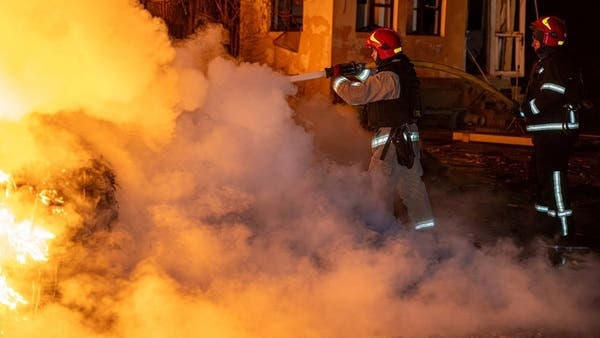

TheUkrainian General Staff’s disclosure of 469 ceasefire violations during the Orthodox Easter pause underscores the fragility of any de‑escalation framework and reinforces heightened risk premiums across conflict‑adjacent markets. For sovereign wealth funds and institutional investors in the Gulf Cooperation Council and wider MENA region, the episode translates into tighter valuation spreads for energy‑linked equities and heightened scrutiny of exposure to Russian‑origin financing structures.
In response, Gulf sovereign capital vehicles are accelerating diversification into resilient infrastructure assets—renewable‑energy parks, modular power grids, and digital logistics hubs—aimed at insulating regional portfolios from external security shocks. Early‑stage venture capital firms are reallocating capital toward cybersecurity, AI‑driven supply‑chain analytics, and hardened communications networks, sectors projected to attract $3.2 bn in MENA‑based deals by 2027, a 22 % increase from the previous fiscal year.
The broader implication for regional development agendas is clear: sovereign finance ministries are embedding contingency‑resilience clauses into megaproject contracts, while regulators are tightening due‑diligence standards for cross‑border fund flows. This convergence of security awareness and strategic capital deployment is reshaping the Middle East’s infrastructure pipeline, prioritizing projects that can operate autonomously amid geopolitical volatility.
Overall, the documented breaches serve as a catalyst for MENA investors to recalibrate risk models, amplify sovereign‑driven capital toward self‑sufficient technological and physical assets, and embed conflict‑mitigation into the core of investment thesis and portfolio construction.