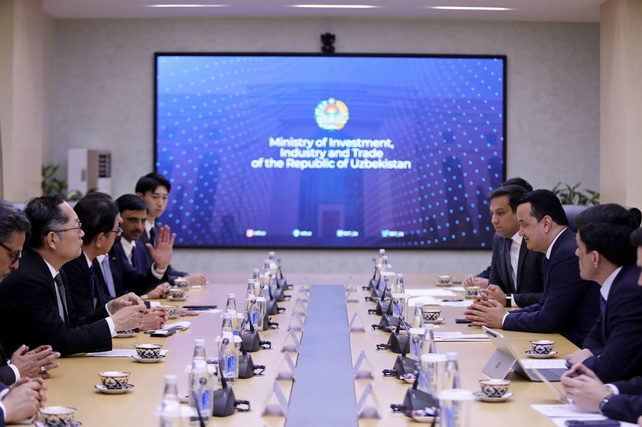

Uzbekistan’s strategic deepening of energy infrastructure partnerships with Sumitomo Corporation and ACWA Power represents a pivotal moment for sovereign capital flows into the MENA region. The $4.2 billion, 3.5 GW joint framework signals a calculated effort by Central Asian states to attract high-net-worth institutional investors, particularly from the Gulf Cooperation Council (GCC). ACWA Power’s Saudi pedigree underscores a growing imperative for MENA-centric capital to offset regional energy diversification goals, while Sumitomo’s Japanese capital infusion highlights cross-continental convergences in renewable energy financing. This convergence not only bolsters Uzbekistan’s sovereign capital base but also sets a precedent for GCC states to leverage their sovereign wealth in high-impact infrastructure projects beyond traditional hydrocarbons. The deal’s terms—prioritizing accelerated commissioning timelines and joint operational efficiency—reflect a maturing investor-distribution nexus critical for stabilizing energy markets in volatile geopolitical climates.
The business and infrastructure ramifications extend beyond Uzbekistan’s borders, offering a blueprint for MENA regional resilience. By commissioning large-scale renewable facilities, the project directly addresses the region’s dual challenges of energy security and climate mitigation. ACWA Power’s track record in solar and wind projects positions it as a vital player in optimizing solar potential across arid landscapes, a challenge MEMNA countries face disproportionately. Sumitomo’s industrial expertise further amplifies this by enabling technology transfer that could underpin local manufacturing ecosystems. Such infrastructure modernization is not merely an energy play but a catalyst for economic diversification, reducing MENA’s historical dependency on fossil fuels. The $4.2 billion valuation also implies significant downstream job creation and local content requirements, which could catalyze ancillary industries and venture capital interest in green tech startups.
The deal’s structure also signals potential shifts in venture capital engagement within the MENA region. While traditionally dominated by growth-stage tech investments, the scale of infrastructure prizes may redirect venture capital towards asset-heavy energy solutions. GCC sovereign funds, already pivotal in private equity syndications, could increasingly collaborate with Western private equity firms to unlock capital for such projects. This shift might foster innovative financing models, such as green bonds or public-private partnerships, tailored to MENA’s unique regulatory and fiscal landscapes. Furthermore, the emphasis on continuous dialogue between investors and regulators—highlighted in the negotiations—could streamline approval processes, reducing liquidity risks. For the region, this represents an opportunity to position itself as a hub for large-scale, sustainable infrastructure investment, attracting both sovereign and private capital on a previously underpenetrated scale.