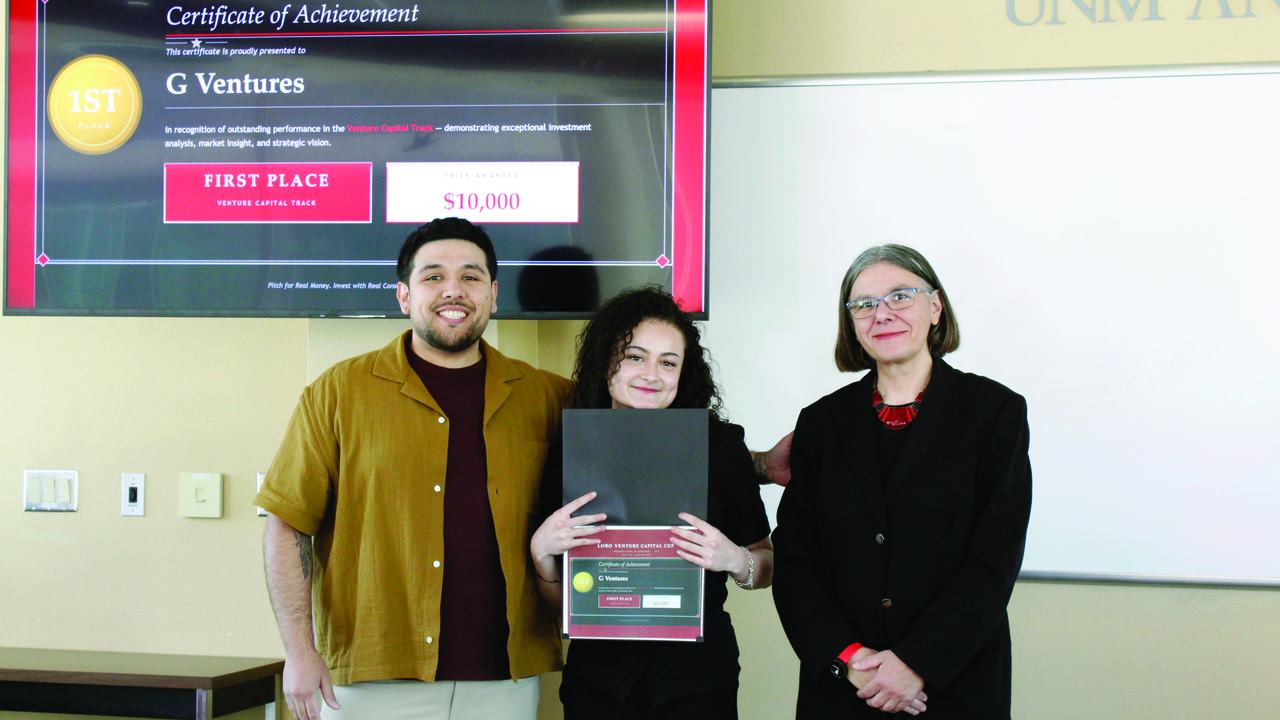

The emergence of structured venture formation and capital allocation training within U.S. academic ecosystems signals a strategic expansion of early-stage infrastructure with direct relevance to sovereign-wealth and MENA-family-office playbook design. While the Lobo Venture Capital Cup concentrated modest liquidity—$36,000 in prize pools—it validated a repeatable operating model in which limited partners, mentors and student allocators execute full-stack diligence on de-risked startup pipelines. For Gulf capital, the template translates into scalable fellowship-to-fund vehicles that convert university IP into proprietary deal flow, reducing reliance on external general partners while tightening control over sectoral mandates such as logistics, health tech and energy transition.
From a venture-capital capacity-building perspective, the competition’s bifurcation of founder and allocator tracks mirrors the Middle East’s structural shift from sponsor-led deployment to institutionalized investment teams. By tasking participants with raising internal fund capital and deploying against disciplined theses, the format inculcates ownership of portfolio construction and retrocession discipline—precisely the capabilities that MENA sovereign investors require to deploy beyond cheque-writing into value-chain control. The migration of a marketing-and-finance student from startup founder to allocatable GP underscores the fungibility of talent that Gulf hubs must cultivate to staff in-house vehicles and mitigate GP-led carry leakage.
For regional technology infrastructure, the Queue Skin outcome—$4,700 secured by a cross-disciplinary bio-engineering team—demonstrates how lightweight capital gates can surface domain-specific IP with hardware-software overlap relevant to MENA supply-chain modernization. Scaling such mechanisms through sovereign-backed university endowments and corporate venture studios would hardwire desert logistics, med-tech and agritech pipelines into domestic limited-partner bases, compressing time-to-deployment while anchoring data and cap-ex within the region. As GCC balance sheets repatriate risk budgets, embedding these micro-fund structures into accredited curricula offers a deterministic path to converting academic innovation into sovereign economic optionality.