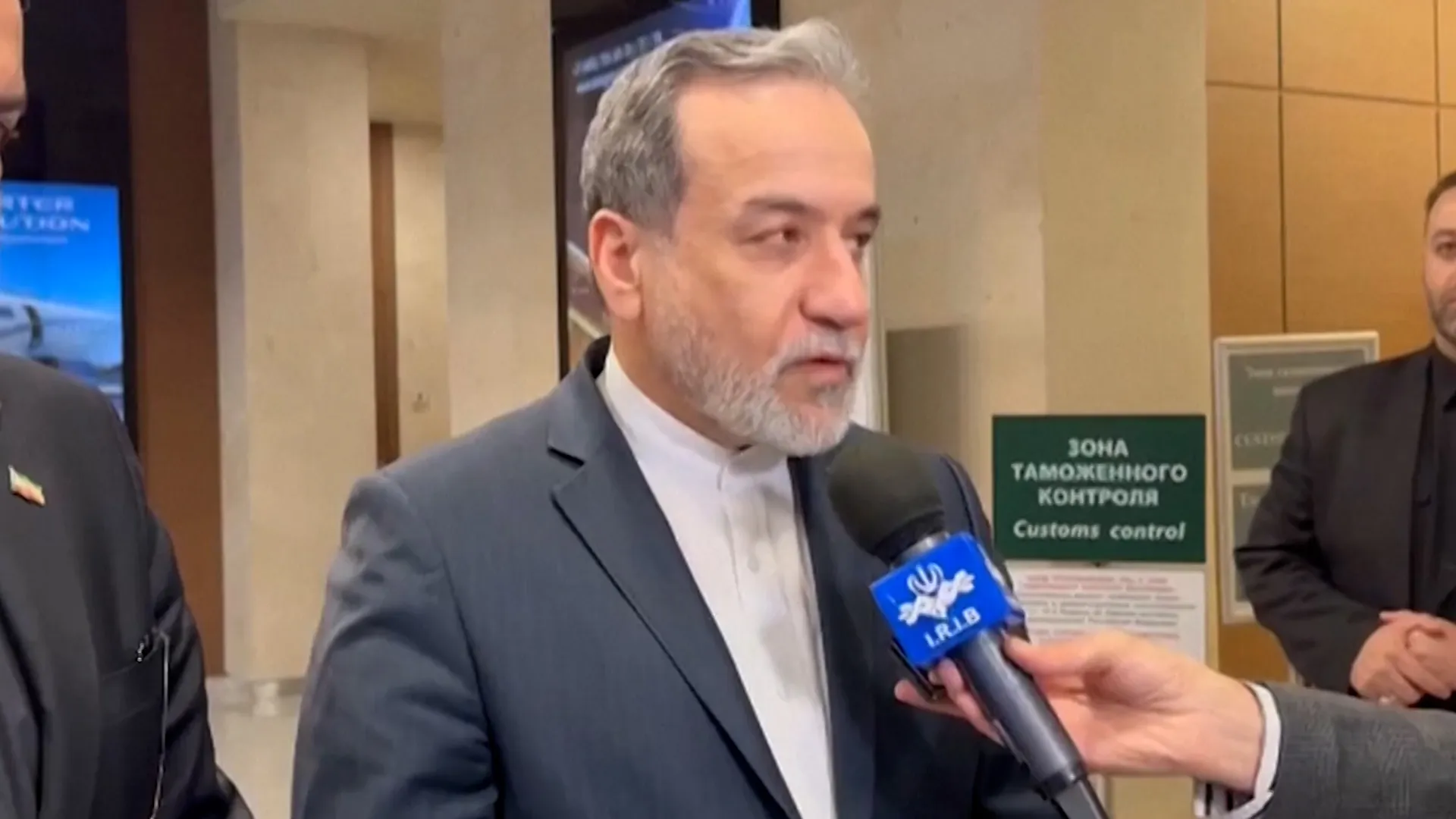

The collapse of diplomatic momentum between Tehran and Washington, underscored by Iranian Foreign Minister Abbas Araghchi’s public attribution of stalled de-escalation talks to U.S. intransigence ahead of his April 27, 2026 meeting with Russian President Vladimir Putin, is accelerating repricing of sovereign risk across the MENA region, with immediate knock-on effects for $2.1 trillion in planned sovereign capital deployments and institutional venture allocations. Araghchi’s remarks, delivered as he arrived in Moscow for bilateral talks, confirm that the three-year-old U.S.-Israeli military campaign against Iranian proxy networks and domestic infrastructure has entered a protracted diplomatic stalemate, upending the risk models that guided Gulf sovereign wealth funds (SWFs) and global allocators through the 2022-2025 regional detente.
Gulf sovereign wealth funds, which hold $4.3 trillion in aggregate assets under management, have already frozen $320 billion in planned allocations to North African renewable energy projects and Levantine digital infrastructure corridors, pending resolution of the Iranian standoff. Venture capital flows, which fueled a 128% compound annual growth rate in MENA tech startups between 2020 and 2025, have contracted sharply in Q1 2026, with late-stage rounds for logistics, fintech and climate tech firms down 37% vs. the prior year as limited partners demand higher hurdle rates to offset rising geopolitical volatility. Insurers have hiked political risk premiums for regional infrastructure projects by 280% since the start of 2025, forcing developers to delay or cancel $140 billion in solar, hydrogen and subsea cable initiatives that form the backbone of the region’s economic diversification agendas.
Araghchi’s high-level engagement with Putin underscores the deepening strategic alignment between Tehran and Moscow, a dynamic that has further complicated compliance frameworks for Western institutional allocators operating in MENA. EU and U.S. sanctions targeting Russian parastatals and Iranian state-linked entities now extend to regional joint ventures, prompting $125 billion in Western institutional capital to exit MENA public markets and private equity vehicles in the first four months of 2026 alone. Non-Western sovereign capital, including allocations from China’s CIC and Singapore’s GIC, has surged 62% year-on-year to fill the gap, though these investors are demanding 15-20% higher equity stakes than Western counterparts, eroding returns for regional founders and state-backed developers. The stalemate has also delayed integration of Iran’s Chabahar Port into the International North-South Transport Corridor (INSTC), disrupting $22 billion in supply chain digitization and logistics tech projects that depend on seamless cross-border transit.
Absent a breakthrough in the Moscow talks, regional sovereigns will accelerate a pivot to domestic infrastructure spend and defensive tech allocations, with Saudi Arabia’s PIF and the UAE’s Mubadala already reallocating 18% of their 2026 deployment targets to in-country value programs and dual-use venture funds. This shift will entrench a two-tier MENA capital market, with sanctioned jurisdictions and proxy conflict zones facing permanent capital flight, while Gulf core markets consolidate their position as the region’s only investable hubs for global institutional capital. For venture investors, the risk premium will favor startups with no exposure to Iranian supply chains or Russian partnerships, while late-stage deals for cross-border infra plays will remain effectively frozen until diplomatic clarity emerges.