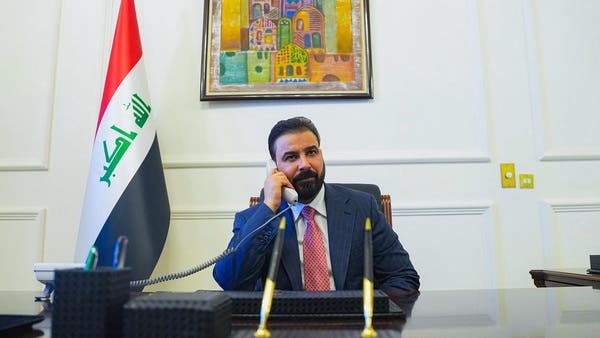

The Trump administration’s direct engagement with Iraq’s newly designated Prime Minister Ali Faleh al-Zaidi signals a strategic recalibration of U.S. economic policy toward Baghdad, with profound implications for sovereign capital flows and regional infrastructure investment across the MENA corridor. The invitation to visit Washington following government formation underscores a deliberate effort to position Iraq as a cornerstone of broader Middle Eastern economic realignment, particularly as Gulf sovereign wealth funds increasingly seek stable, high-yield destination markets for capital deployment.
From a sovereign capital perspective, Iraq’s hydrocarbon reserves—estimated at over 140 billion barrels—represent one of the most significant untapped pools of sovereign wealth potential in the region. A stabilized political transition, underwritten by direct U.S. diplomatic backing, reduces the risk premium that has historically deterred large-scale sovereign investment from the Abu Dhabi Investment Authority, Qatar Investment Authority, and Saudi Arabia’s Public Investment Fund from committing capital to Iraqi reconstruction projects. The bilateral cooperation framework announced following the call explicitly references “consolidating stability,” language that institutional investors interpret as a green light for long-term infrastructure commitments in energy, transport, and logistics corridors.
The venture capital and private sector dimension cannot be understated. Iraq’s domestic market of over 40 million consumers, combined with its strategic position as a transit hub between the Gulf and Turkey, presents compelling opportunities for regional tech and financial services firms seeking expansion. A government “free from terrorism,” as characterized in the readout, creates the security conditions necessary for startup ecosystems and digital economy development—sectors that Gulf venture capital funds have increasingly prioritized as part of post-oil diversification strategies. The timing is notable: regional sovereign investors are actively seeking new deployment channels following the normalization of relations between Gulf states and Syria, and a stable Iraq represents a logical next frontier for capital allocation.
However, institutional observers should remain cautious. The political interference that blocked former candidate Nouri al-Maliki—a figure closely aligned with Tehran—reveals the continued contestation between U.S. and Iranian spheres of influence in Iraq. For sovereign and venture capital, this geopolitical fault line introduces regulatory and contractual risks that require careful structuring. The “tremendous new chapter” rhetoric must be tested against the operational realities of Iraqi governance, where factional politics have historically undermined economic reform agendas. The coming months—particularly the outcome of al-Zaidi’s government formation and the Washington visit—will determine whether this diplomatic opening translates into actionable investment frameworks or remains another cycle of regional optimism.