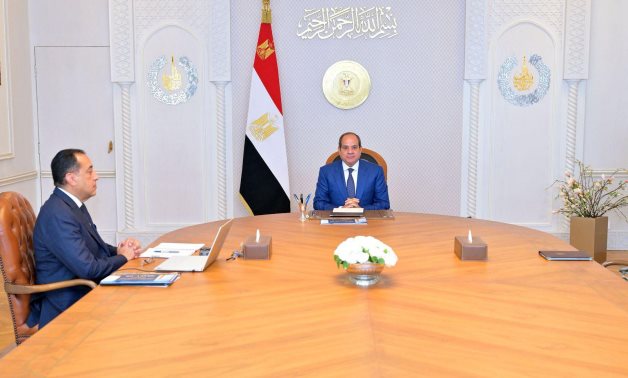

President Abdel Fattah El-Sisi’s directives to Prime Minister Mostafa Madbouly to intensify inflation containment efforts and increase targeted spending on health, education and social protection represent a calibrated alignment of Egypt’s sovereign fiscal priorities with the core mandates of Egypt Vision 2030. The move underscores a strategic push to preserve the real value of public expenditure amid persistent global commodity volatility, while advancing industry localization and export growth targets designed to diversify sovereign revenue streams beyond traditional tourism, Suez Canal receipts and worker remittances. For Gulf sovereign wealth funds (SWFs) and institutional investors with concentrated exposure to Egyptian assets, the focus on macro stability serves as a critical mitigant for political and credit risks, as inflation erosion of public spending power has historically correlated with elevated social unrest and sovereign borrowing cost spikes across the MENA region.
The mandate to expand social protection for vulnerable cohorts, paired with tightened monitoring of food commodity and strategic goods supplies, is explicitly designed to stabilize domestic consumption pools that account for 62% of Egypt’s GDP, a metric with direct implications for both sovereign credit ratings and the local venture capital ecosystem. Egypt attracted a record $2.3 billion in VC funding in 2025, per regional data, with consumer tech and essential services startups heavily reliant on stable household purchasing power. Separately, the upcoming inauguration of the new Borg El Arab campus of L’Université Senghor, highlighted by Sisi as a pillar of Egypt’s partnership with African and Francophone states, constitutes a strategic human capital infrastructure play: the facility will channel skilled talent into Egypt’s growing tech and manufacturing hubs, lowering talent acquisition costs for both state-backed industrial zones and private VC-backed startups while deepening regional integration across MENA and Sub-Saharan Africa.
Sisi’s emphasis on securing strategic goods supplies amid ongoing regional geopolitical disruptions aligns with a broader MENA sovereign trend toward supply chain resilience, which has driven $14.6 billion in combined Gulf SWF and institutional capital inflows into Egyptian logistics, cold chain and port infrastructure since 2024, including allocations from Saudi Arabia’s Public Investment Fund (PIF) and UAE’s Abu Dhabi Developmental Holding Company (ADQ). The push to localize industry and scale export capacity will accelerate public-private partnership (PPP) frameworks for special economic zones, already a key target for VC deployment in climate tech, agtech and advanced manufacturing across the region. This policy calibration reinforces Egypt’s position as the MENA region’s largest consumer market and a preferred sovereign capital allocation destination for institutional investors seeking exposure to Global South growth corridors, even as regional volatility persists.