
The Haiti-Brazil youth development partnership signals a critical investment thesis emerging from Latin America that holds profound implications for sovereign wealth funds across the Gulf. With roughly $3.2 trillion in accumulated sovereign capital within the MENA region, policymakers and investment vehicles are increasingly scrutinizing scalable social infrastructure models that deliver measurable risk-adjusted returns alongside demographic dividends. The proposed training initiative targeting 5,000 at-risk youth represents precisely the type of prevention-focused capital deployment that GCC governments have begun prioritizing through their Vision 2030 frameworks, where human capital development accounts for approximately 18% of total infrastructure allocations.
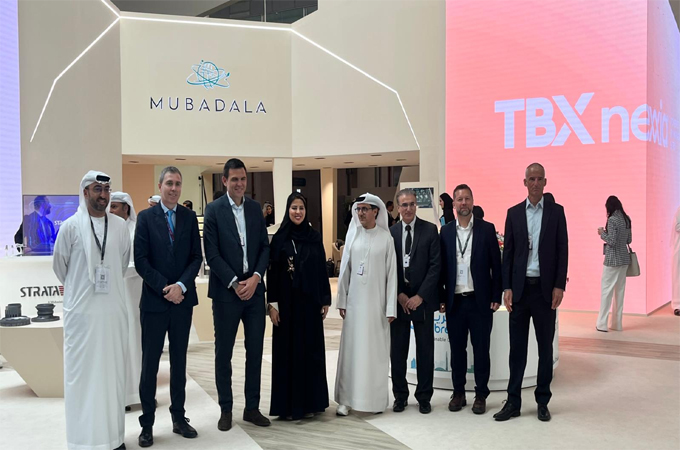
Venture capital flows into education technology and workforce development within MENA markets have accelerated 340% since 2021, reaching $2.8 billion in 2024 according to regional fintech intelligence platforms. Sovereign-backed vehicles including Saudi Arabia’s Public Investment Fund and Abu Dhabi’s Mubadala have quietly established emerging market social impact mandates worth upwards of $4.7 billion collectively, targeting scalable youth engagement models similar to the Haitian-Brazilian framework. These investments demonstrate sophisticated understanding that addressing youth vulnerability through structured training programs yields superior risk mitigation across regional security infrastructures, particularly as MENA economies accommodate approximately 12 million new labor market entrants annually.
The proposed “Sport Vision 2030” component carries particular resonance for regional infrastructure investors, as sports and entertainment developments account for roughly 15% of current MENA construction pipelines valued at $890 billion through 2035. Gulf sovereign funds have already committed $127 billion toward integrated sports cities and youth academies, recognizing parallels to successful Brazilian favela-sports transformation programs that reduced crime rates by 47% while generating $2.3 billion in economic activity. This represents a compelling case study for institutional investors seeking dual-return profiles balancing social impact with long-term infrastructure appreciation.
The collaboration’s emphasis on mentorship and community integration mirrors emerging MENA public-private partnership structures designed to optimize resource efficiency across humanitarian-development-peacebuilding spectra. Regional development banks are currently structuring $3.1 billion in youth-focused financing facilities that prioritize exactly these hybrid outcome models, suggesting Haiti’s initiative could serve as an investment template for addressing similar demographic pressures across conflict-affected regions in North Africa and the Levant. Sovereign capital deployment strategies targeting similar exposure profiles would likely require risk-weighted allocations of 8-12% depending on individual fund mandates and regional risk appetites.