
The rapid maturation of agentic AI systems presents a defining investment and infrastructure challenge for MENA sovereign capital allocators, as regional wealth funds confront the bifurcation between platform-native solutions and distributed toolchains that will determine the next decade of enterprise value creation. With combined assets exceeding $2.3 trillion, Gulf sovereign investors are uniquely positioned to capitalize on the fundamental architecture shift outlined in recent agent deployment learnings, where API completeness and platform containment are emerging as critical differentiators rather than mere technical considerations. The regional implications extend beyond venture portfolios to encompass sovereign data strategies, as nations increasingly recognize that AI agent proliferation necessitates hardened infrastructure commitments spanning UAE’s multi-billion dollar data center investments to Saudi Arabia’s cloud-first government mandates under Vision 2030.
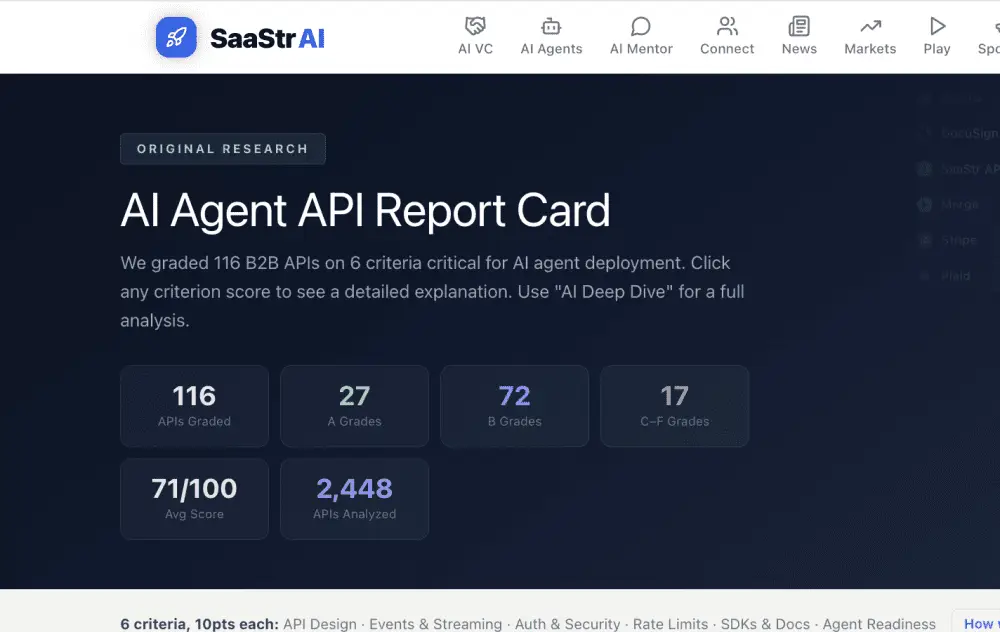
Regional venture ecosystems are witnessing accelerated consolidation around agent-ready infrastructure plays, with MENA-based investors increasingly scrutinizing portfolio companies through the lens of sovereign API compatibility and platform containment—a framework that directly correlates with the Stripe-grade agentic readiness scoring now adopted by sophisticated buyers. This evolution mirrors broader sovereign capital allocation trends, where Abu Dhabi Investment Authority and Public Investment Fund portfolios are systematically shifting toward businesses that demonstrate native AI orchestration capabilities rather than retrofitting legacy architectures. The emergence of specialized agent infrastructure funds, backed by regional pension capital and sovereign derivatives, signals recognition that winning platforms will compound value through superior rate limit management, OAuth flow reliability, and webhook consistency—metrics that directly translate to regional digital transformation success rates across banking, telecommunications, and energy sectors.
Critical infrastructure implications for MENA economies center on the platform containment thesis validated through recent agent deployment failures, where integrated authentication, database management, and deployment environments proved essential for maintaining security posture while enabling rapid iteration cycles. This directly informs national cloud strategies across the region, as Gulf Cooperation Council states mandate data localization requirements that favor contained platforms over distributed toolchains requiring extensive integration work. The economic impact extends to workforce planning, where regional sovereign employment funds must recalibrate training programs to address the emerging hierarchy of AI coordination roles—specialized agents reporting to human managers who in turn report to AI oversight systems, creating new organizational structures that Gulf labor markets have yet to fully comprehend.
From a sovereign capital deployment perspective, the agent specialization framework validates current regional investment theses while highlighting emerging opportunities in API-grade infrastructure and contained platform technologies that align with Gulf digital sovereignty objectives. The performance differential between fully integrated agent platforms and best-of-breed toolchains—measured in deployment velocity, security incident rates, and regulatory compliance costs—creates a compelling investment case for regional infrastructure plays that can deliver enterprise-grade agentic capabilities while meeting stringent data residency requirements. As MENA nations advance their AI strategies through 2026-2028 planning cycles, sovereign investors are positioned to capture significant value creation from the platform consolidation wave that will inevitably follow the current proliferation phase, provided they maintain focus on the fundamental architectural decisions that distinguish transformative AI adoption from incremental automation.