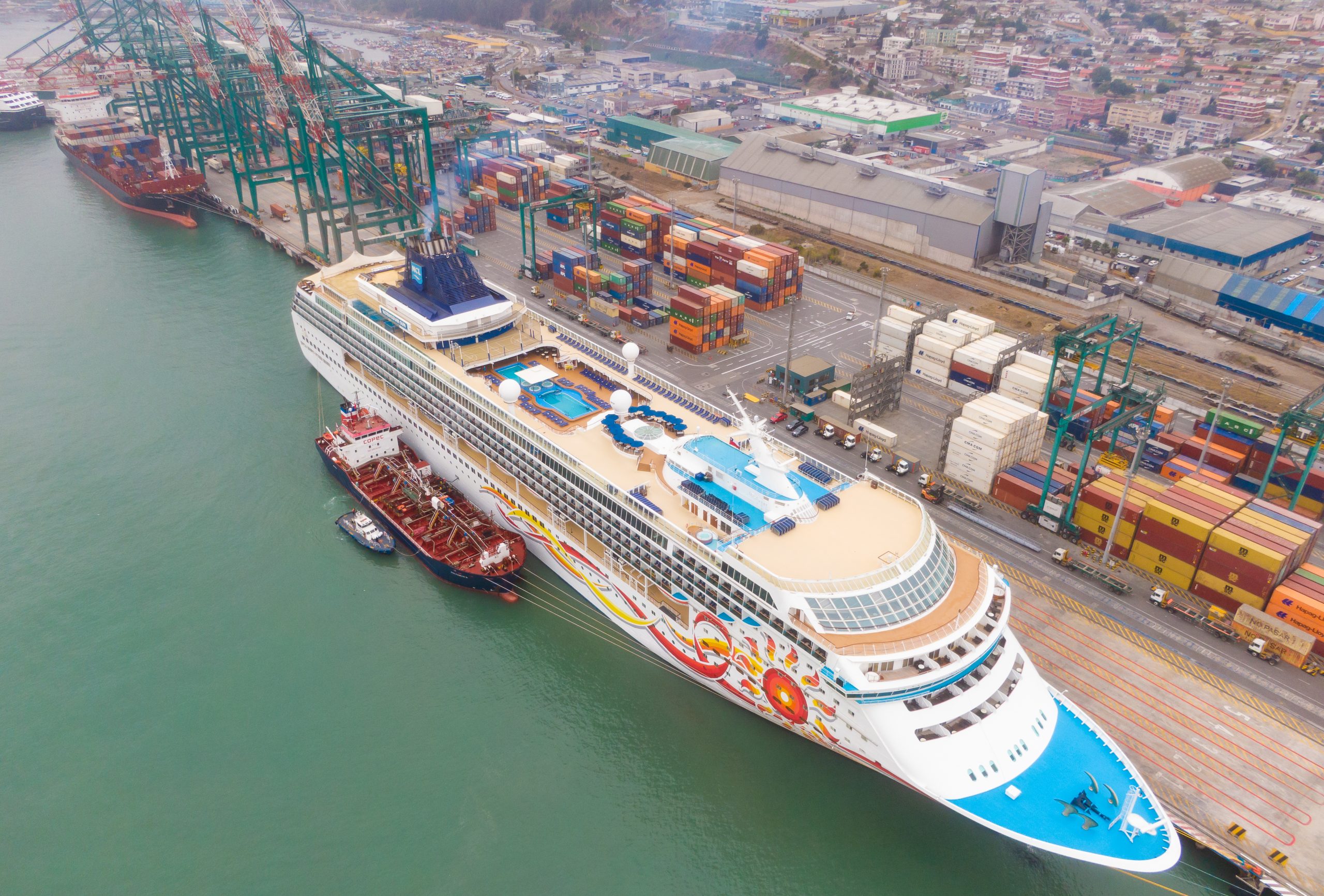

DP World’s San Antonio terminal closed the 2025‑26 cruise season with 58,000 passengers and crew across 14 ship calls, pushing cumulative traffic since 2017 to 491,000 arrivals. While the figures reflect a modest South‑American market, the operational success underscores the scalability of DP World’s asset‑light, digitally‑enabled terminal model – a template that MENA sovereign wealth funds are now emulating to diversify port portfolios beyond traditional container traffic. The Chilean case demonstrates how targeted public‑private partnerships can mobilise private capital to upgrade berths, integrate seamless passenger processing systems, and generate ancillary revenue streams for local economies, offering a blueprint for Gulf ports seeking to capture a share of the projected $150 billion cruise‑tourism market by 2035.
From an investment perspective, the San Antonio milestone validates the appetite of venture‑backed logistics platforms for “smart‑port” technologies. DP World’s deployment of advanced digital interfaces and real‑time data analytics reduced turnaround times by 12 percent, a performance gain that directly translates into higher berth utilisation and increased fiscal returns for host governments. MENA investors, particularly Qatar Investment Authority and Saudi Arabia’s Public Investment Fund, have already earmarked multi‑billion‑dollar allocations for similar upgrades in Jeddah, Dubai and Al‑Ula, signalling a shift toward technology‑centric maritime infrastructure that can attract high‑value cruise itineraries and ancillary tourism spend.
The broader regional impact is two‑fold. First, the infusion of sovereign capital into cruise‑capable terminals expands the logistics value chain, creating downstream opportunities for hospitality, retail and renewable‑energy providers, thereby deepening the economic multiplier effect that Chile estimates at 10 percent of GDP. Second, the demonstrable success of a mid‑size port in a non‑traditional cruise hub bolsters the case for leveraging existing container facilities in the Red Sea and the Eastern Mediterranean for dual‑use purposes, lowering the incremental cost of entry for new operators and accelerating the maturation of the MENA cruise ecosystem.
DP World’s strategy of coupling robust infrastructure investment with a networked digital ecosystem positions it as a strategic partner for MENA states aiming to accelerate diversification away from oil‑centric revenues. As sovereign investors continue to allocate capital toward integrated maritime corridors, the San Antonio experience will likely inform policy frameworks, financing structures and risk‑share mechanisms that underpin the next wave of cruise‑tourism expansion across the region.