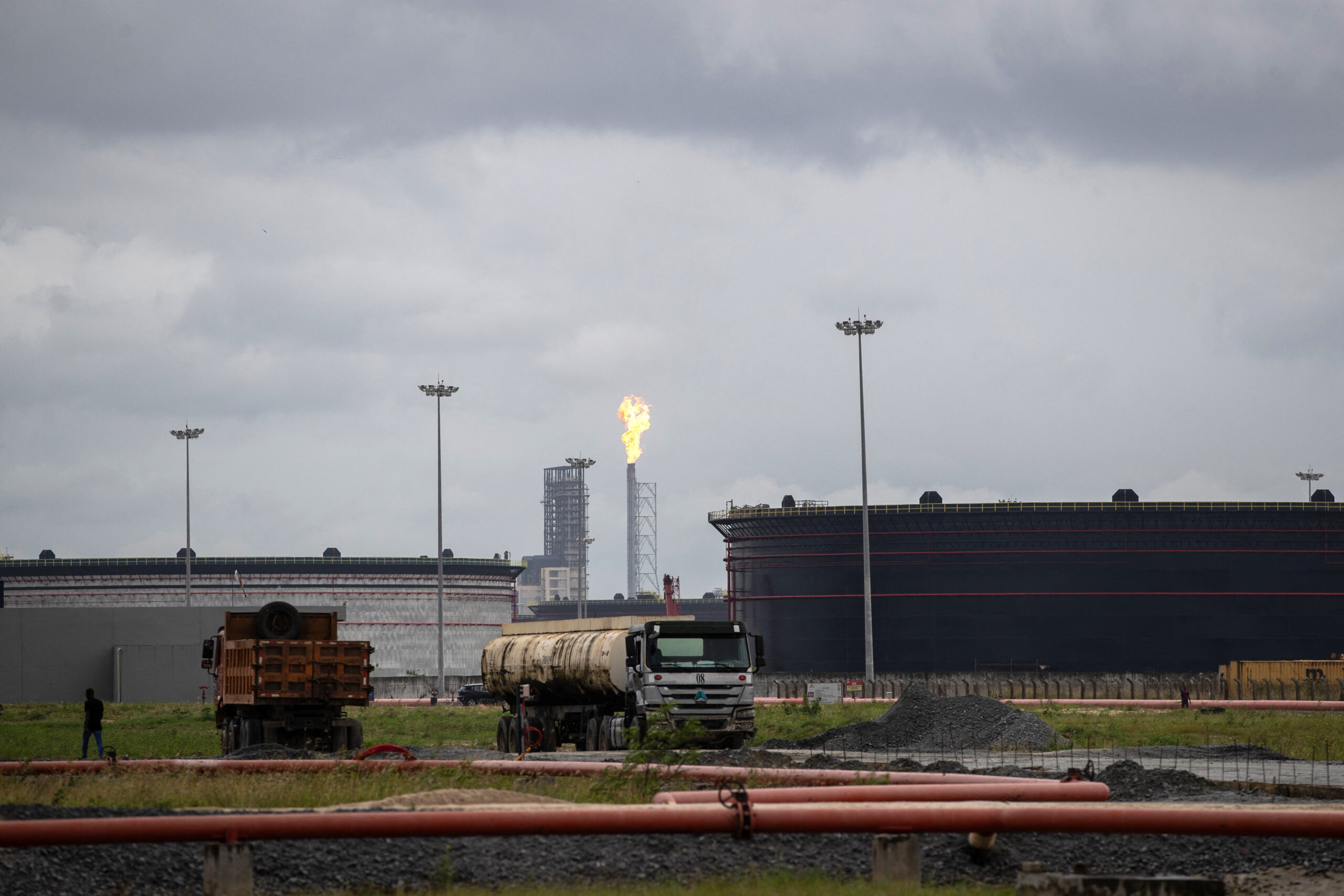

Dangote’s proposed $40bn multi-exchange IPO represents a seismic shift in Nigeria’s energy infrastructure and a potential catalyst for broader capital inflows into Africa’s most populous economy. By targeting a 100% capacity expansion of its oil refinery and a fourfold increase in fertiliser production, the deal underscores Nigeria’s strategic pivot toward industrial modernization and commodity self-sufficiency. The IPO’s scale—comparable to sovereign bond issuances in emerging markets—signals confidence in Nigeria’s ability to attract global institutional investors, despite historical volatility and political risks. This move could destabilize regional oil export revenues while accelerating investments in downstream energy ecosystems, potentially triggering a reallocation of portfolio funds toward Nigerian equities over traditional upstream-focused plays.
The fundraising ambition raises critical questions about sovereign capital dynamics in the Middle East and North Africa (MENA). Given Nigeria’s $41bn external debt as of 2023, the IPO’s success hinges on balancing aggressive growth with fiscal prudence. A 50%+ subscription rate in its 2012 IPO—a record for Africa—positions Dangote’s newest venture to set a new benchmark for sovereign-linked private equity sales. Strategic allocation of proceeds toward ESG-aligned agrochemical ventures could align with Saudi Arabia’s NEOM megaproject or UAE’s Masdar partnerships, fostering cross-border institutional collaborations. However, regulatory fragmentation across MENA’s 22 jurisdictions may complicate joint listing strategies, particularly in GCC nations grappling with hydrocarbon overhangs.
The IPO’s technical architecture, spanning Abuja, Dubai, and London exchanges, reflects Nigeria’s aspiration to become Africa’s capital-raising hub. This multi-venue approach mirrors Qatar’s Ras Ghanim natural gas project’s IPO success, which utilized cross-border SEBs to access Eurocentric liquidity pools. For venture capital ecosystems, the $1.2bn estimated liabilities from expanded operations could unlock NCAP’s risk appetite for regional oil-tech startups, particularly in carbon capture and supply chain digitization. Such activity may catalyze a Silicon Valley-style innovation arc in MENA, where $11bn in VC funding flowed in 2023, though concentrated in fintech and SaaS rather than industrial-tech.
Infrastructure ramifications transcend national borders, necessitating coordinated investments in Gulf of Guinea trade routes and the Moroccan-Mauritanian gas pipeline. Doubling refinery throughput requires parallel expansions at Warri Port and Lagos dry port complexes, potentially reigniting debates over Nigerian Sovereign Investment Authority (NSIA)-led public-private partnerships. Such reconfigured logistics networks could reduce the MENA export-internal trade gap by 15-20%, aligning with UAE Park’s 2030 fiscal targets through Saudi National Industrial Development and Logistics Program linkages. However, the IPO’s arbitrage opportunities may exacerbate shareholder royalty disputes, mirroring downstream conflicts between Axellagine and Saudi energy conglomerates, demanding nuanced regulatory frameworks tailored to Africa’s evolving debt sustainability thresholds.