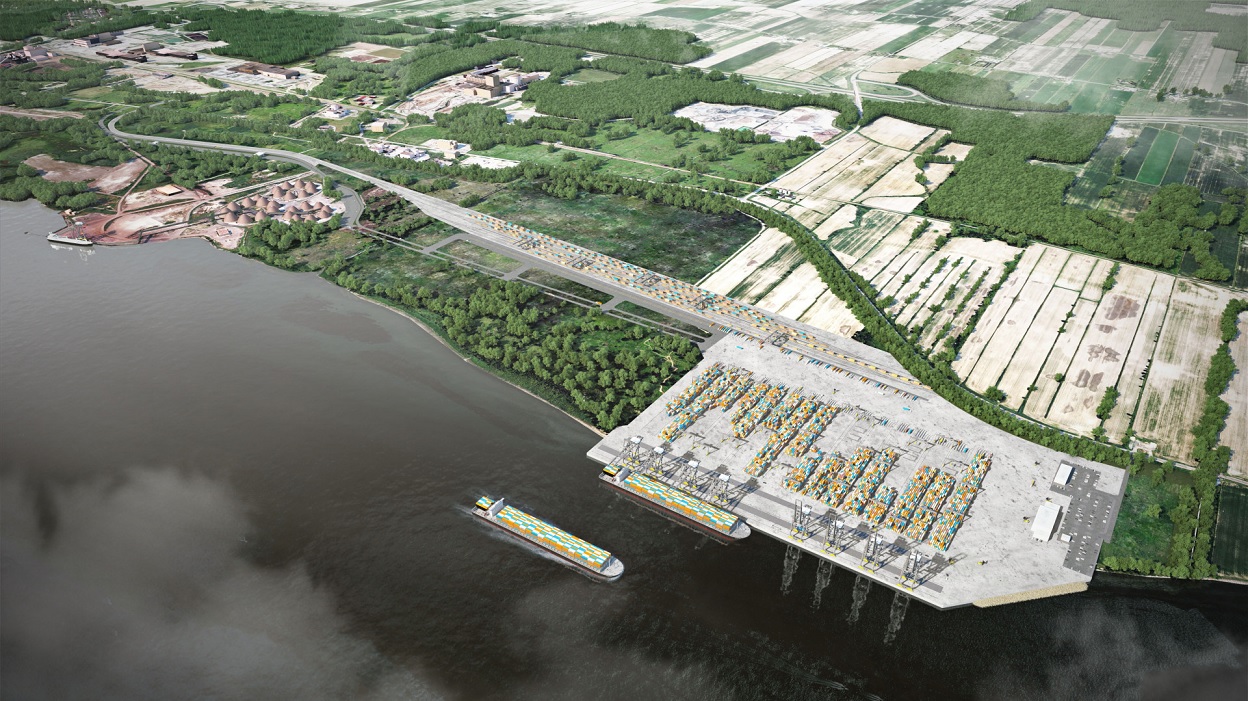

The commencement of construction on DP World’s Contrecoeur container terminal at the Port of Montreal represents a strategically significant investment with far-reaching implications for the broader Middle East and North Africa (MENA) region’s financial and technological landscape. This expansion, underpinned by a 2025 Joint Development Agreement with the Montreal Port Authority, underscores a growing trend of sovereign wealth funds and institutional investors within MENA actively seeking diversification opportunities beyond traditional oil and gas assets, mirroring the Canadian model of leveraging port infrastructure for economic growth. The project’s scale – adding approximately 1.15 million TEUs – directly addresses escalating global supply chain pressures and reinforces Canada’s position as a critical North American trade hub, impacting regional trade flows and potentially diverting volumes away from established routes.
From a venture capital perspective, the Contrecoeur project’s technological component – encompassing advanced automation, digital supply chain management, and data analytics – presents a compelling case study for investment. MENA nations, particularly Saudi Arabia’s NEOM and the UAE’s ambitions in logistics, are increasingly prioritizing digital transformation within their port operations. DP World’s demonstrated expertise in this area, coupled with the project’s scale, will undoubtedly attract further private capital focused on smart port technologies. Moreover, the project’s reliance on robust infrastructure – including on-site rail connectivity – highlights the critical need for continued investment in regional transport networks, a challenge shared by many MENA countries seeking to improve connectivity and reduce reliance on maritime transport.
The sovereign capital implications are considerable. DP World’s involvement, facilitated by its joint venture with La Caisse, demonstrates a sophisticated approach to public-private partnerships. MENA sovereign wealth funds, such as those in Abu Dhabi and Qatar, are increasingly comfortable with these models, recognizing their potential to deliver stable returns while mitigating direct government exposure. The success of this Canadian venture could serve as a blueprint for similar infrastructure projects across the region, particularly in areas like logistics and transportation, driving competition and potentially stimulating further sovereign investment. The project’s timeline, with commissioning expected by 2030, provides a tangible timeframe for assessing the impact of these investments.
Finally, the expansion’s impact extends to regional infrastructure development. The successful execution of the Contrecoeur project will necessitate advancements in construction methodologies, logistics management, and digital integration – all areas where MENA nations can learn and adapt. Furthermore, the increased trade volumes facilitated by the terminal will likely spur demand for related services, including warehousing, customs clearance, and freight forwarding, creating opportunities for technology providers and service companies within the region. Ultimately, DP World’s Canadian investment serves as a valuable benchmark for strategic infrastructure development and technological adoption across the MENA landscape, accelerating the region’s transition towards a more diversified and digitally-driven economy.