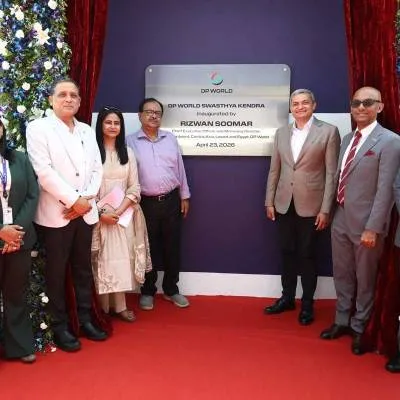

The establishmentof DP World’s Swasthya Kendra for truckers represents a strategic imperative for operational resilience in global supply chains, with particular relevance to the Middle East and North Africa region. By institutionalizing health infrastructure at key logistics nodes, DP World addresses a critical bottleneck in cross-border freight movement—a sector where prolonged health-related delays for truckers disrupt supply chain efficiency. In the MENA context, where ports such as Dubai and Jeddah serve as vital transshipment hubs for Indo-Pacific and African trade, this initiative underscores the growing recognition of integrated infrastructure as a competitive differentiator. For sovereign entities reliant on transit revenue and industrial growth, such public-private partnerships signal a shift toward optimizing logistics ecosystems to attract and retain foreign capital. However, the scalability of this model hinges on alignment with regional fiscal policies, as sovereign budgets remain strained by competing priorities. The move also suggests a maturing appetite for risk mitigation in supply chains, which could catalyze further investments in adjacent sectors like digital health monitoring or autonomous vehicle adoption, areas where venture capital has shown increasing traction.
The intersection of sovereign capital and emerging infrastructure projects like Swasthya Kendra reveals broader macroeconomic implications for the MENA region. While the initiative itself is corporately driven, its success may influence governmental strategies to de-risk transportation corridors critical to energy, agriculture, and manufactured goods trade. Countries such as Saudi Arabia and the UAE have long prioritized logistics modernization as part of economic diversification, and this project could serve as a blueprint for state-led imperatives to enhance operational continuity. From a venture capital perspective, the construction and management of such facilities may spawn opportunities in healthtech, telematics, and predictive maintenance technologies tailored to the region’s harsh operating conditions. However, limited VC activity in infrastructure-adjacent sectors in MENA suggests a need for stronger alignment between sovereign initiatives and private-sector innovation. The challenge lies in structuring financing models that balance public risk appetite with returns for investors—a dynamic where regional governments may increasingly collaborate with financial institutions to de-risk these venture-driven plays.
The ripple effects of Swasthya Kendra extend to regional infrastructure development, particularly in how it redefines the role of secondary logistics hubs in MENA. Efficient trucker health management reduces transit times and lowers operational costs, making adjacent ports and overland routes more attractive for cargo consolidation. This could accelerate investments in secondary ports or cross-border transit infrastructure in countries like Jordan, Lebanon, or even inland corridors connecting to sub-Saharan Africa. For the region’s technology sector, such initiatives create demand for drones, AI-driven health diagnostics, or blockchain-based compliance tracking—sectors where MENA has yet to fully capitalize. Nevertheless, sovereign strategies must prioritize foundational investments in digital infrastructure (e.g., broadband, cybersecurity) to enable these innovations. The true test of Swasthya Kendra’s impact will be whether it catalyzes a paradigm shift in how MENA integrates health, logistics, and technology into a cohesive industrial strategy, one that aligns with global trends while addressing regional idiosyncrasies like energy dependencies or political fragmentation.