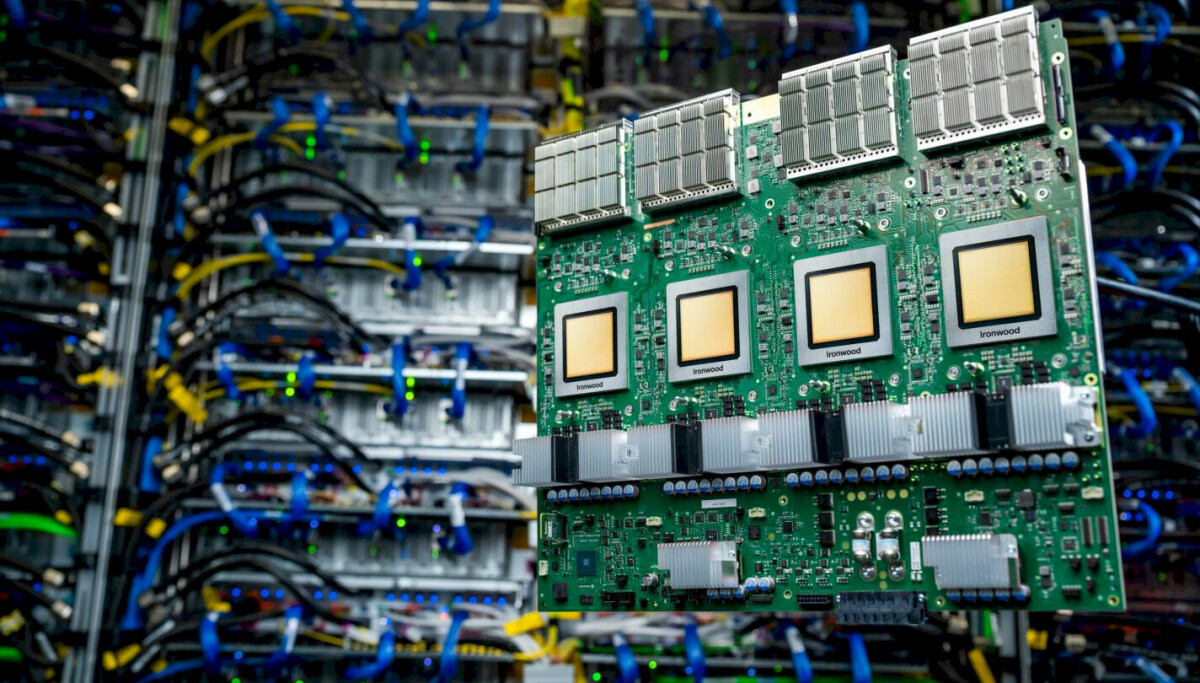

Google Cloud’s unexpected emergence as the fastest-growing hyperscaler in Q1 2026, outpacing both Amazon Web Services and Microsoft Azure with 63.4% year-on-year revenue growth to $20 billion, marks a decisive shift in enterprise AI infrastructure adoption that carries outsized implications for Middle East and North Africa sovereign capital allocators and regional tech ecosystems. The unit’s 800% YoY growth in GenAI model-based products, paired with a $462 billion revenue backlog that justifies its planned $180 billion–$190 billion full-year capex, validates the Gulf sovereign wealth funds’ pivot from speculative venture bets on pure-play model builders such as OpenAI to infrastructure-first exposures aligned with their own in-region digital sovereignty priorities. As Google underscores the differentiating value of its full-stack integrated TPU-to-Gemini Enterprise Agent Platform, MENA sovereign vehicles including Saudi Arabia’s Public Investment Fund (PIF) and Abu Dhabi Investment Authority (ADIA) are refining their AI infrastructure mandates to prioritize vertically integrated stacks that can support both public sector modernization and private enterprise digitization.
Google’s capex allocation, with 60% directed to server infrastructure and 40% to data centers and networking for five consecutive quarters, mirrors the investment priorities of MENA’s sovereign digital infrastructure programs, including Saudi Arabia’s National Data Management Office (NDMO) cloud rollout and the UAE’s G42-led AI cluster buildout. Regional data sovereignty regimes, such as the UAE’s Personal Data Protection Law (PDPL) and Saudi Arabia’s Cloud Computing Regulatory Framework, have driven demand for localized hyperscaler infrastructure, where Google’s existing Middle East regions in partnership with stc and du already process enterprise workloads with latency and compliance advantages over European or Asian nodes. The 30x year-on-year growth in BigQuery tabular database integrations with Gemini is particularly salient for MENA energy, logistics and public sector entities processing petabytes of operational data, as it eliminates the need to transfer sensitive datasets offshore for AI training and inference.
The doubling of Google Cloud’s $100 million to $1 billion enterprise deals year-on-year, including multiple billion-dollar contracts, and 45% average overcommitment rate from existing customers, sets a benchmark for MENA’s VC-backed AI ecosystem and sovereign portfolio companies alike. Google’s reported 16 billion average tokens processed per minute across its first-party models in Q1 2026, with 330 enterprise customers each processing over 1 trillion tokens in the past 12 months, further de-risks the infrastructure bet for MENA allocators wary of the high operating losses plaguing pure-play model builders. Regional growth-stage funds, which deployed $7.2 billion into AI-adjacent startups in 2025 per MAGNiTT data, are shifting focus from consumer-facing AI applications to middleware and integration tools designed to plug into hyperscaler stacks like Google’s Vertex AI-upgraded Gemini Enterprise Agent Platform, reducing the risk of stranded capital in unproven niche models. Sovereign capital vehicles including ADQ and PIF’s Sanabil Investments are now mandating portfolio companies to adopt unified AI infrastructure to drive operational efficiency, as Google’s 3x year-on-year operating income growth to $6.6 billion proves that scalable, profitable AI adoption relies on integrated infrastructure rather than frontier model experimentation alone.