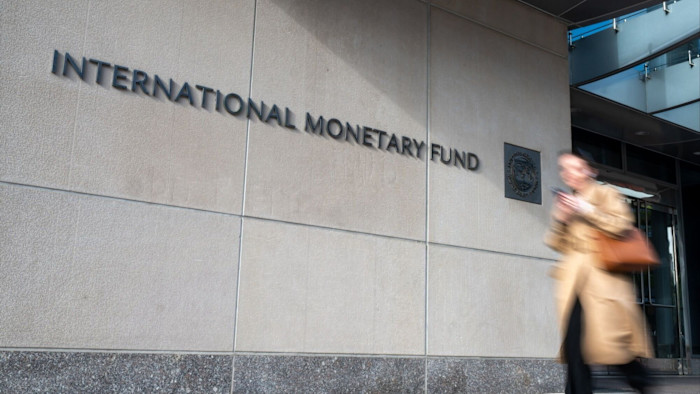

The International Monetary Fund’s latest outlook signals that the global economy could stall at its slowest pace since the pandemic if the Gulf conflict keeps oil prices anchored near $100 a barrel for the remainder of 2024. The IMF now projects a 2.5% expansion for the world, a sharp downturn from the 3.1% forecast released earlier this month, and a 5.4% inflation rate under an “adverse” scenario that assumes persistent high energy costs.
For the Middle East and North Africa, the ramifications are particularly stark. While advanced economies are expected to weather the shock relatively unscathed, the IMF estimates that growth in the MENA‑Centr Asia region would contract until 1.9% in 2026— a drop of more than two percentage points compared with 2025. The spike in oil prices is already tightening financial conditions, pushing central banks toward aggressive rate hikes, and elevating commodity price transmission to food inflation. In the most severe case, the IMF foresees oil prices climbing to $125 a barrel, which would force a steep 5.8% inflation year‑on‑year and push the global growth rate to only two percent, a level seen only a handful of times over the last four decades.
These developments have a cascading effect on sovereign budgets and private investment. Many MENA governments, already balancing tight fiscal margins, will need to reallocate funds from discretionary spending to cover higher energy subsidies, food import costs, and debt servicing. Concurrently, venture capital flows are at risk of contraction as global investors demand higher risk premia in the wake of weaker growth forecasts and tighter credit conditions. Firms in the region that rely on export revenues and foreign direct investment may face stalled expansion plans, prompting a shift toward more resilient, knowledge‑based sectors such as fintech and renewable energy.
Infrastructure projects—a cornerstone of the region’s development strategy—stand to be reshaped by these economic currents. With national budgets tightening, governments might defer or scale back large‑scale infrastructural undertakings, especially in sub‑regional corridors that depend on foreign capital. At the same time, the high cost of imported construction inputs could accelerate the pursuit of locally sourced materials and regional supply chains, potentially creating new opportunities for manufacturers and service providers in the MENA bloc. However, the overall slowdown will likely delay the completion of critical transport and logistics hubs that underpin global trade routes, thereby extending the period of global supply chain disruption and escalating geopolitical risk in the region.