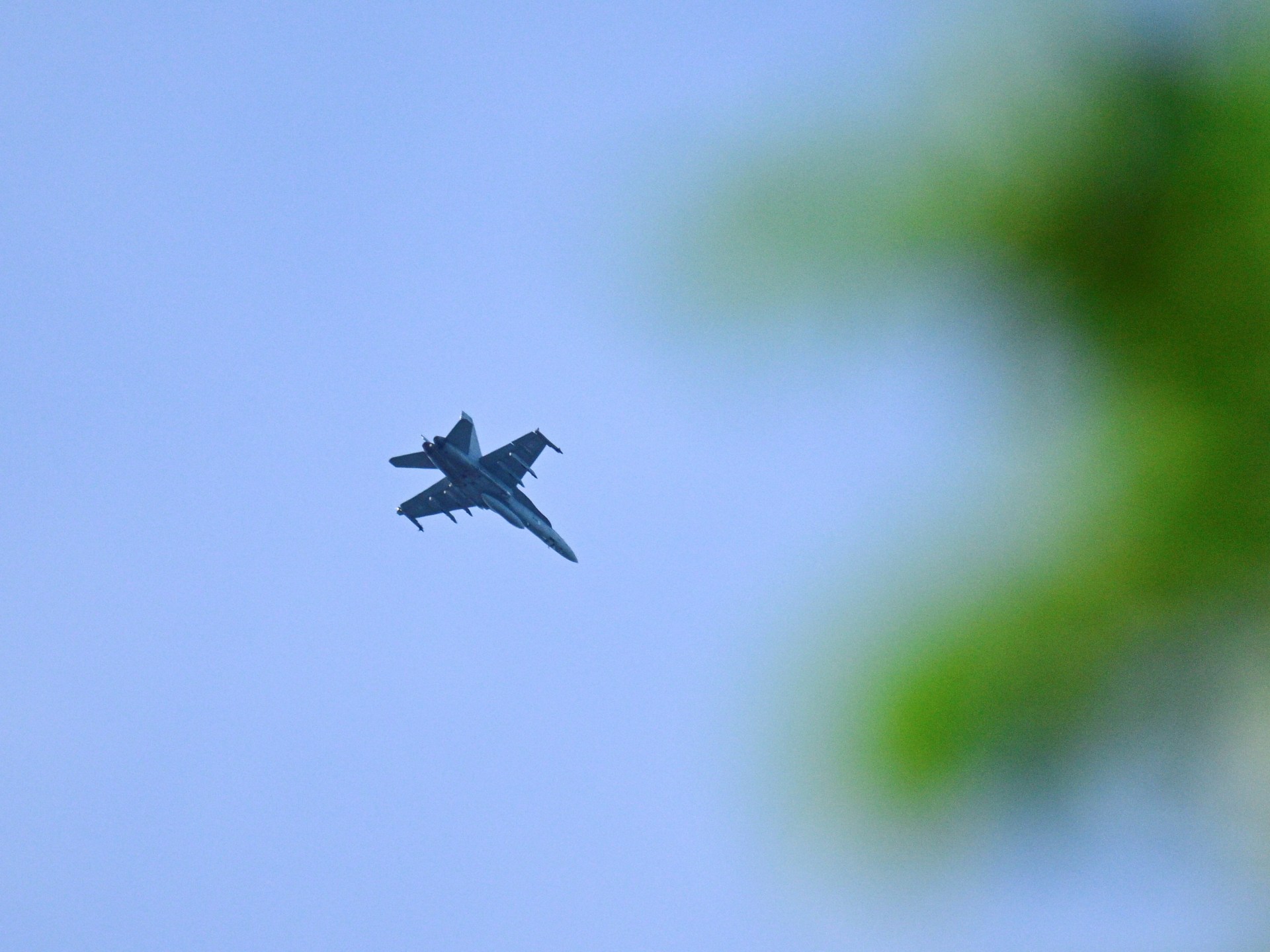

The $82 million Series B raised by Firestorm Labs, alongside Anduril Industries’ recent $5 billion at a $61 billion valuation, signals that defense and logistics tech is no longer a peripheral venture category—it is a core sovereign strategy play. For the Gulf states, this trajectory demands attention. UAE and Saudi Arabia have committed tens of billions to defense industrialization through entities like Edge Group and Saudi Military Industries, and the emerging model of containerized, edge-deployed manufacturing aligns directly with their ambitions to localize production and reduce dependency on distant supply chains. Sovereign wealth funds now evaluating whether to deepen exposure to defense-adjacent venture capital will find the sector’s capital efficiency and strategic national-security fit increasingly difficult to ignore.
Equally consequential for the region is the surge in physical AI and industrial automation funding—C-Infinity’s $16 million seed and the broader $37 billion global tally for physical AI in 2026 underscore a structural shift from software-centric to production-centric venture capital. For MENA, where massive infrastructure programs in the UAE, Saudi Arabia, Egypt, and Morocco remain capital-intensive and labor-constrained, the ability to compress process planning timelines from weeks to minutes represents a direct lever on construction and manufacturing output. Sovereign investors in Abu Dhabi’s Mubadala and Saudi Arabia’s Public Investment Fund are already building deep-tech portfolios; the convergence of physical AI with defense logistics and circular economy plays—such as ROSI’s €20 million solar panel recycling platform and Opalia’s cell-based dairy supply chain—offers a roadmap for how regional capital can compound across climate resilience, food security, and industrial autonomy.
The seed-stage financing of Opalia at $2.3 million, led by Nadarra Ventures with Quebec-based and institutional co-investors, is modest by headline standards but strategically sharp: it targets a supply-side solution that integrates into existing dairy infrastructure rather than chasing consumer-facing disruption. That model is precisely what MENA’s agricultural transformation—driven by sovereign food-security mandates and water-scarcity pressures—requires. Meanwhile, ROSI’s Spain-based first plant at 10,000 tonnes per year will soon need adjacent markets, and the region’s accelerating solar deployment, led by Saudi Arabia’s ACWA Power and UAE’s Masdar, is generating the very end-of-life panel volume that makes industrial recycling economically viable at scale. Taken together, these five deals are not isolated funding announcements; they are early indicators of where sovereign capital, venture capital, and regional infrastructure investment are converging.